Felippe Moraes
Monument to Euclid, 2017
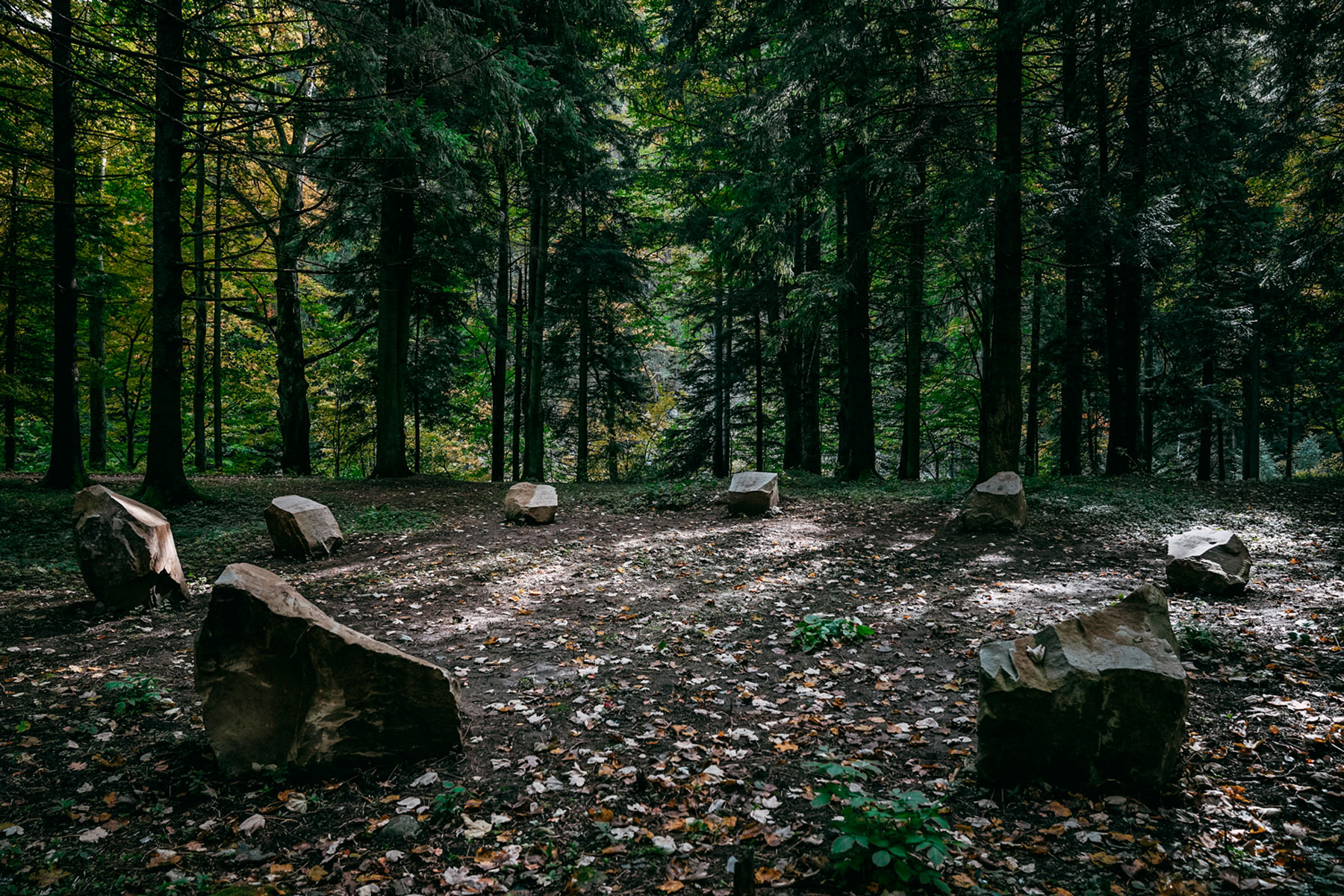
Eight carved blocks of Kliwa sandstone
approx. 1300 × 1300 × 120 cm
Permanent installation in Slănic-Moldova
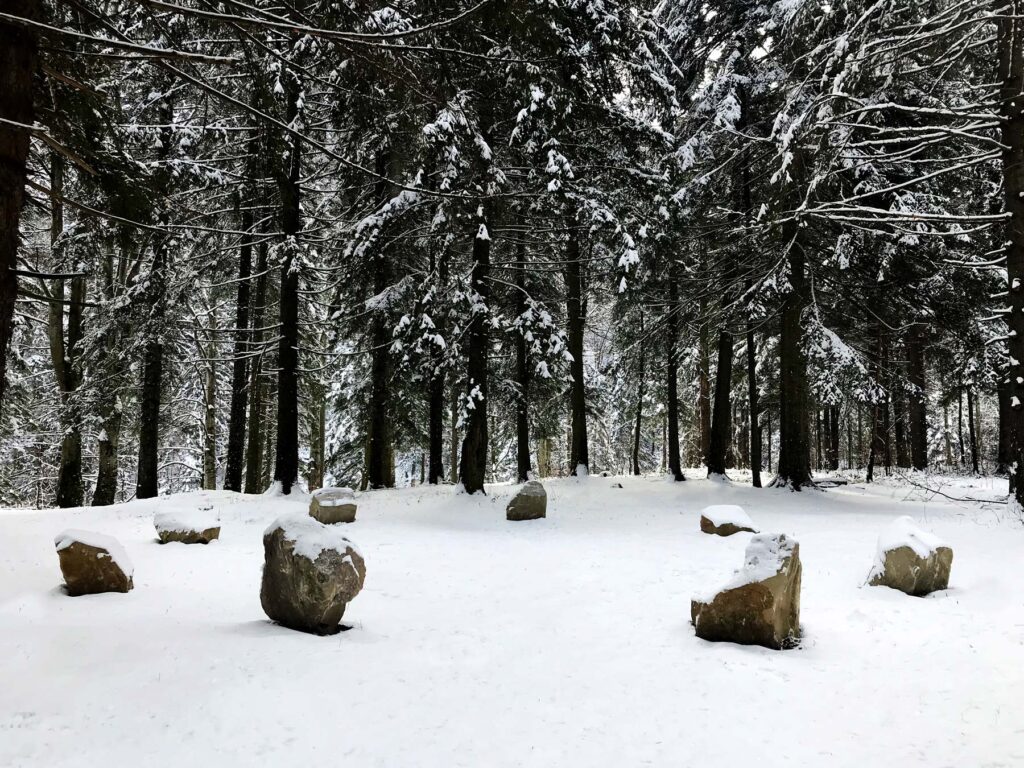
Monument to Euclid (2017), by Felippe Moraes, is a permanent sculptural installation dedicated to the Greek mathematician Euclid, author of the treatise Elements, one of the most influential scientific texts in history.
Written more than two thousand years ago, Elements establishes the foundations of Euclidean geometry — a logical system that organizes fundamental concepts such as point, line and plane. These principles continue to structure much of the mathematics, architecture and spatial representation used today.
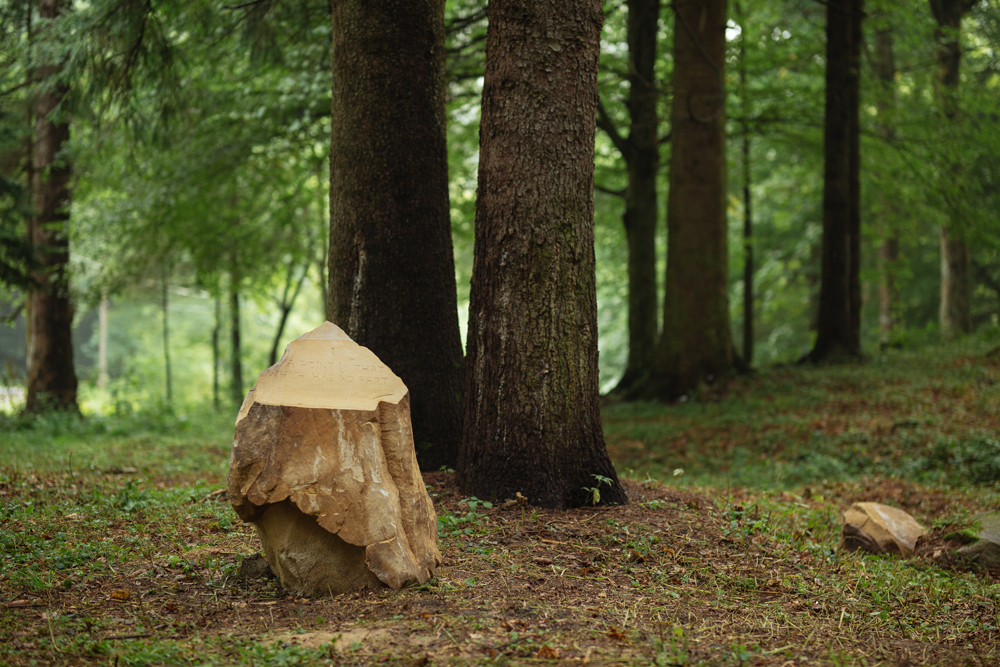
The installation consists of eight blocks of Kliwa sandstone, a sedimentary rock characteristic of the eastern Carpathian region. This type of sandstone is formed mainly from quartz grains compacted over millions of years, the result of ancient marine sedimentary deposits found in that area of Europe.
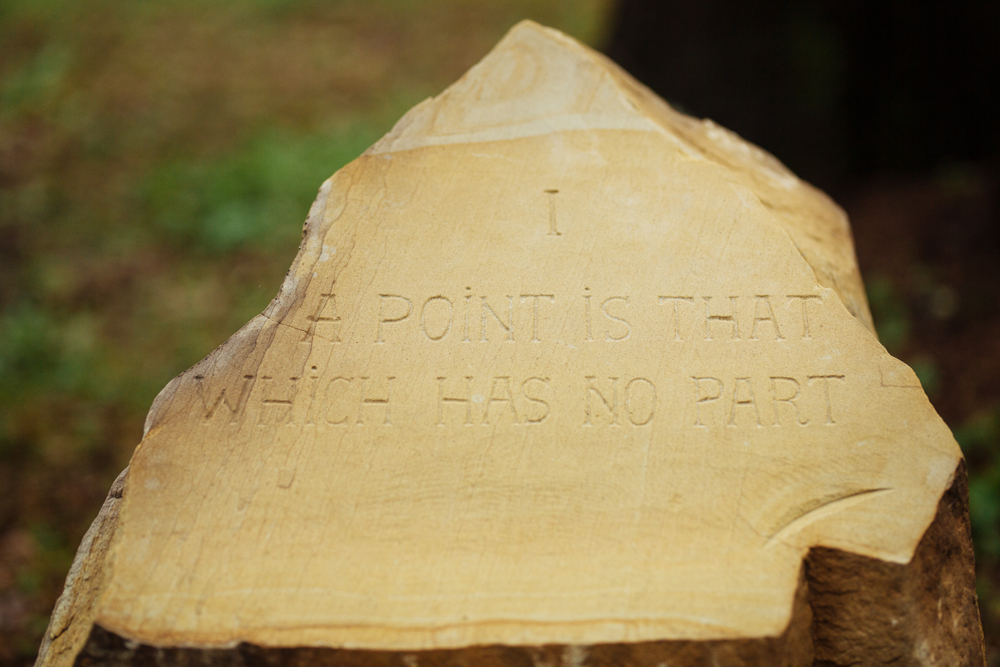
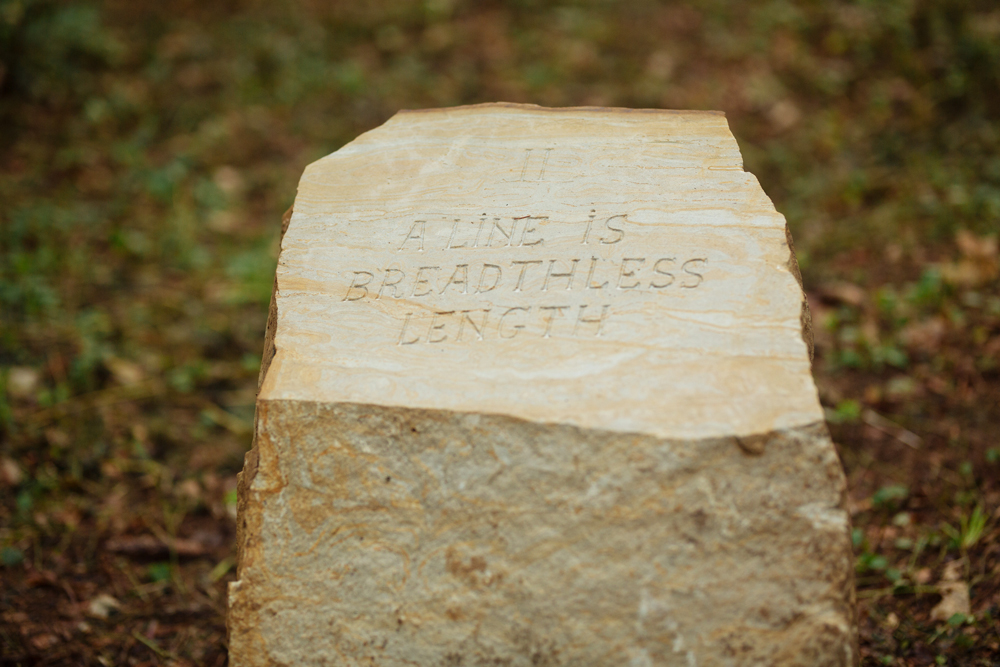
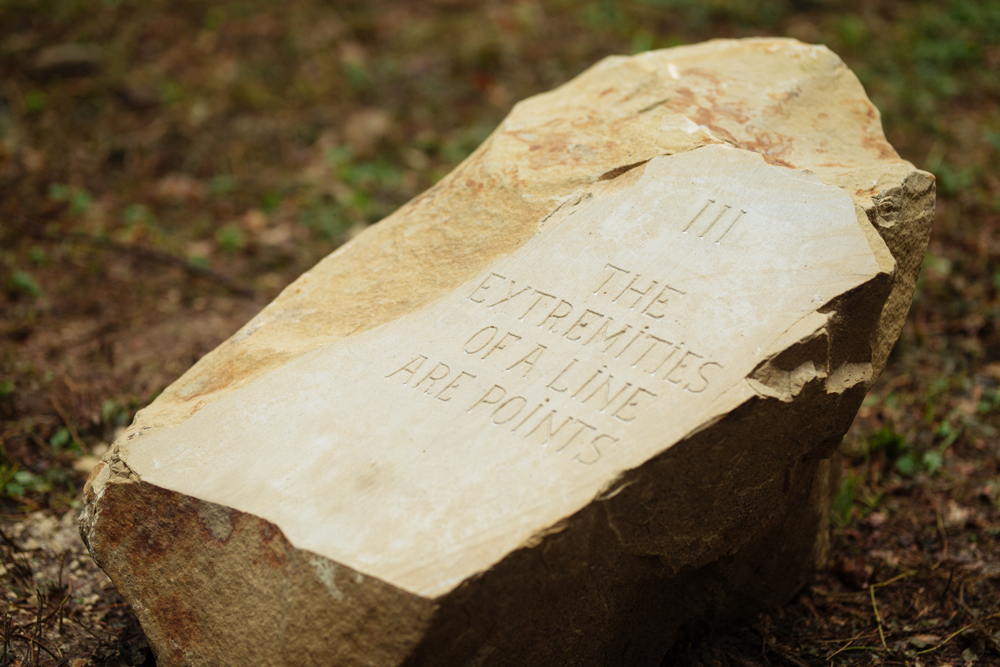
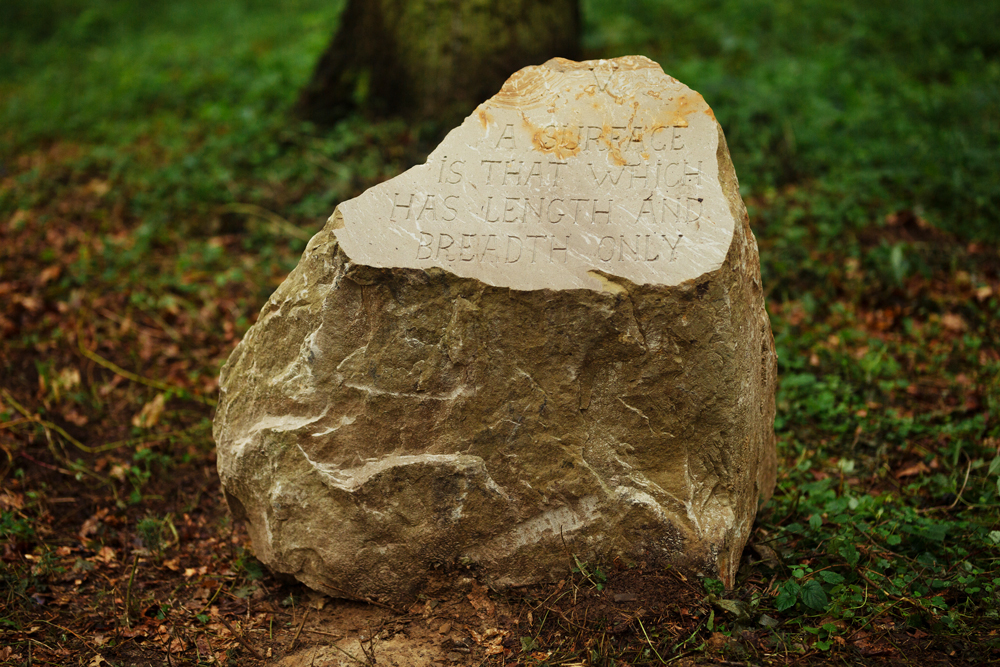
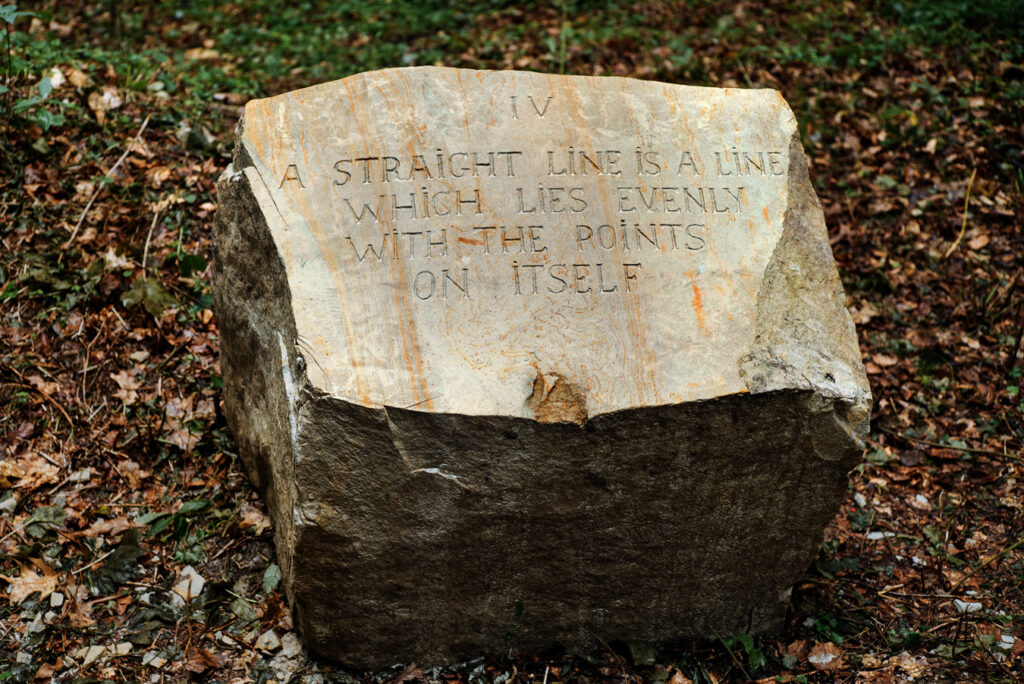
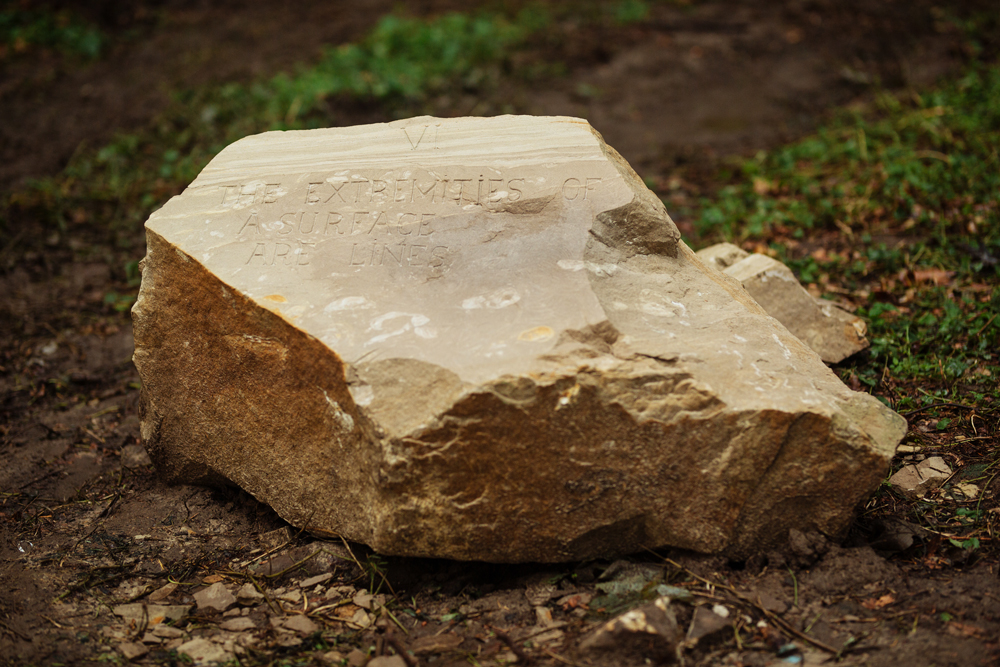
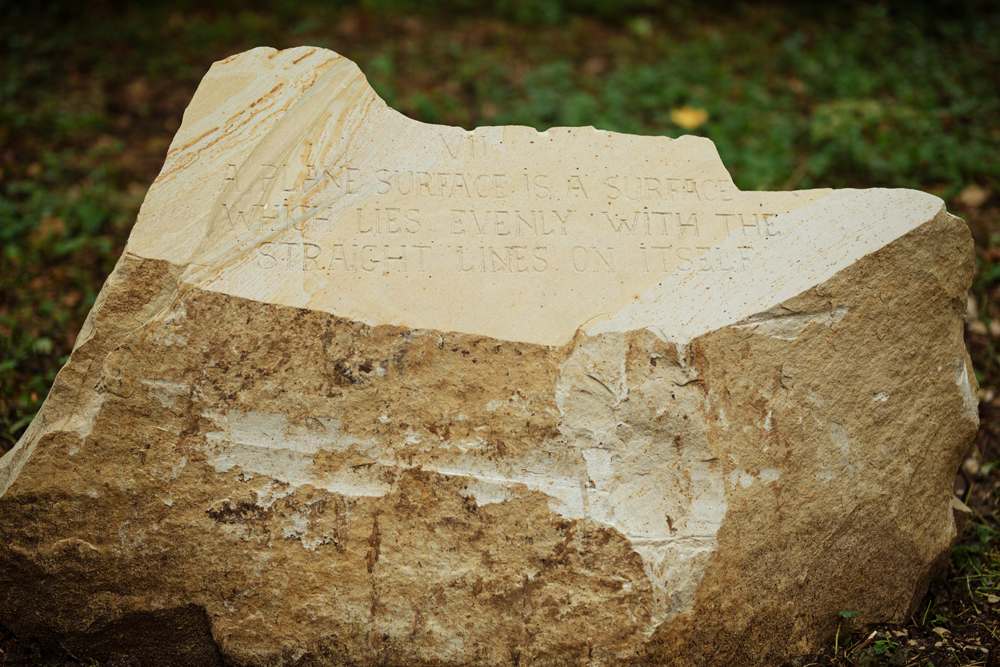
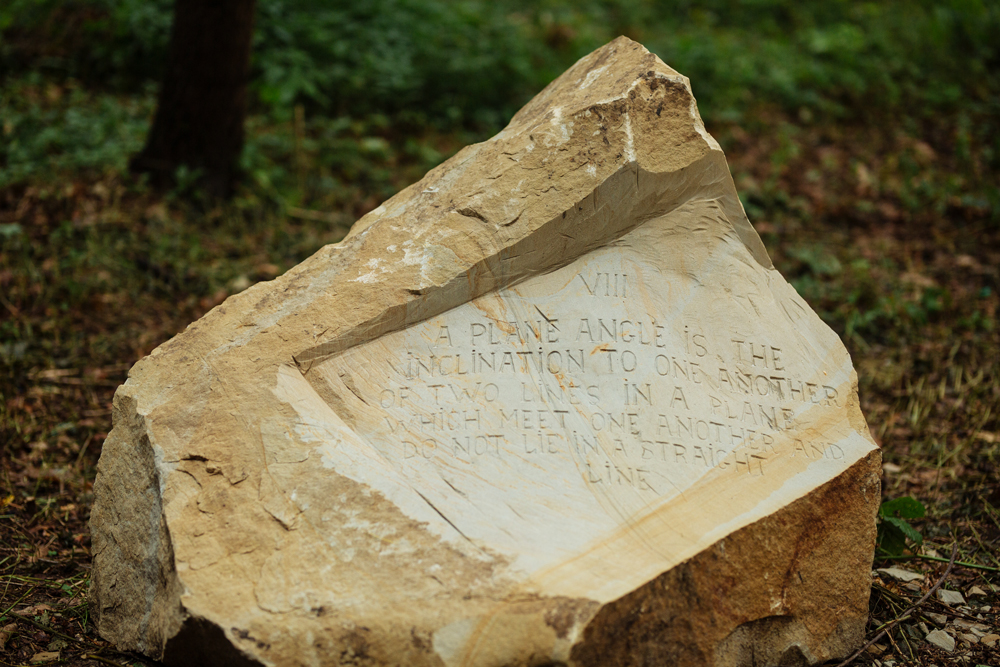
Each block was partially sectioned to create flat surfaces bearing the engraved first definitions from Euclid’s book. Among them appear fundamental concepts of geometry, abstract entities that form the basis of the rational construction of space.
The sculptural operation of the work functions as a visual metaphor for the intellectual gesture of geometry itself.
The stone blocks are originally irregular and raw, the result of geological processes that developed over millions of years. By intervening in these natural masses to create flat faces and geometric inscriptions, the artist brings out the contrast between the complexity of matter and the human impulse to simplify the world through abstract models.
Euclidean geometry arises precisely from this desire to organize reality through clear definitions and rational structures. By engraving these definitions onto the surface of the sandstone, the work turns mathematical concepts into material inscriptions, connecting abstract thought and geological matter.
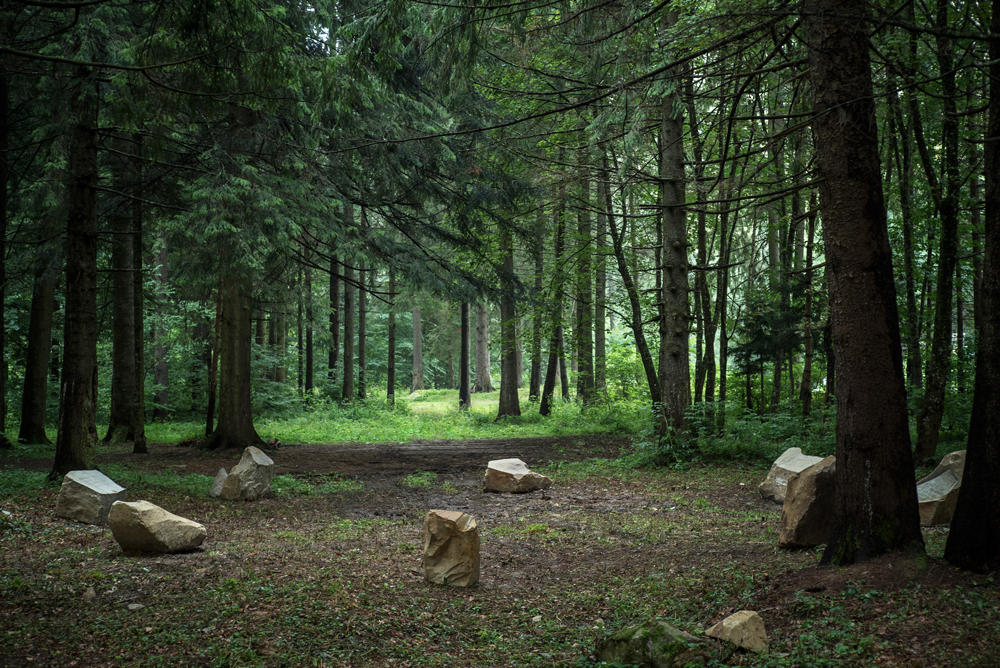
The eight blocks are arranged in a circle, directly evoking the form of ancient megalithic monuments.
Circular structures made of large stones, such as Neolithic circles and megalithic alignments, are among the earliest monumental architectures produced by humanity. These spaces were often associated with the observation of the sky, with rituals, and with symbolic practices related to the cosmos.
By arranging the stones in this circular configuration, Monument to Euclid establishes a dialogue between two fundamental ways of understanding the world: the spiritual dimension present in prehistoric monuments and the rational thought that emerges in Greek mathematics.
In this way, the work brings together two forms of knowledge that often seem opposed: mystery and reason.
Geology, time and knowledge
Another central element of the work is the very materiality of the stone.
Kliwa sandstone is a geological formation found in the eastern Carpathians, formed from quartz-rich sediments deposited in ancient marine environments. Over millions of years, these sediments were compacted and transformed into rock, creating mineral layers that today form part of the region’s landscape.
By using this stone, the work connects different scales of time: the deep time of geology, the historical time of mathematics, and the present time of artistic experience.
The geometric inscriptions, engraved onto the surface of the stone, create an encounter between these distinct temporalities. Mathematics appears as a language capable of crossing centuries, while the sandstone functions as a physical support for the permanence of these ideas.
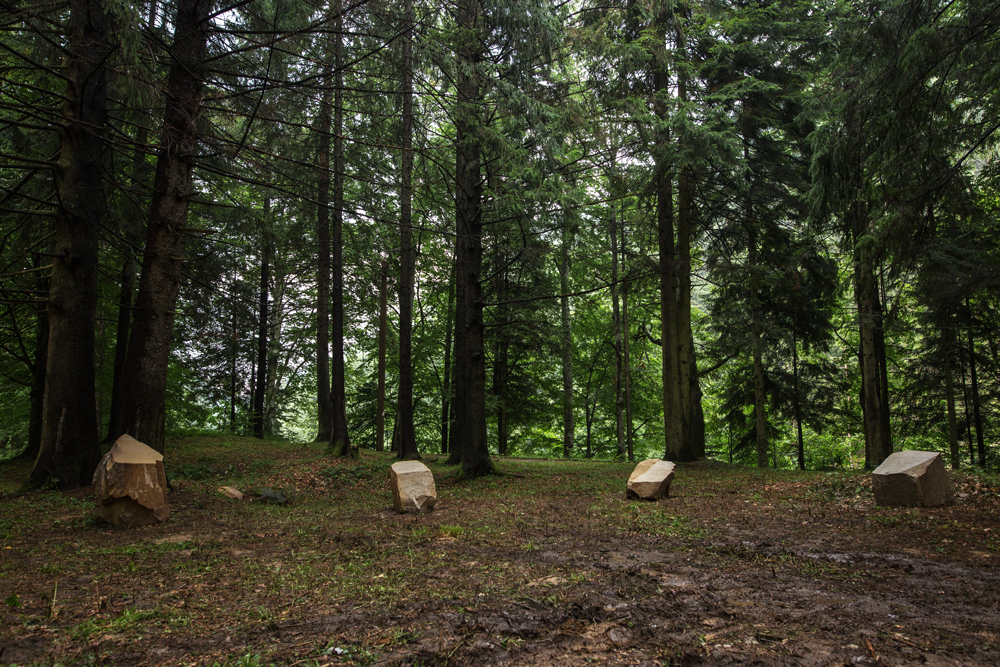
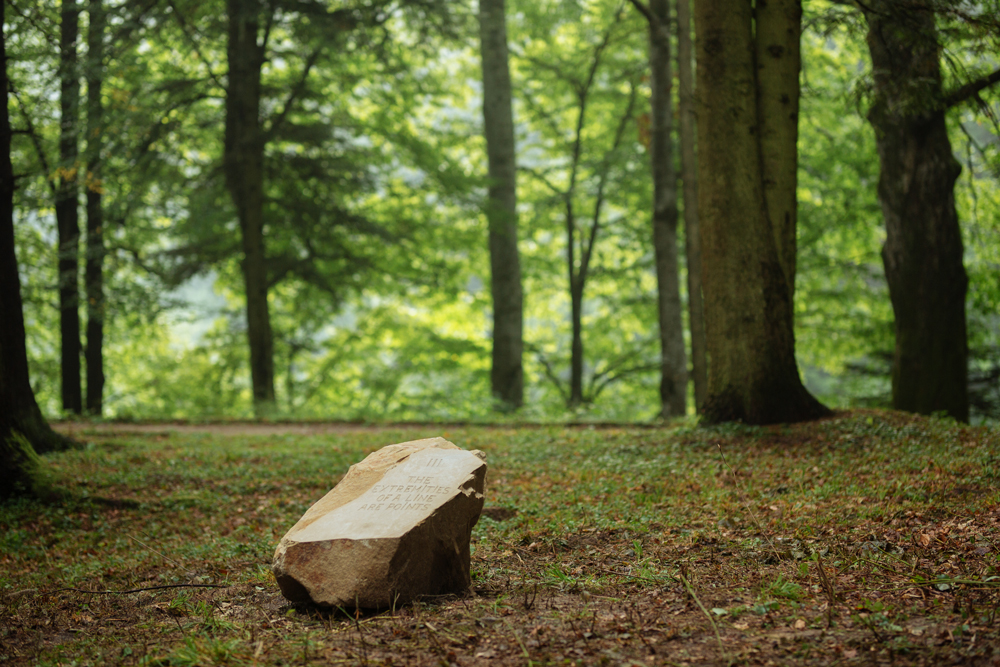
Permanently installed in the town of Slănic-Moldova, the work occupies public space as a monument dedicated not to a political or military figure, but to an idea.
In this sense, Monument to Euclid can be understood as a monument to abstract thought. The work celebrates the human capacity to imagine conceptual systems that organize space, structure knowledge, and profoundly influence how we perceive the world.
Between stone, mathematics and landscape, the work turns geometric definitions into symbolic architecture.