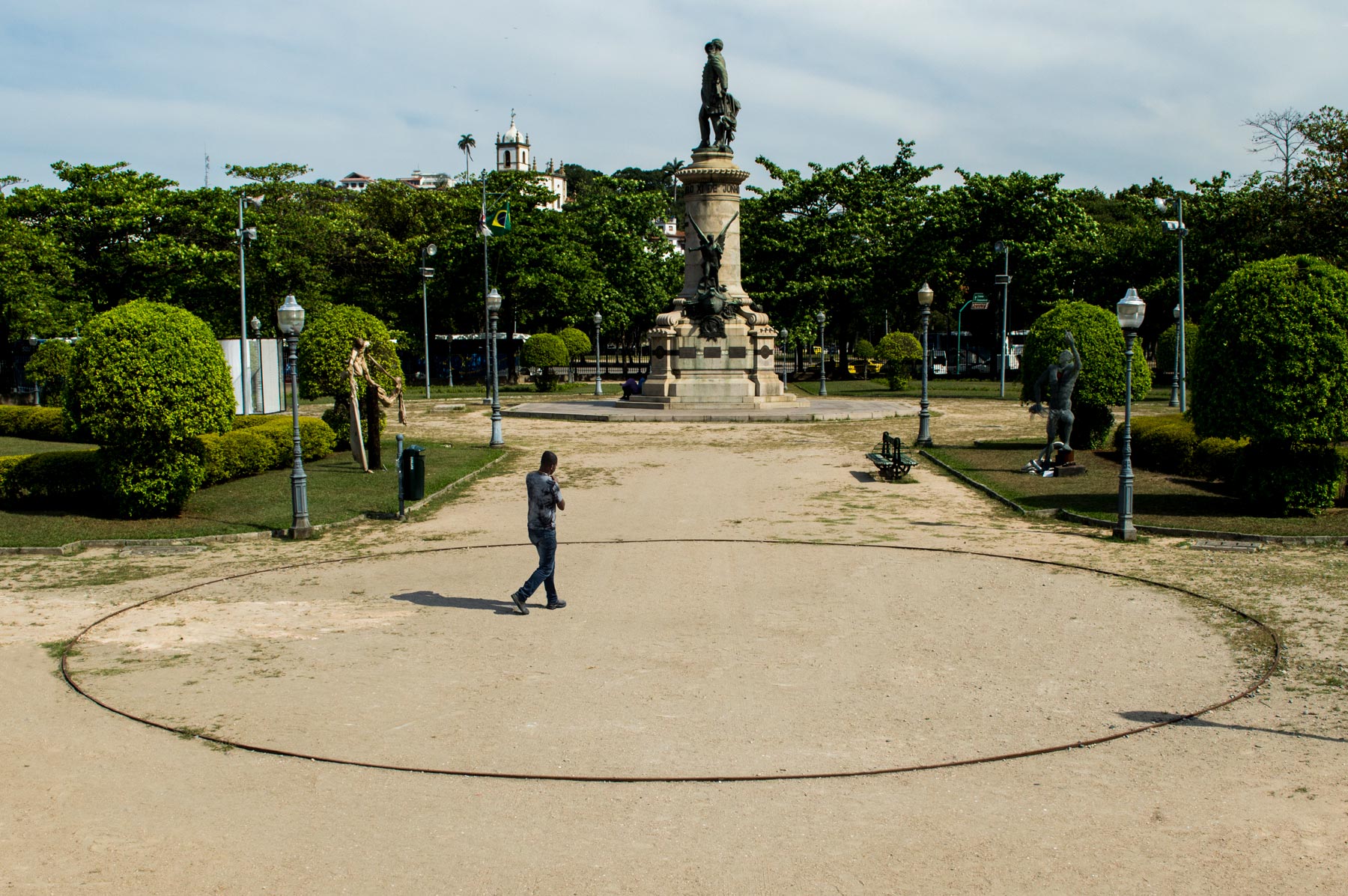
Escala Humana (Human Scale), 2016
Corten steel and brass
1200 × 1200 × 2 cm
Praça Paris, Rio de Janeiro — 2016
The sculpture Escala Humana (Human Scale, 2016), by Felippe Moraes, starts from an exercise in scientific imagination often used to make sense of the planet’s deep history: condensing Earth’s 4.5 billion years into a single 24-hour day. When this scale is applied, the entire trajectory of the human species occupies just 77 seconds, appearing at approximately 23:58:43 of this hypothetical day.
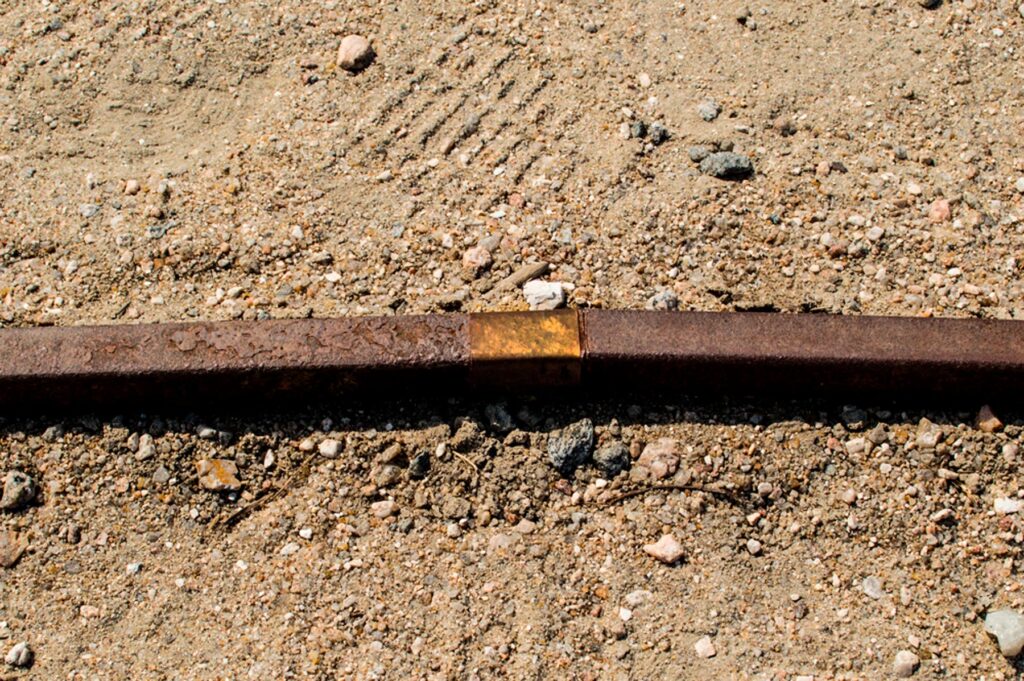
The work materializes this proportion in a large circle 12 meters in diameter, built in steel and placed directly on the ground. Within this continuous structure, the interval corresponding to human time appears as a small polished brass marker measuring just 3.4 centimeters — a golden point almost imperceptible against the total dimension of the circle.
This difference in scale visually translates the contrast between the vastness of geological time and the brevity of human presence in the planet’s history.
The metal circle functions as a diagram expanded into space, converting an abstract reasoning about geological time into a physical experience. Walking around the circle, the observer confronts the almost incomprehensible extent of Earth’s history and directly perceives the disproportion between that duration and the brief interval corresponding to humanity.
The use of the circle reinforces the idea of continuity and cycle, a form often associated with the representation of time. In this case, however, the design represents not merely a symbol, but a proportional measure of the planet’s duration.
The sculpture thus transforms a scientific model of temporal understanding into a material presence that can be experienced in space.
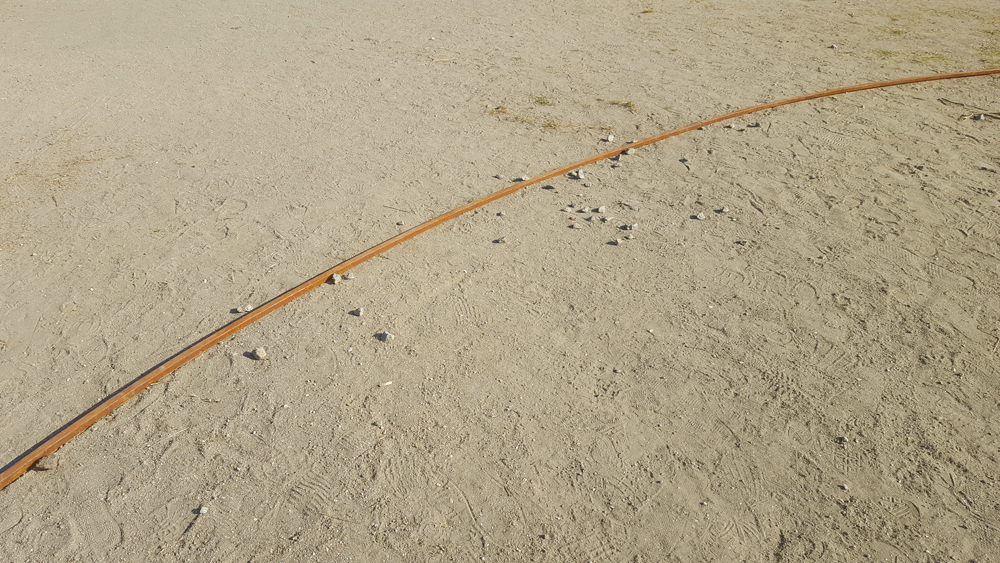
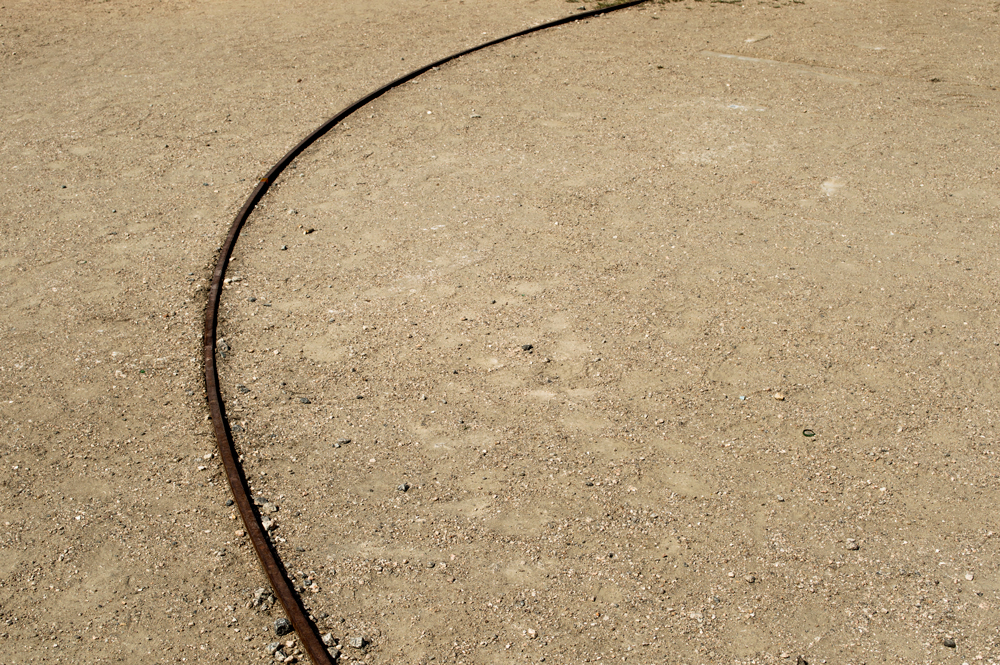
Despite its 12-meter diameter, the work maintains a discreet presence in the environment. The minimal thickness of the steel structure makes the circle seem almost to disappear when viewed from a distance, creating a paradox between monumentality and invisibility.
Within this continuous line, the small brass point takes on unexpected visual importance. Its golden gleam interrupts the uniformity of the steel and precisely marks the tiny interval corresponding to human presence.
The sculpture thus establishes a tension between grandeur and brevity: a monumental circle that contains, within just a few centimeters, the entire history of humanity.