Felippe Moraes
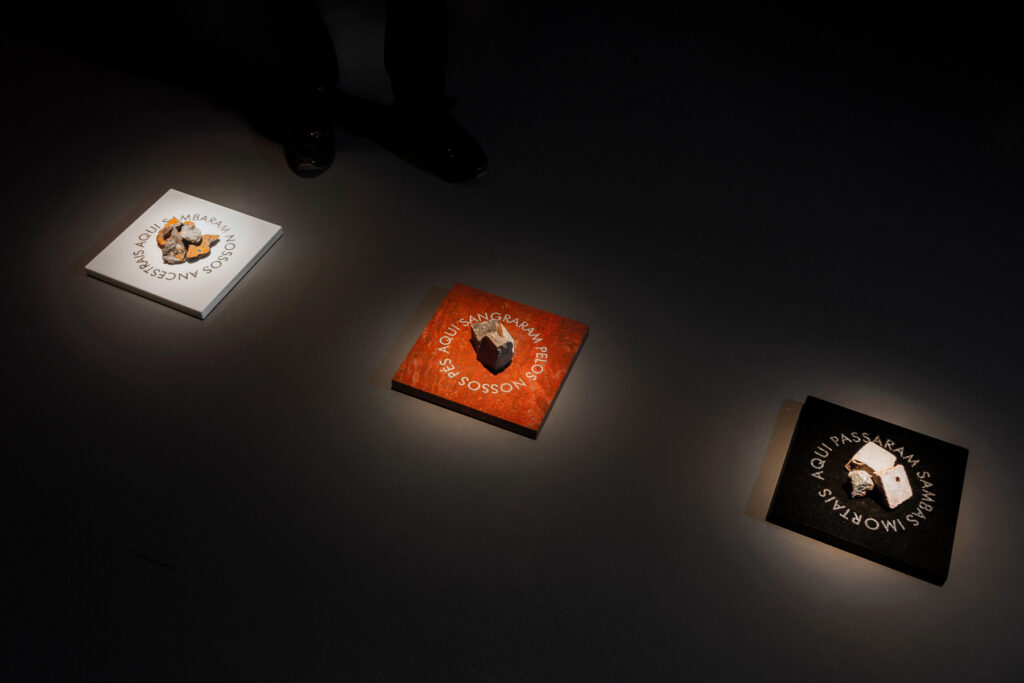
Aqui Passaram (Here They Passed), 2025
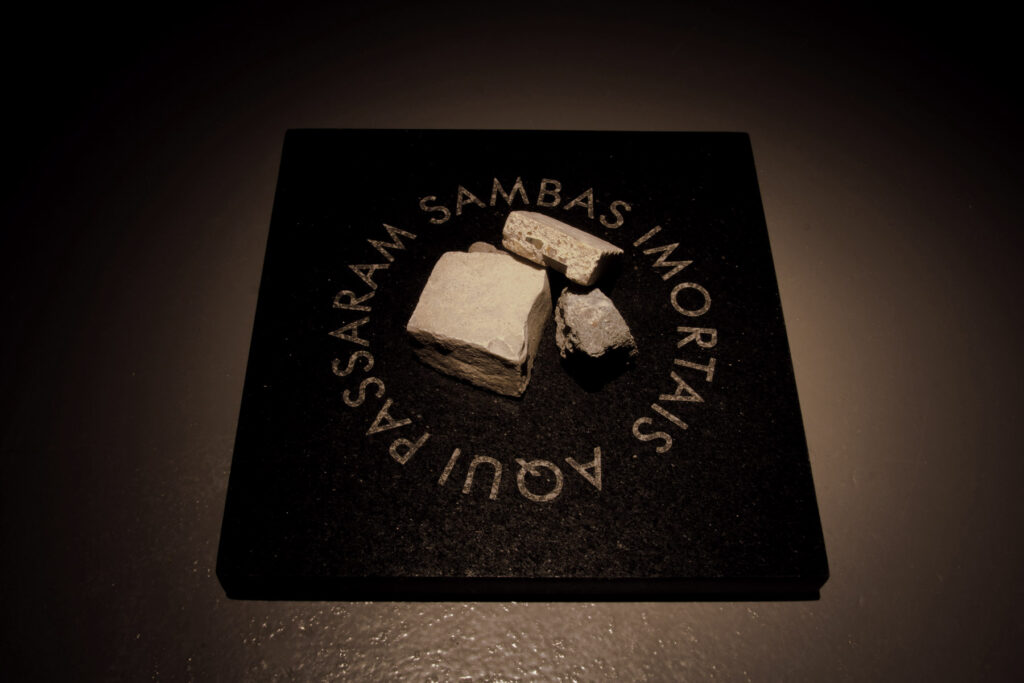
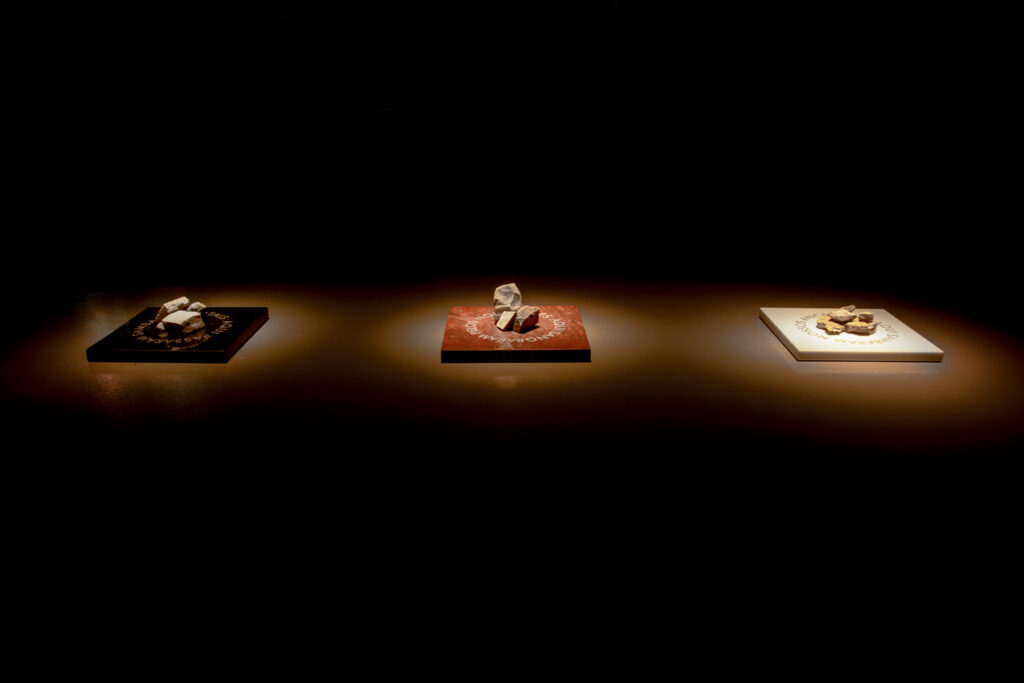
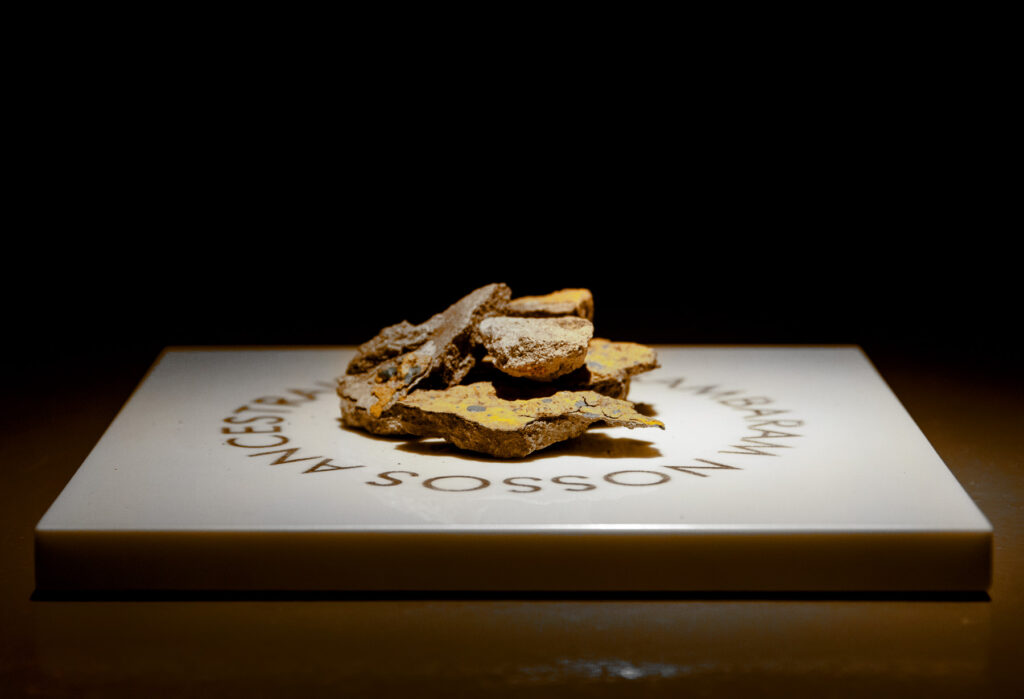
Laser engraving on stone, fragments from Av. Marquês de Sapucaí, Av. Rio Branco and Av. Presidente Vargas
Variable dimensions
Aqui Passaram (Here They Passed, 2025), by Felippe Moraes, investigates the relationships between urban memory, popular culture and political history in Brazil. The work consists of stones laser-engraved with excerpts from the song Vai Passar (1984), by Chico Buarque, arranged in a circular formation around fragments of pavement removed from major avenues in Rio de Janeiro: Av. Marquês de Sapucaí, Av. Rio Branco and Av. Presidente Vargas. These sites played fundamental roles in the history of samba school parades in Rio de Janeiro throughout the 20th century.
Each stone bears one of the lines “here immortal sambas passed,” “here our feet bled” and “here our ancestors sambaed.” Written in the final years of the Brazilian military dictatorship, the song became a symbol of the collective desire for political and social transformation. In its poetic narrative, Carnival appears as a metaphor for historical renewal, evoking a moment in which popular celebration becomes an allegory of liberation.
The work transforms words originally sung into permanent inscriptions on mineral matter, creating a relationship between the fluidity of music and the permanence of stone.
The song Vai Passar, composed by Chico Buarque in 1984, became one of the most emblematic works of Brazilian music for addressing the country’s process of redemocratization. In its lyrics, Carnival emerges as a symbolic image of the passage of historical time, suggesting that moments of oppression are also transient.
By incorporating fragments of this song into his work, Felippe Moraes connects contemporary art and political memory. The verses engraved on the stones function as traces of a specific historical moment in Brazil, but also as broader evocations of Carnival’s capacity to translate social tensions and collective hopes.