Felippe Moraes
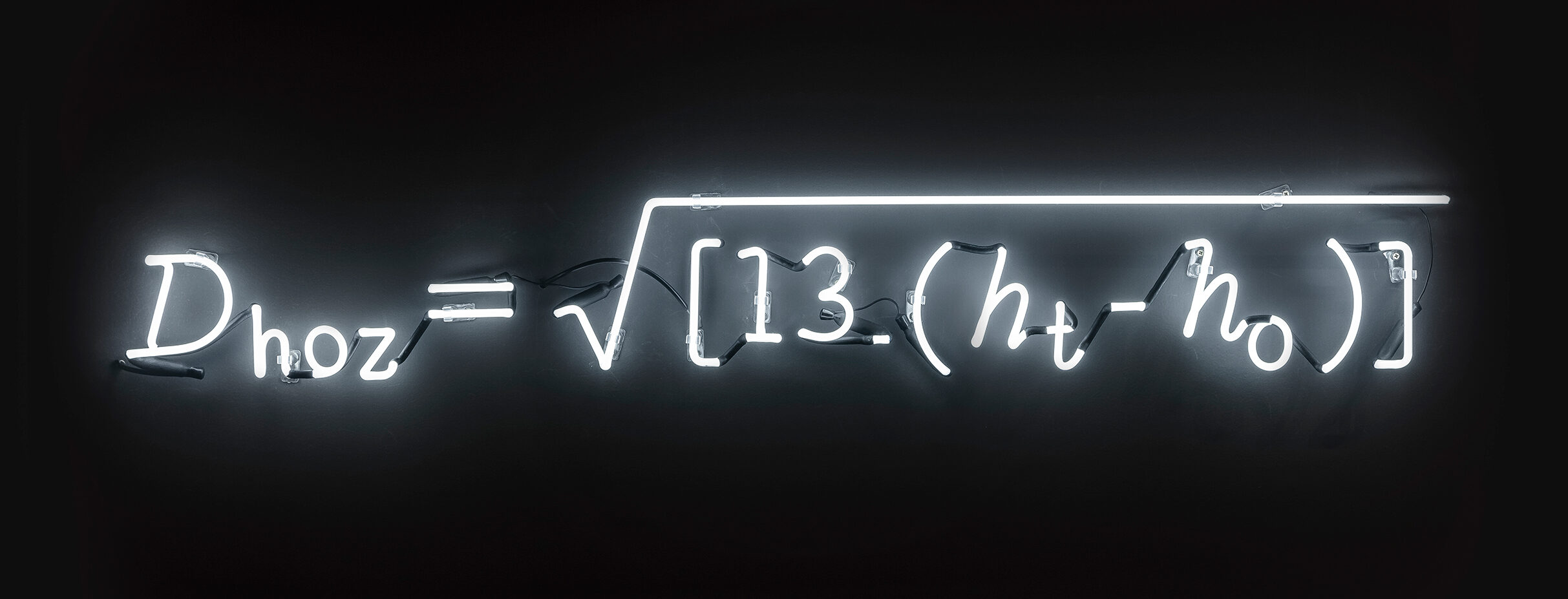
A Distância do Horizonte (The Distance to the Horizon), 2011 –
Mathematical formula (multiple formats)
Variable dimensions
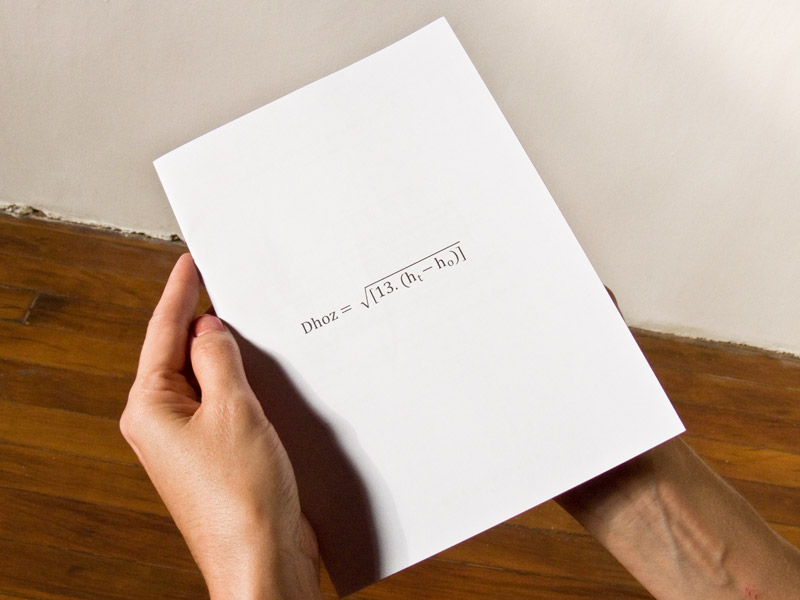
A Distância do Horizonte (2011) is a conceptual work by Felippe Moraes that proposes a bridge between mathematics and bodily experience. The work starts from a simple formula capable of calculating the distance between an individual and the horizon line. The result is given in kilometers and is derived from the observer’s own physical data.
The work displaces a geometric equation from the technical field into the field of art. Using measurements taken from their own body, the viewer can discover the exact distance separating them from the horizon they see. The figure obtained is mathematically correct, yet remains essentially intangible. No matter how far someone walks toward the horizon, it will always remain at the same distance.
This practical impossibility turns a scientific calculation into a poetic experience. The work reveals a fundamental limit of human perception: the horizon is simultaneously measurable and unreachable.
Structure of the work
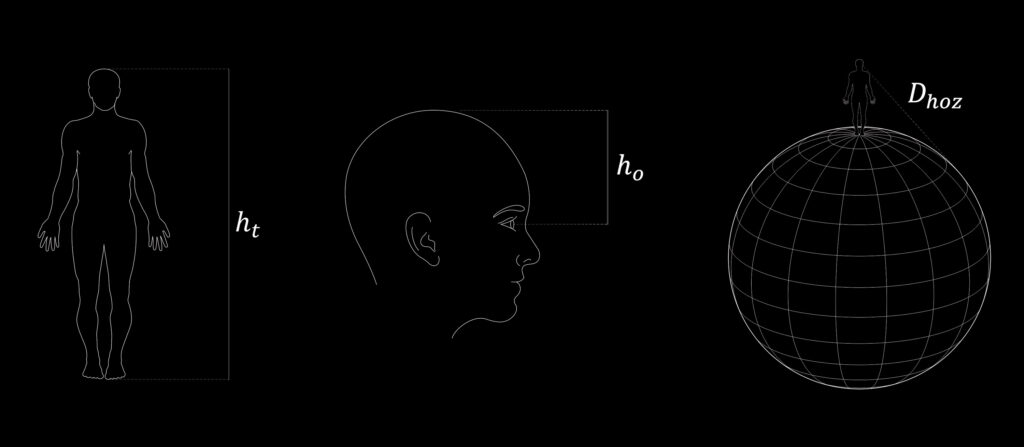
The basis of the work is a mathematical formula used to estimate the distance to the visible horizon based on the observer’s height relative to ground level. Felippe Moraes adapts this principle into an artistic device that turns the calculation into a personal experience.
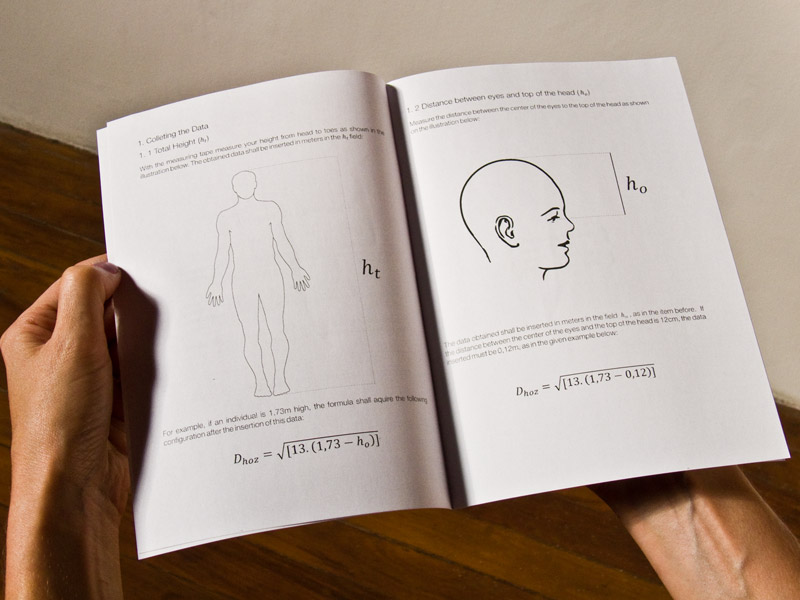
To use the system proposed in the work, two simple measurements of the participant’s body are needed. The first is the individual’s total height, measured from the feet to the top of the head. The second is the distance between the center of the eyes and the top of the head. These values are entered into the equation presented in the work.
From this data, one obtains the approximate distance to the visible horizon for that specific person.
The work then takes the form of a manual, a diagram, or a system of instructions that allows any individual to carry out their own calculation. The result obtained is not merely an abstract number. It corresponds to a real distance in terrestrial space, even though it is impossible to reach it directly.
Horizon Calculator
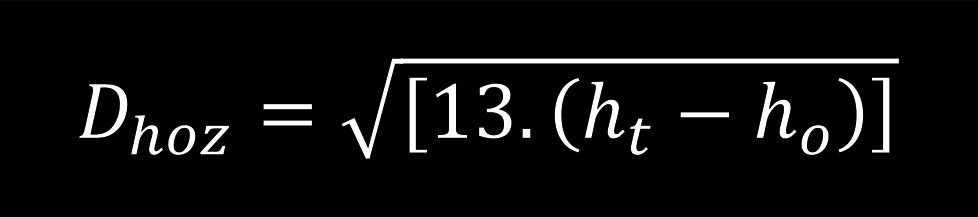
Enter your total height (Ht) and eye height (Ho) to the top of your head below to find the distance to the horizon.
(If you are above sea level, add the location’s altitude to your total height (Ht))
Multiple Formats
The work A Distância do Horizonte manifests across different formats that expand its investigation into measurement and perception. It exists as a booklet-format manual, as a silkscreen print presenting the mathematical diagram, and also as a case containing the measuring instruments used to calculate the distance to the horizon.
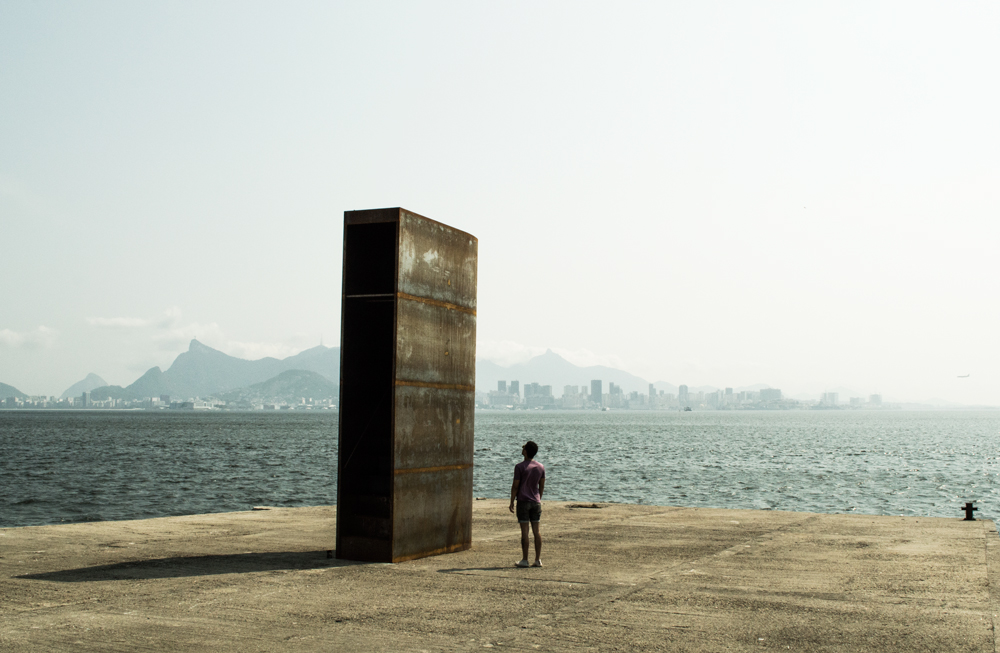
This conceptual system finds its spatial expression in the sculpture Monumento ao Horizonte (2016), installed on Caminho Niemeyer, in Niterói. Built in corten steel, the structure functions as an observatory: the visitor climbs internal stairs and positions themselves before a slit in the metal that frames the horizon to the west, turning the abstract calculation into a direct experience of the landscape.
Selected Exhibitions
- 2026 - ArPa - Verve Galeria + Galeria Athena - Estádio do Pacaembu (São Paulo, Brazil)
- 2023 - A Distância do Horizonte - MUSEU (Coimbra, Portugal)
- 2018 - Imensurável - CAIXA Cultural Fortaleza (Ceará, Brazil)
- 2015 - Arte Atual Festival / Coisas Sem Nome (Curated by Paulo Myiada et al) - Instituto Tomie Ohtake (São Paulo, Brazil)
- 2013 - Hipotética - Largo das Artes (Rio de Janeiro, Brazil)
- 2011 - Boite Invaliden - Invaliden1 Gallerie (Berlin, Germany)
- 2011 - Orizzonti Dell'uomo - Centro Adamastor (Guarulhos, Brazil)