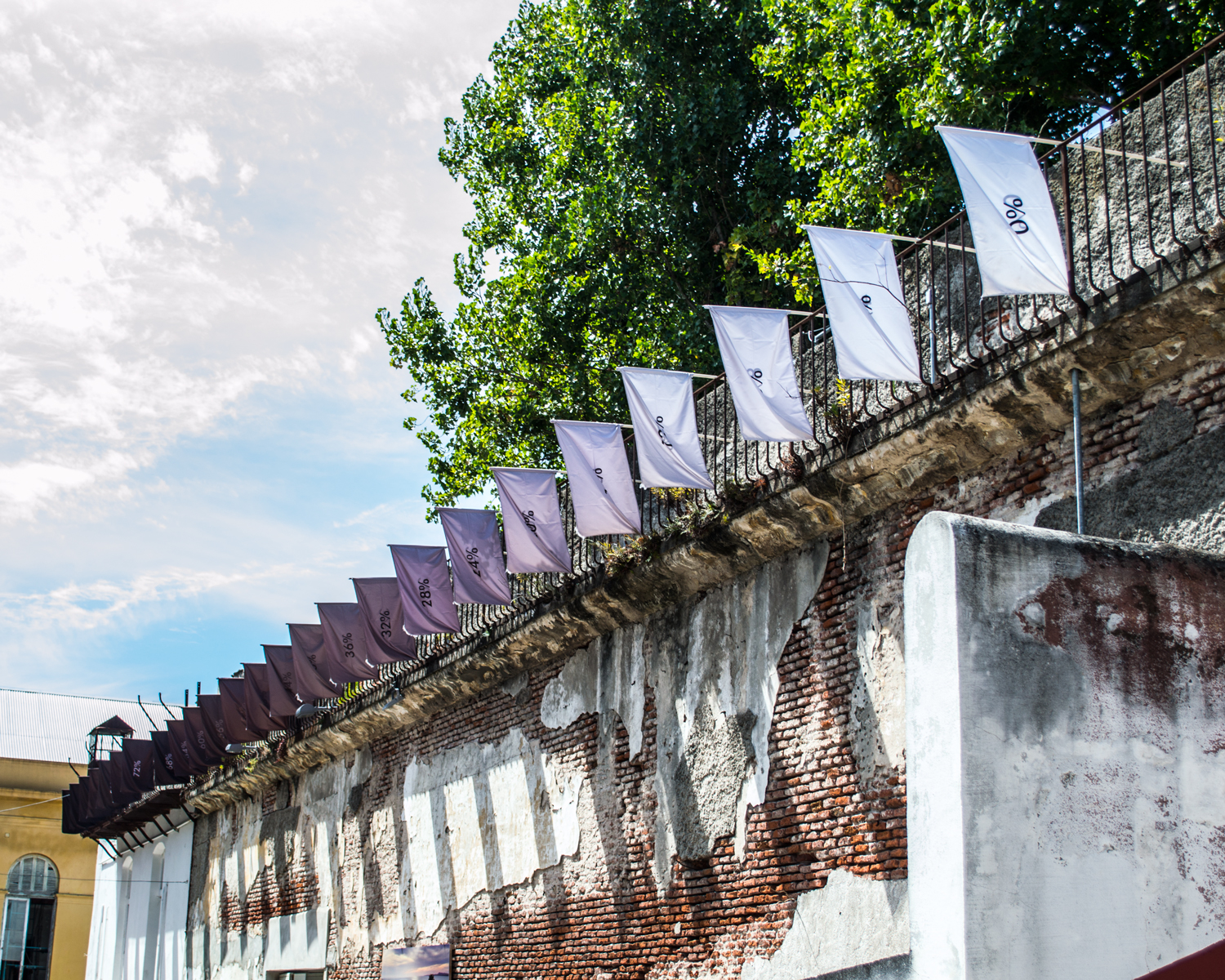
Proporción (Proportion), 2018
Solo exhibition
Espacio de Arte Contemporáneo (EAC)
Curated by Fernando Sicco
Montevideo – Uruguay
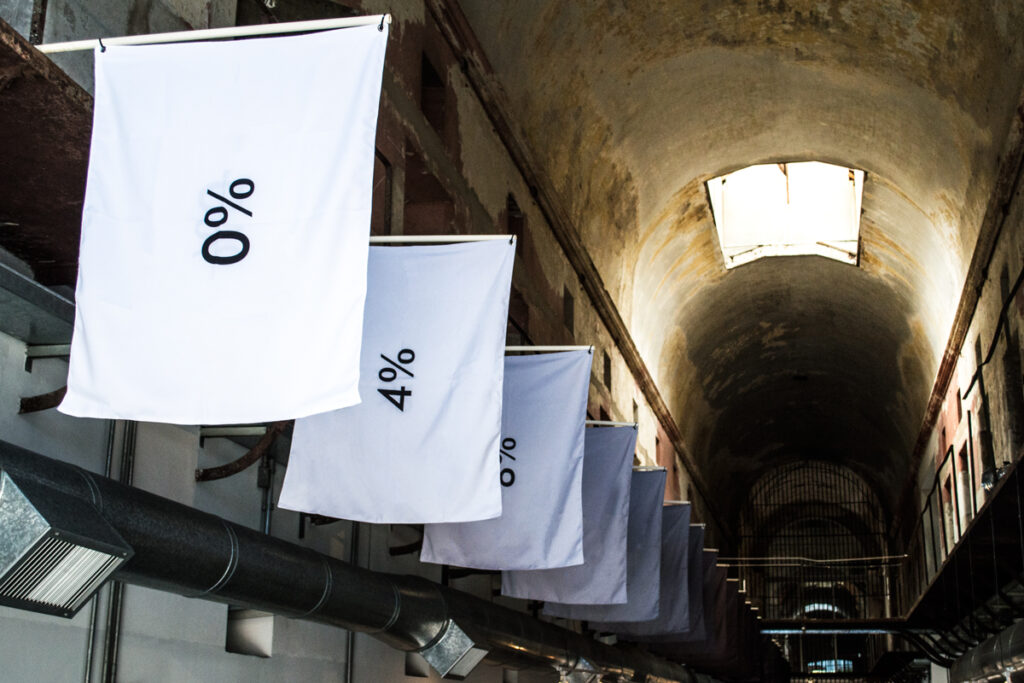
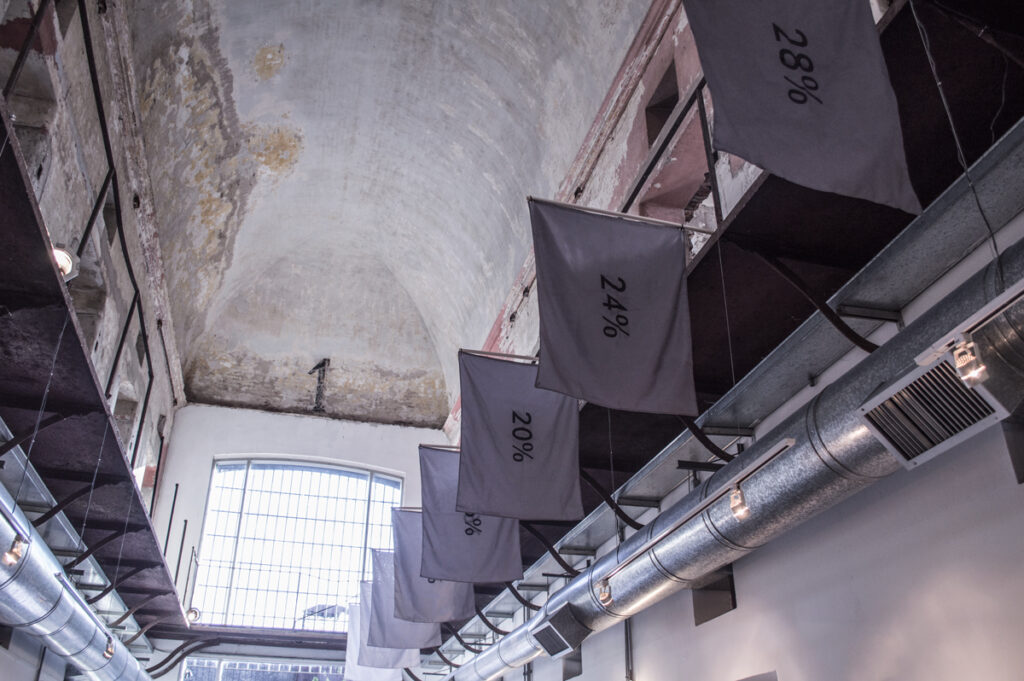
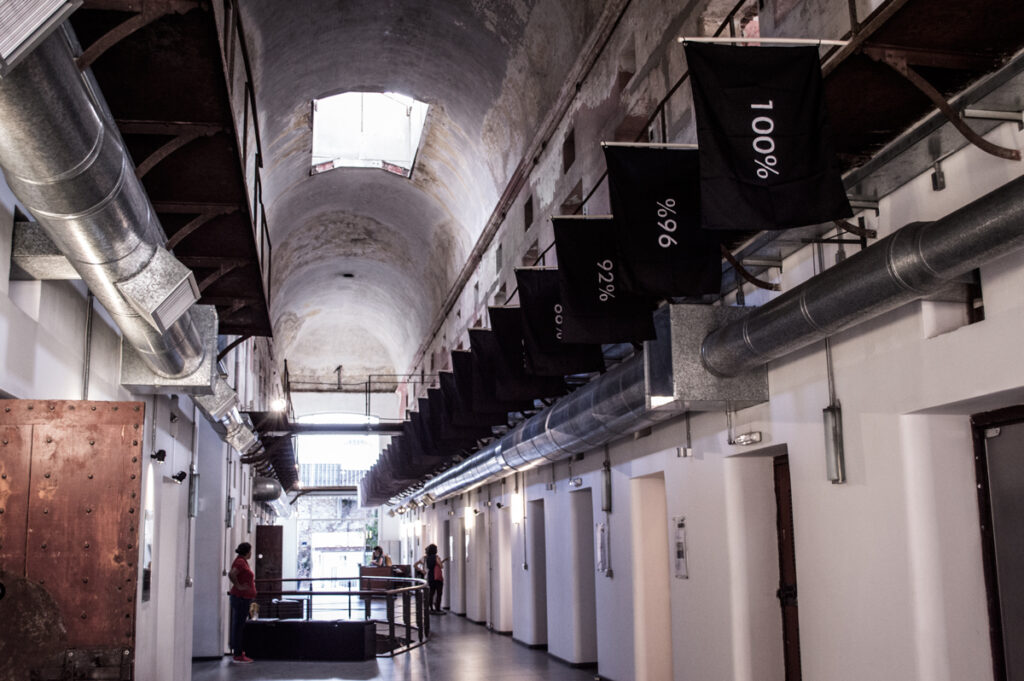
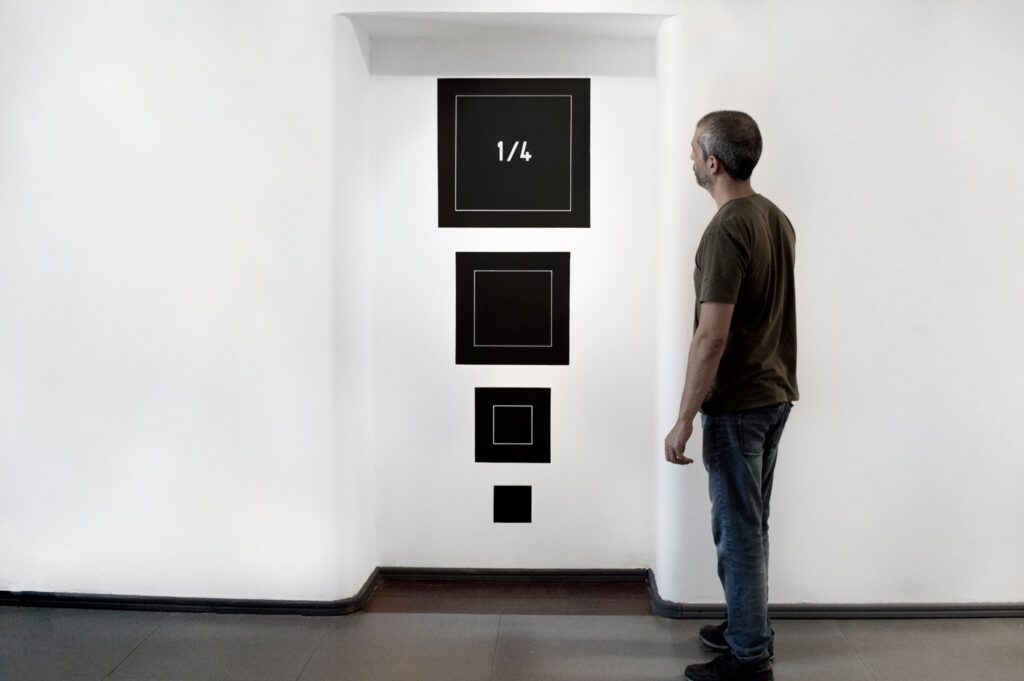
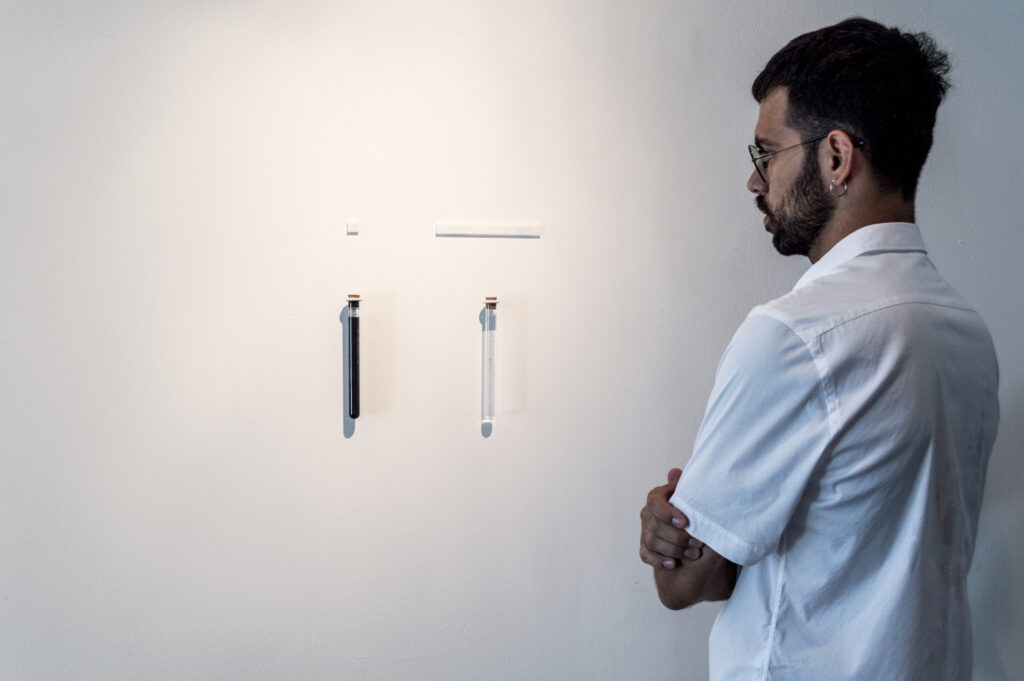
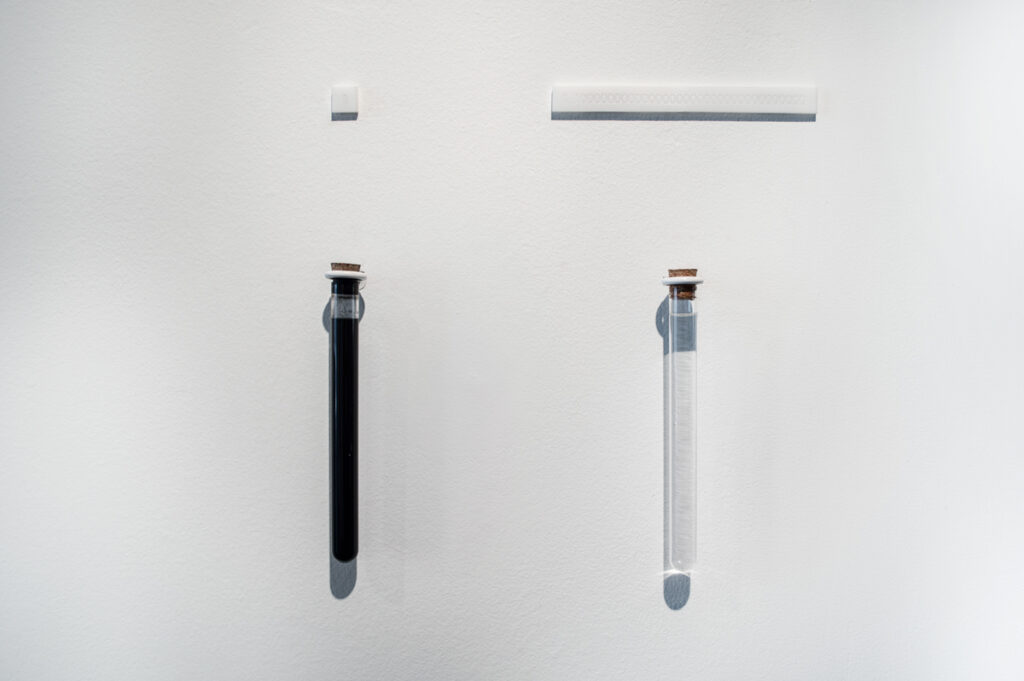
The exhibition Proporción, by Felippe Moraes, presents a body of work investigating the ways we measure and organize the world. Through conceptual procedures and elementary mathematical propositions, the show reveals that what we understand as precision and order is also shaped by arbitrary decisions that mold our perception of reality.
With a reduced, direct language, the works operate as essential visual structures that put pressure on the relationship between the tangible and the intangible. By eliminating formal excess, the exhibition proposes an open field of reading, in which each work presents itself as a device for thought, capable of being activated by different subjects in different contexts.
Set within a moment of social and political instability, Proporción shifts the idea of measure beyond the technical field. The exhibition suggests that measuring is also a critical gesture, capable of revealing the limitations of the systems we use to understand the world and pointing toward new ways of perceiving, organizing, and imagining the real.
Curatorial Text
Proporción – Fernando Sicco
The multiple exhibition PROPORCIÓN, by Felippe Moraes, began with the selection of a project for the exterior of the building at the EAC’s 7th Open Call — a flag intervention that at the time was called Progressão and had been presented at MAC Niterói, in Brazil. Later, Moraes, who had already taken part in the exhibition A escala humana at the EAC in 2015, was invited to present other works of his along the same lines inside the EAC, giving rise to the group of works distributed along the central hall this season.
Proporción, as a title, does more justice to the level of abstraction the artist seeks in his works, while distancing itself from the idea of direction oriented toward an endpoint, inevitably associated with the notion of progress. What interests him, symbolically, are the gradients and measurement systems of processes both tangible and intangible, which, despite their arbitrariness, largely determine how we relate to one another and to the world we live in.
This tension between the mathematical universes of geometry and arithmetic, the variable of time, and social and political becoming forms the axis from which Moraes’ works seek to generate meaning.
F. Sicco / EAC
Artist’s Statement
Proporción – Felippe Moraes
The body of the show Proporción is made up of visual exercises on conceptual procedures related to the measurement and quantification of the world of phenomena, both tangible and intangible. These processes, while commonplace and inherent to the establishment of what we understand as civilization, are also arbitrary and decisive in shaping how we apprehend the world and the relationships established within it. We are thus led to reflect on how the ways we measure and observe alter the reading and perception of the world around us.
The choice of elementary materials, finishes, and processes is itself a proposal to reduce noise, bringing the work closer to an absolute distillation — an impulse to arrive at the strictly essential in order to convey the intended mental articulations, which, in their almost atomic and fundamental nature, could hypothetically relate to any subject at any time, taking on readings, propositions, and proportions inherent and relative to the moment of reading.
As is the nature of any event, the show takes place at its given instant as a result of what preceded it and in the latency of what is to come. At a historical moment of social upheaval, of demands and uprisings by minorities in confrontation with the opposition and repression of dominant sectors, the very act of measuring becomes even more political. The viability of the units of measure and tools of social observation we have developed throughout history is thus called into question in the face of the unprecedented and disruptive nature of contemporary events. Not only is the subject called into question, but so is the vocabulary that conveys it.
With a graphic language and simple methods, the works start from elementary mathematical propositions and place themselves in the world to be appropriated by it and read amid the confusion of the perpetual present, as well as in the utopian overcoming of that reality in a future that is always in the latency of becoming. They are nothing more than visual schemas and small logical processes, calling out for ordinary vectors to violently fill their gaps, appropriating them in order to articulate the theoretical, social, and political thoughts, upheavals, and trances of the now and of what is to come.
Felippe Moraes