Construção (Construction), 2011
Solo exhibition
Curatorial text by Fernanda Lopes
Paço das Artes
São Paulo
Curatorial Texts
Held at Paço das Artes in 2011, the exhibition Construção (2011) marks Felippe Moraes’ first institutional solo show. With a curatorial text by Fernanda Lopes, the project presents a body of work investigating the human condition as an ongoing process, taking construction as its central metaphor.
The exhibition weaves together prosaic materials, architectural structures, and symbolic systems to propose a reading of the world that oscillates between the rational and the sensory. Numbers, tools, surfaces, and everyday gestures are reorganized to reveal tensions between logic and mystery.
Inspired by the song Construção (1971) by Chico Buarque, the exhibition suggests that small variations in the order of elements produce radical shifts in meaning. Repetition, inversion, and reorganization become strategies for accessing invisible layers of reality.
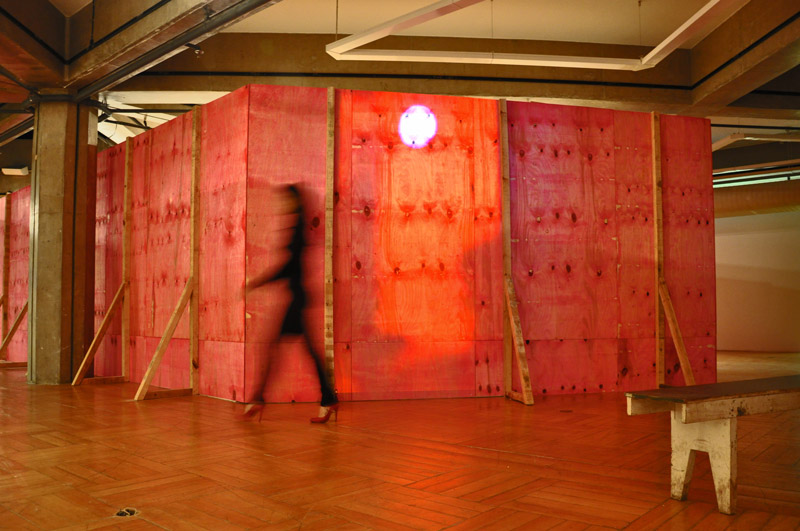
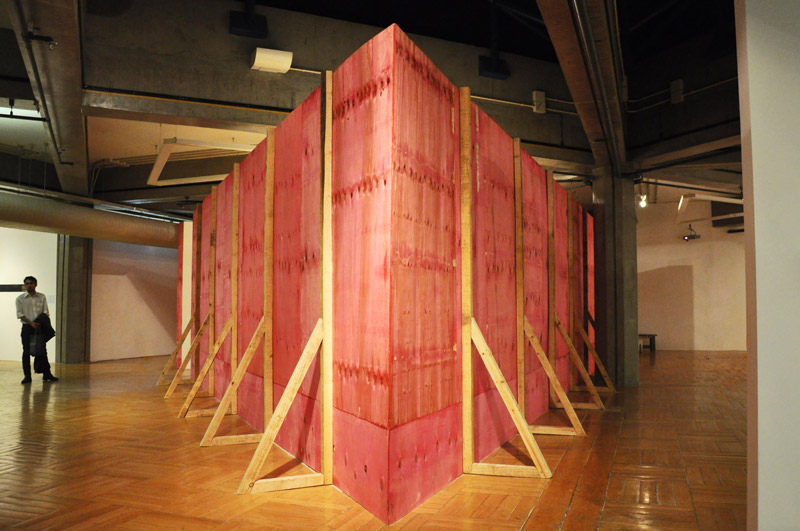
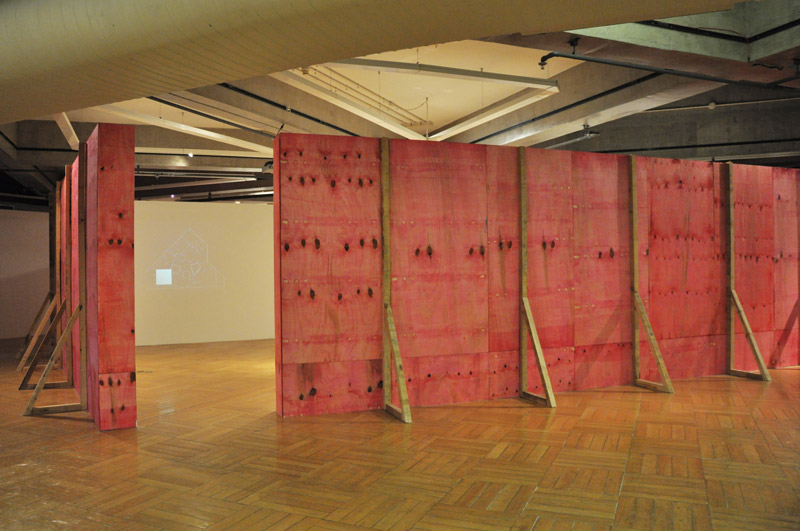
The exhibition builds itself as an environment that alternates between a raw exterior and a refined interior. On the outside, magenta hoarding walls point directly to the world of civil construction.
Red videos from the series Encarnado (2010–11) are projected onto this surface, presenting simple actions that evoke effort, repetition, and intention.
Crossing this threshold, the visitor enters a silent, clear space. In this environment, the constructive dimension ceases to be literal and comes to operate as symbolic language.
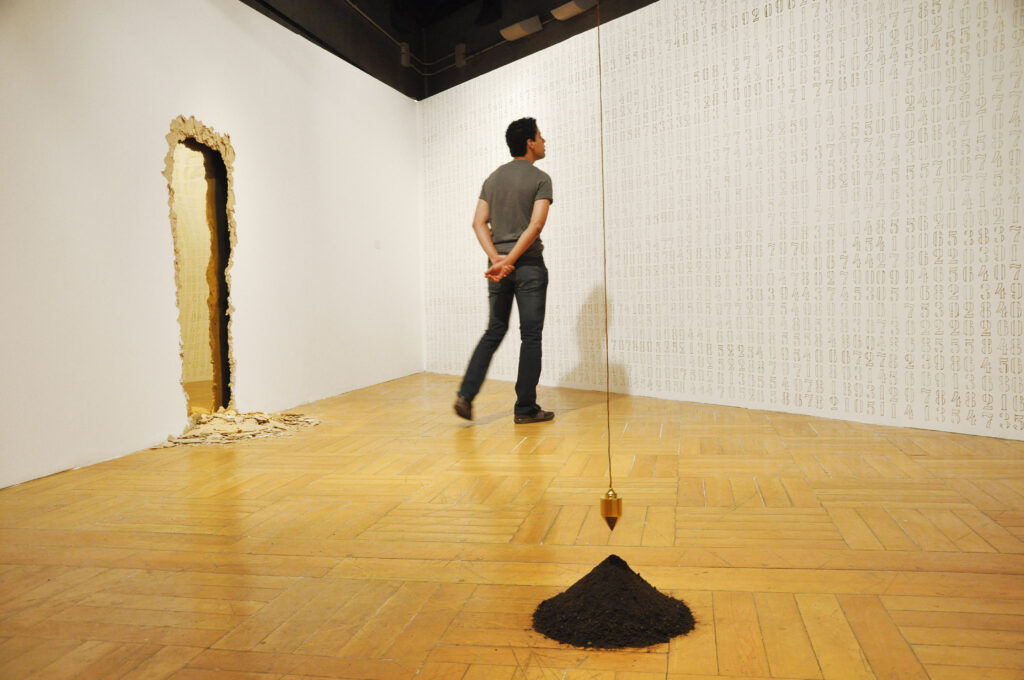
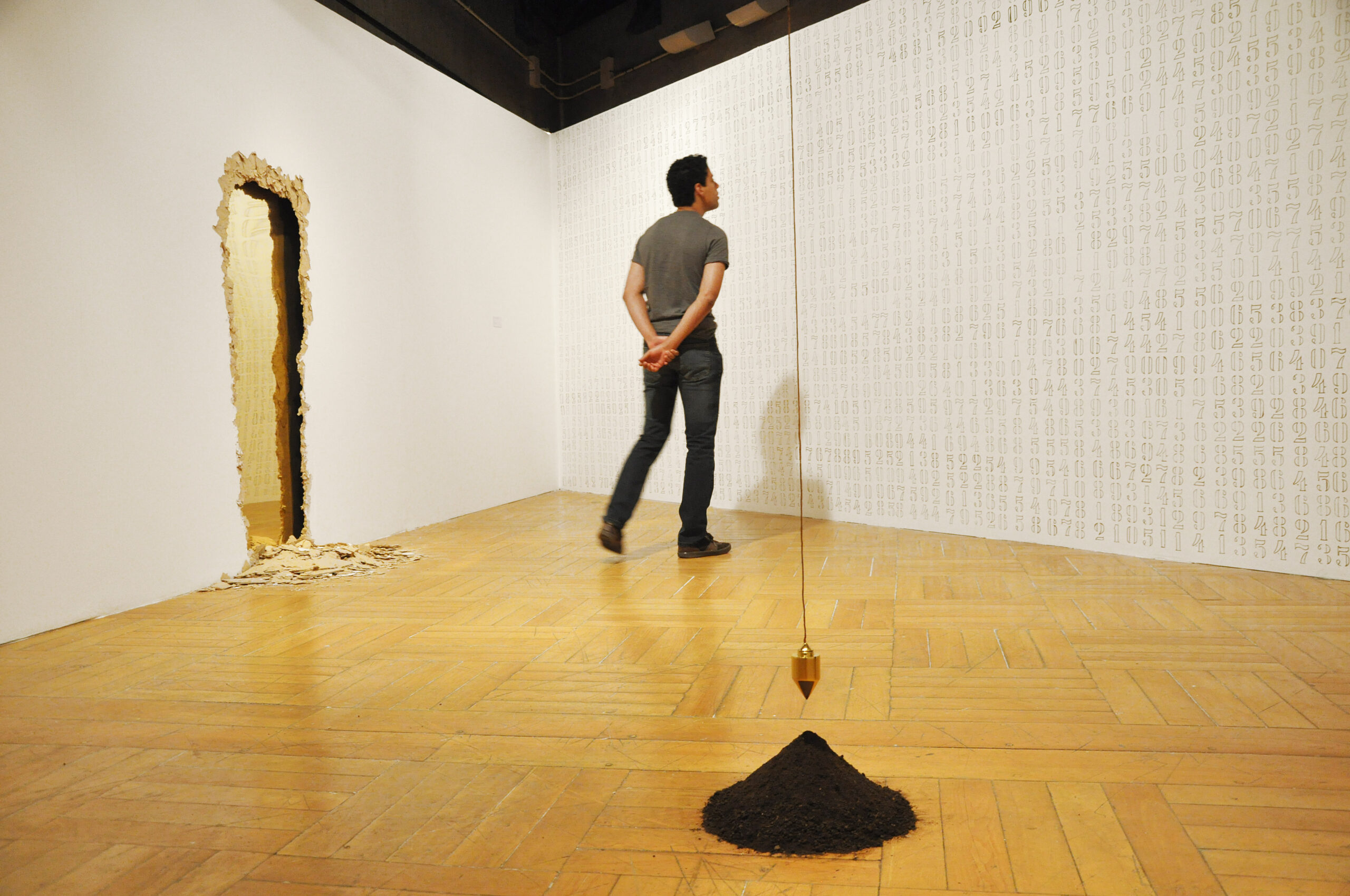
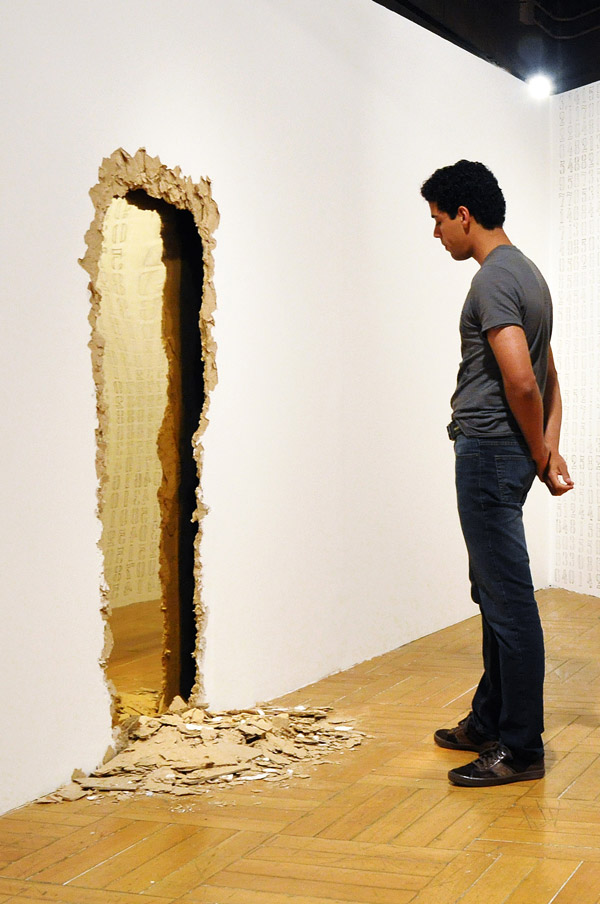
The installation Entranha (2011) reveals a gold surface hidden inside the wall. The gesture of rupture exposes a hidden dimension of the space, proposing the existence of invisible layers within the built environment.
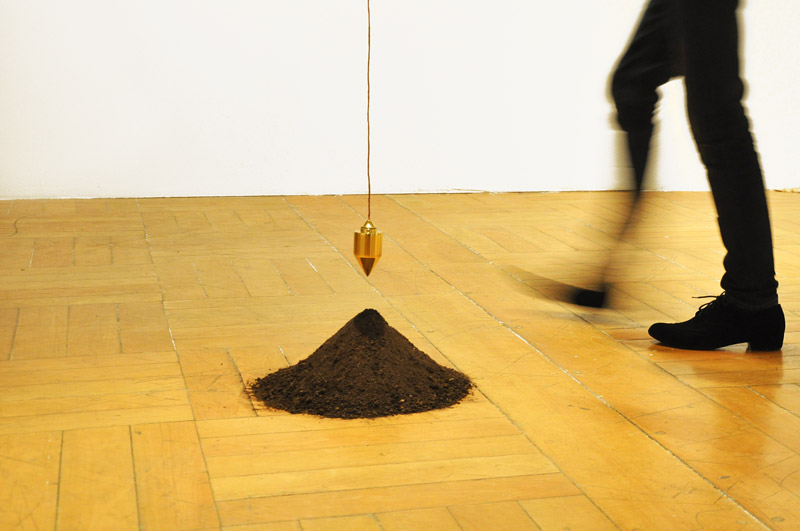
A Gênese (2009–11) presents a suspended plumb line that approaches a mound of earth without touching it. The work articulates balance, gravity, and origin, establishing a tension between technical precision and symbolic dimension.
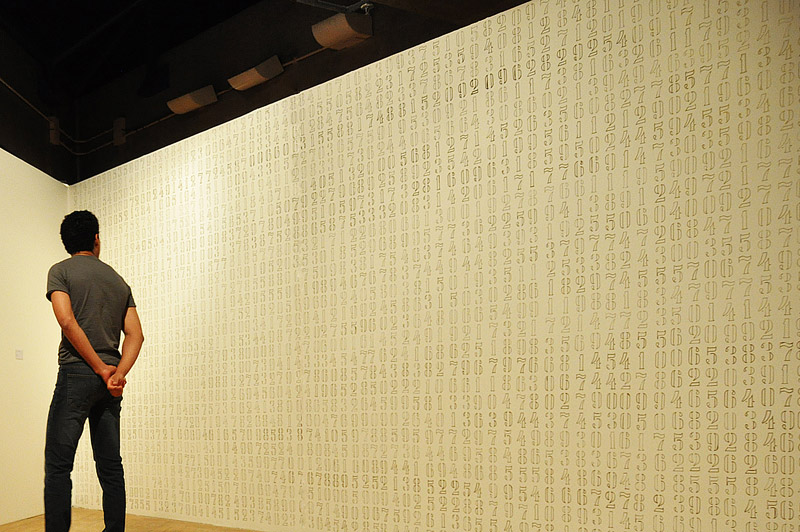
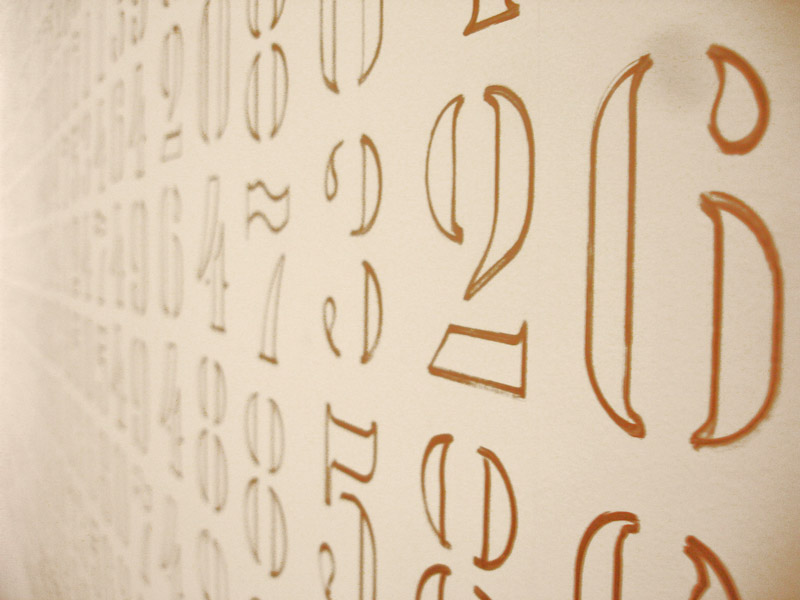
The installative drawing π (2011) presents thousands of decimal places of the mathematical constant, handwritten on the wall. The repetitive gesture approaches a meditative practice and suggests an attempt to grasp infinity through numerical language.
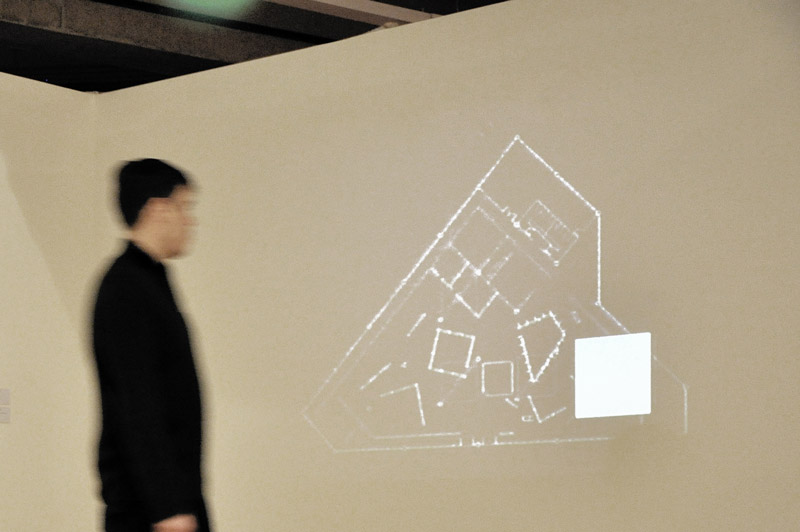
Quatro Paredes Mágicas (2011) projects a moving square of light onto the floor plan of the exhibition space drawn on the wall. The work suggests the presence of an invisible architecture that shifts slowly, revealing a space that can never be fully grasped.
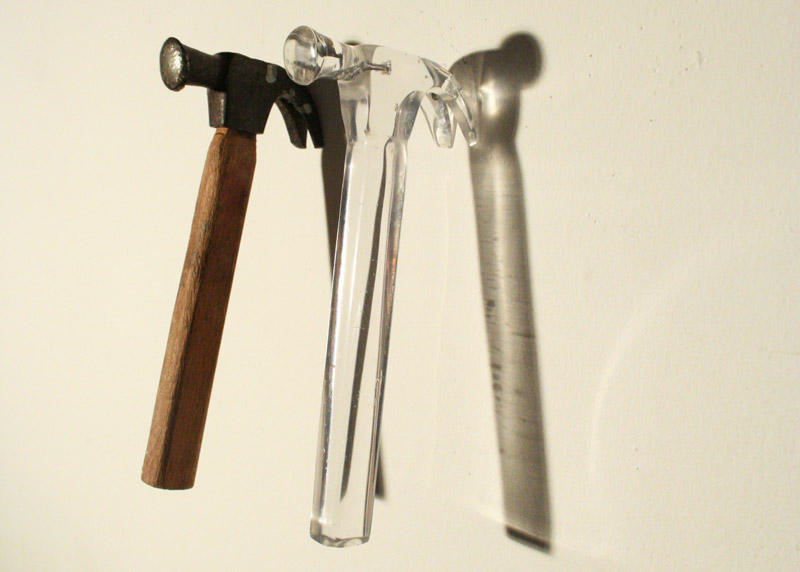
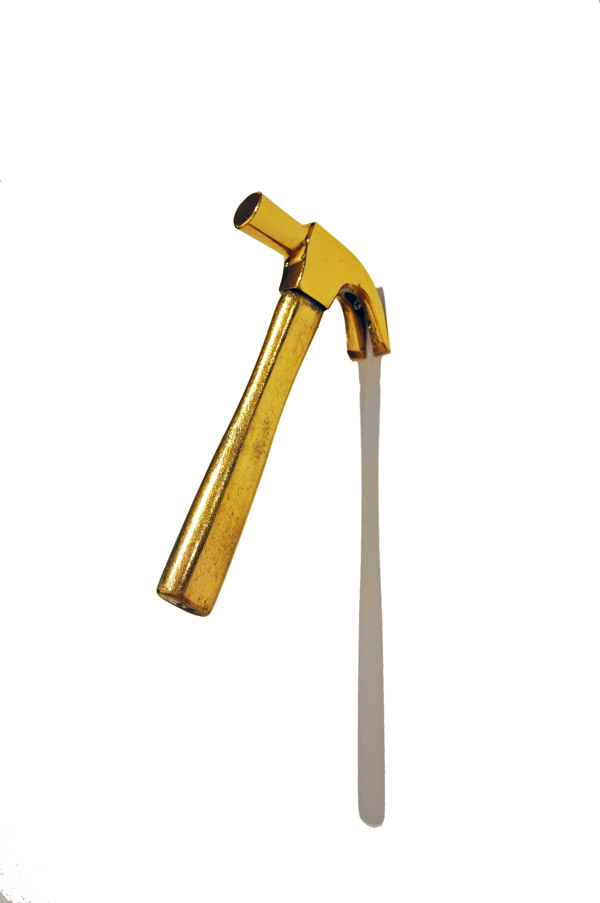
Ungido (2011) and Projeto e Execução (2010) use tools such as hammers to reflect on transformation, value, and action. The objects move between practical function and symbolic dimension, questioning the limits between idea and realization.