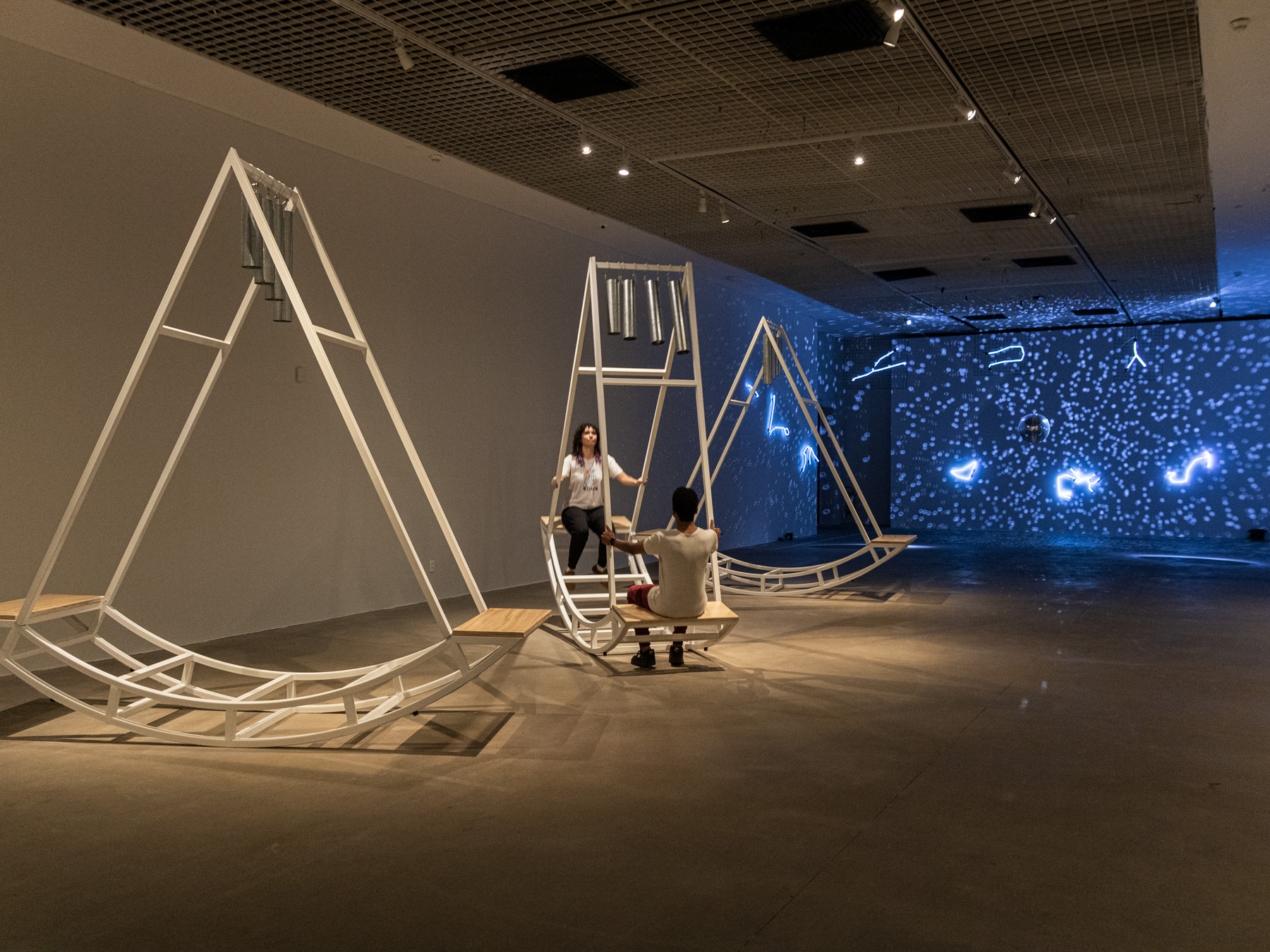
Solfejo (Solfège), 2024
Solo exhibition
CAIXA Cultural Brasília
Curatorial text by Victor Gorgulho
Distrito Federal – Brazil
April 10 – May 26, 2024
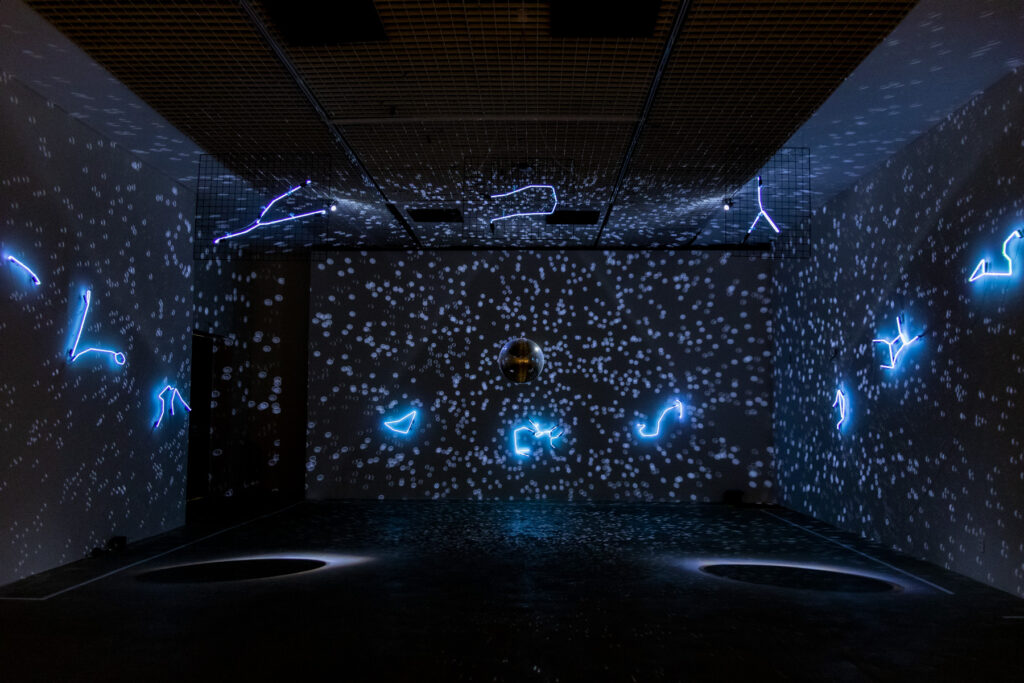
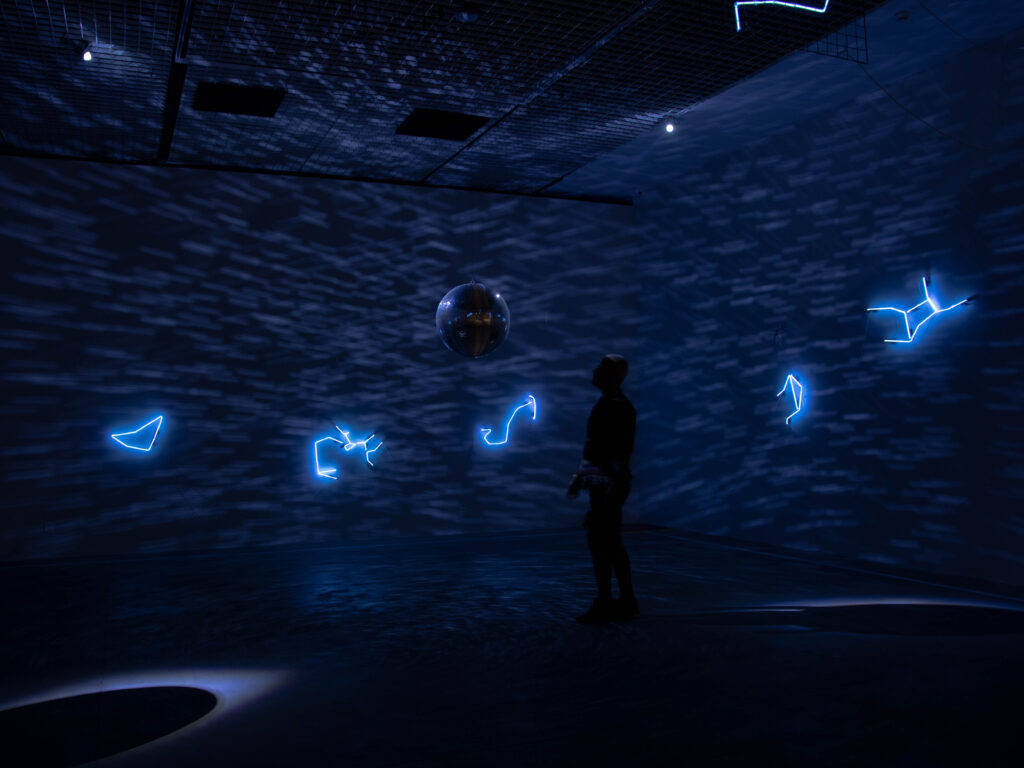
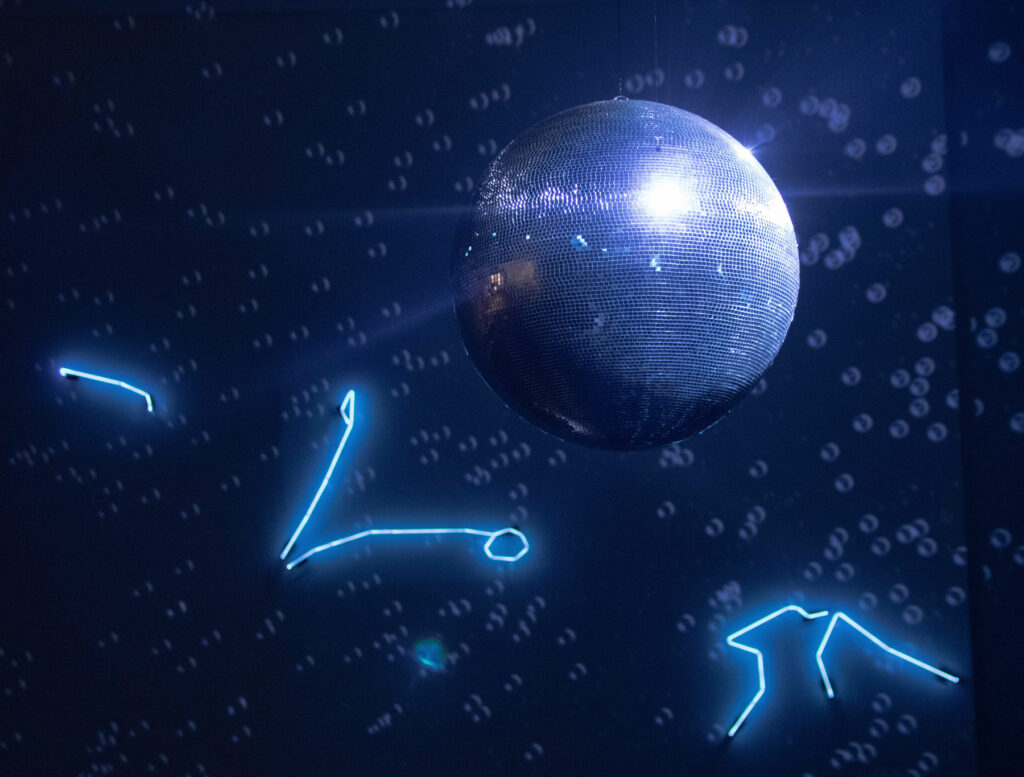
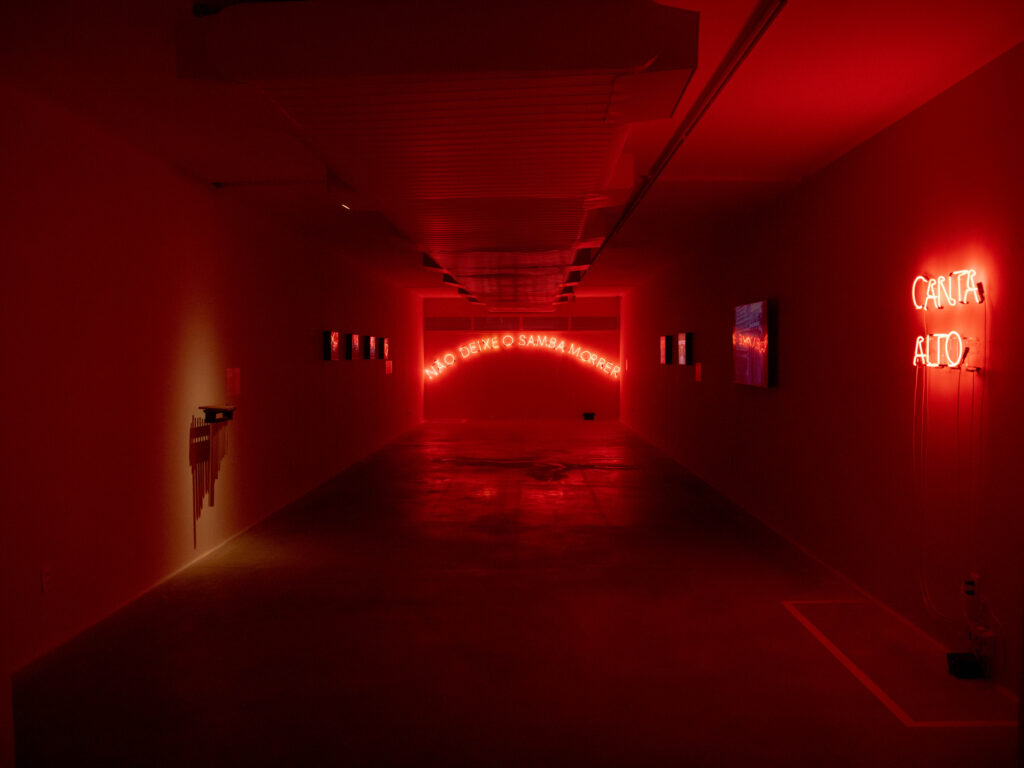
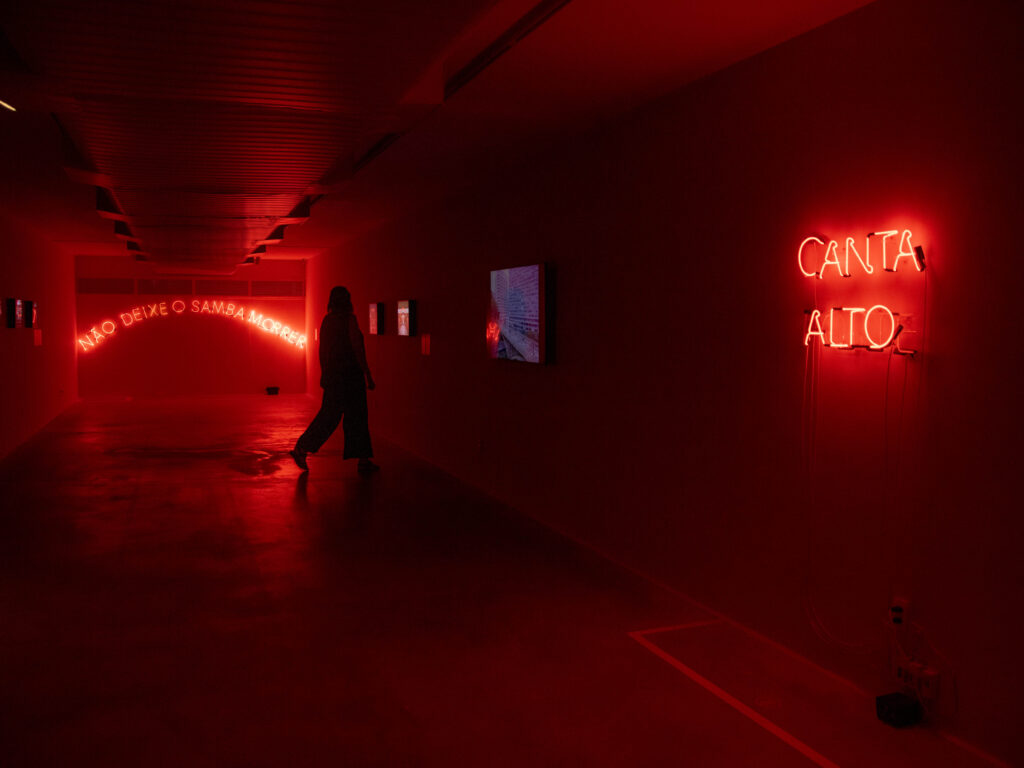
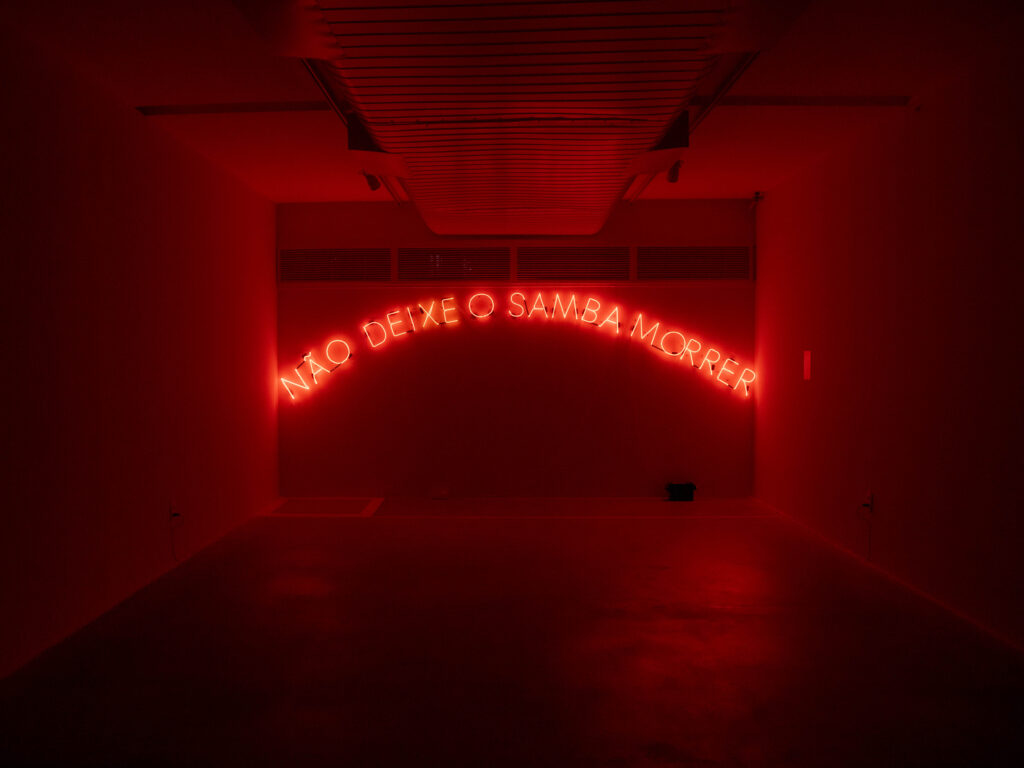
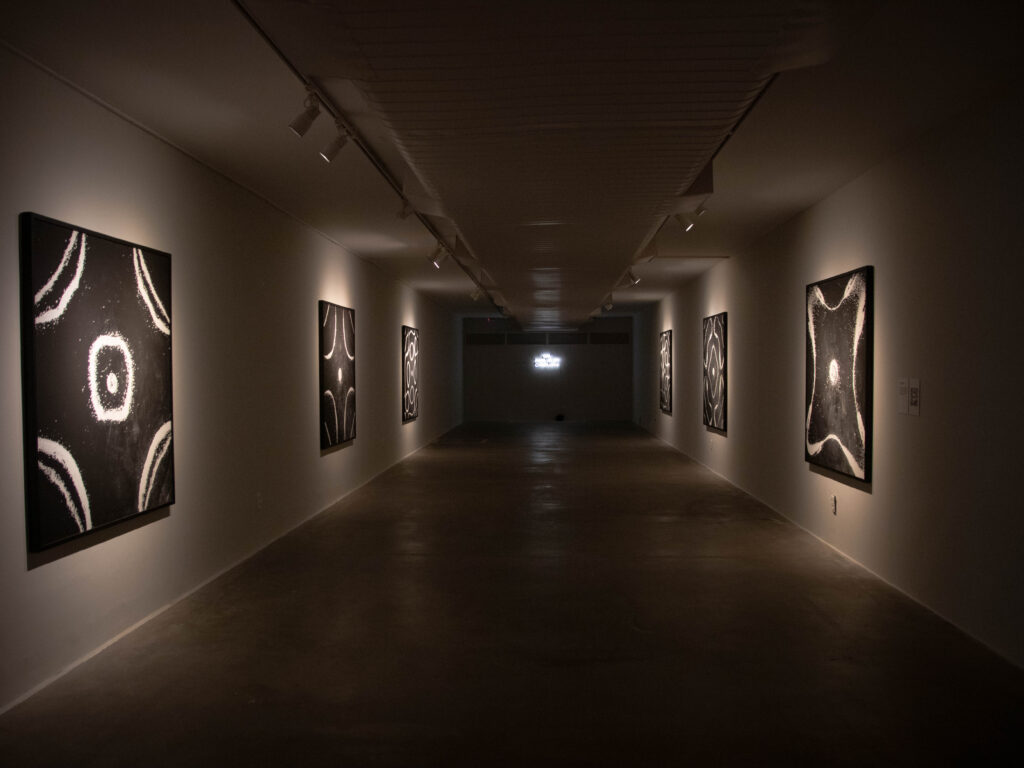
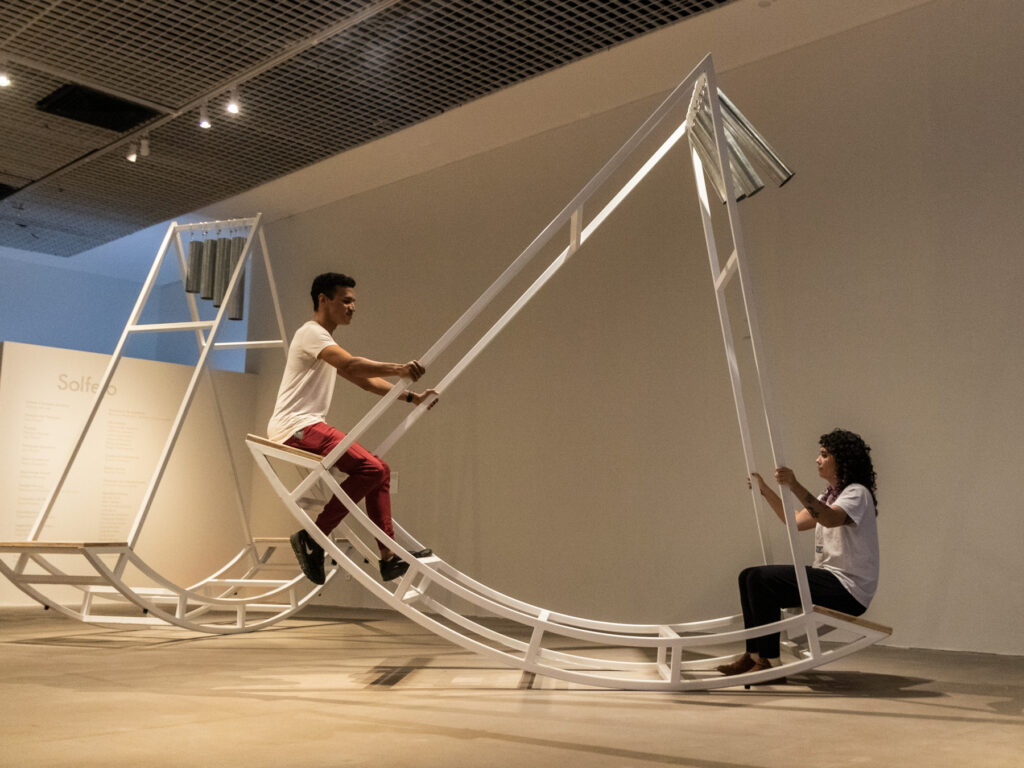
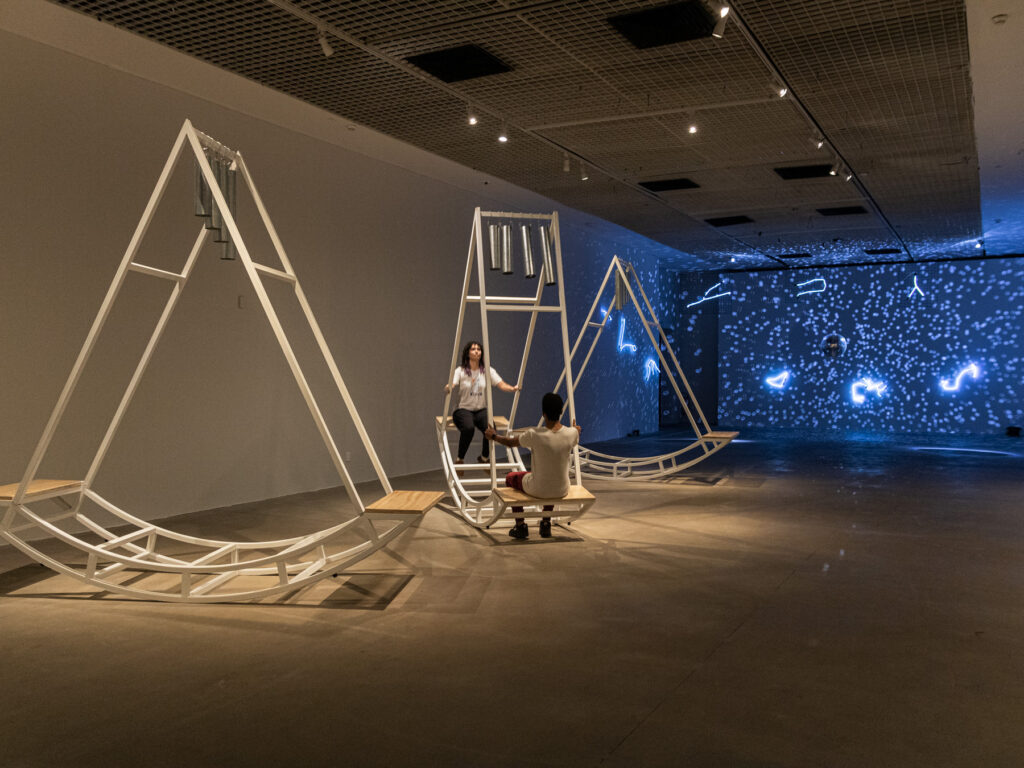
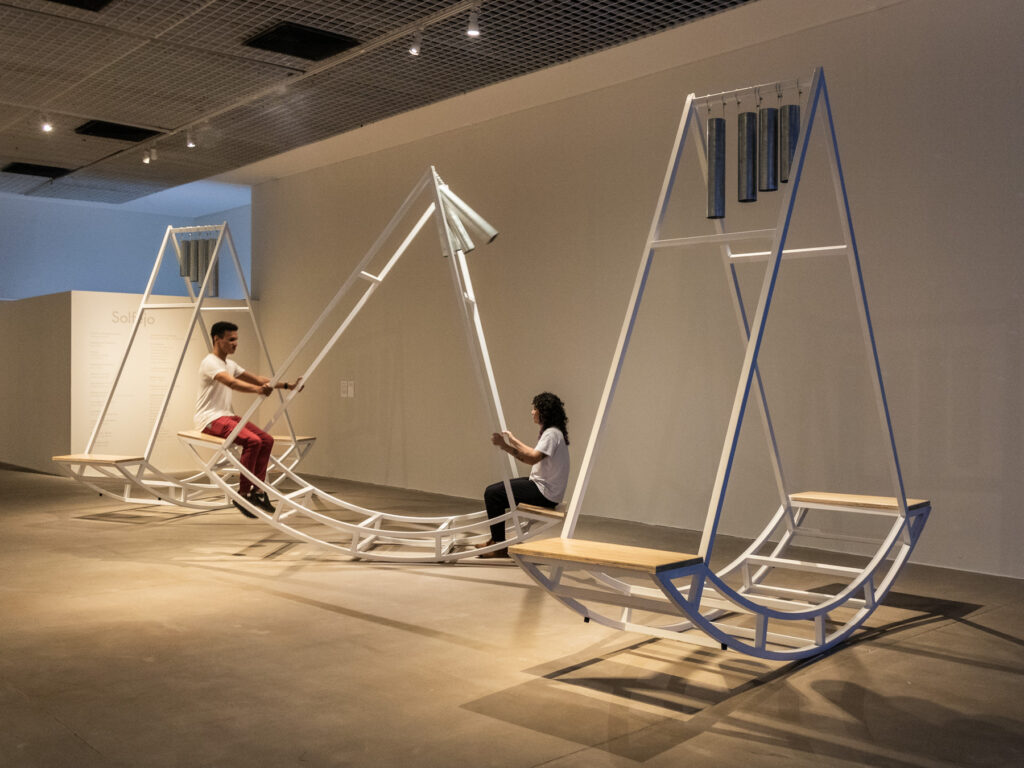
The exhibition Solfejo (2024), by Felippe Moraes, presented at CAIXA Cultural Brasília between April 10 and May 26, 2024, marks his first solo show in the city and the largest exhibition the artist has staged to date. Bringing together 45 works produced over 15 years, the exhibition proposes an immersion in the relationships between sound, perception, and experience, expanding the idea of music beyond the auditory field.
Originally presented in 2019 in São Paulo, the show returns profoundly transformed. The new staging incorporates previously unseen works and revisits earlier pieces in light of recent events, revealing a more urgent inflection, crossed by the political, social, and existential tensions of the present.
Amid interactive installations, videos, sound sculptures, and luminous works, Solfejo invites the public to perceive invisible phenomena that move through the world. Works such as Composição Aleatória #2, Harmonices Mundi, and Solaris Discotecum create situations in which the visitor ceases to be a spectator and becomes part of systems of sound, movement, and space.
With a curatorial text by Victor Gorgulho, the exhibition weaves together science, spirituality, and sensoriality along a path that activates both body and imagination. By revealing hidden patterns and rendering perceptible what escapes immediate perception, Solfejo asserts itself as an experience that oscillates between rigor and enchantment.The exhibition Solfejo (2024), by Felippe Moraes, presented at CAIXA Cultural Brasília between April 10 and May 26, 2024, marks his first solo show in the city and the largest exhibition the artist has staged to date. Bringing together 45 works produced over 15 years, the exhibition proposes an immersion in the relationships between sound, perception, and experience, expanding the idea of music beyond the auditory field.
Originally presented in 2019 in São Paulo, the show returns profoundly transformed. The new staging incorporates previously unseen works and revisits earlier pieces in light of recent events, revealing a more urgent inflection, crossed by the political, social, and existential tensions of the present.
Amid interactive installations, videos, sound sculptures, and luminous works, Solfejo invites the public to perceive invisible phenomena that move through the world. Works such as Composição Aleatória #2, Harmonices Mundi, and Solaris Discotecum create situations in which the visitor ceases to be a spectator and becomes part of systems of sound, movement, and space.
With a curatorial text by Victor Gorgulho, the exhibition weaves together science, spirituality, and sensoriality along a path that activates both body and imagination. By revealing hidden patterns and rendering perceptible what escapes immediate perception, Solfejo asserts itself as an experience that oscillates between rigor and enchantment.
Curatorial Text
- Artista-alquimista – Victor Gorgulho
Artist’s Statement
Solfejo – Felippe Moraes
“Solfejo” is one of the rare opportunities for an artist to return to a major exhibition from their past, to revisit it, expand it, and distort it. Five years ago, in 2019, we presented this show at the Centro Cultural FIESP in São Paulo. Today, at CAIXA Cultural Brasília, it represents the continuation of a body of research, now in its second decade, still imbued with its original questions while profoundly impacted by recent history.
At that moment, as a Brazilian, queer, and democratic artist, I felt compelled to address the sonic and musical questions proposed here. What was missing, however, was a call to the public about the urgency of the times we were living through, and a warning about the return of the years of lead that were looming. We decided, then, to open the show with the neon work Divino Maravilhoso (2019), which quotes the 1968 song by Caetano and Gil and calls out to us: “Atenção para o refrão!” (“Attention to the chorus” – free translation). As much a call to the show’s subject — music — it was also, in itself, a warning about refrains already sung and marched to before.
Five years later, luminous songs have multiplied into an electric verbosity. The show was marked by the COVID-19 pandemic and the shadow of authoritarianism. The music presented here starts from silence, from frequencies suspended in space, from the cosmos and the order of the higher spheres. At the same time, it hurls us back into reality, bringing samba as a Brazilian philosophy and the ultimate form of survival and social cohesion. Samba, which presents itself as song, is, in essence, the backbone of Brazilianness, a modus vivendi — what makes us who we are and what keeps us alive and alert.
“Solfejo” asserts itself as a space of democratic experience. As a method, it starts from the thinking of a people who understand themselves through music, moving toward a libertarian artistic practice. It is a rhizome that crosses through different fields of knowledge without hierarchy — one in which music calls us to movement and to “random compositions,” to the patterns inscribed in the sky and the invisible waves in the air, but, above all, calls us to action: Canta forte, canta alto!
Felippe Moraes
2024