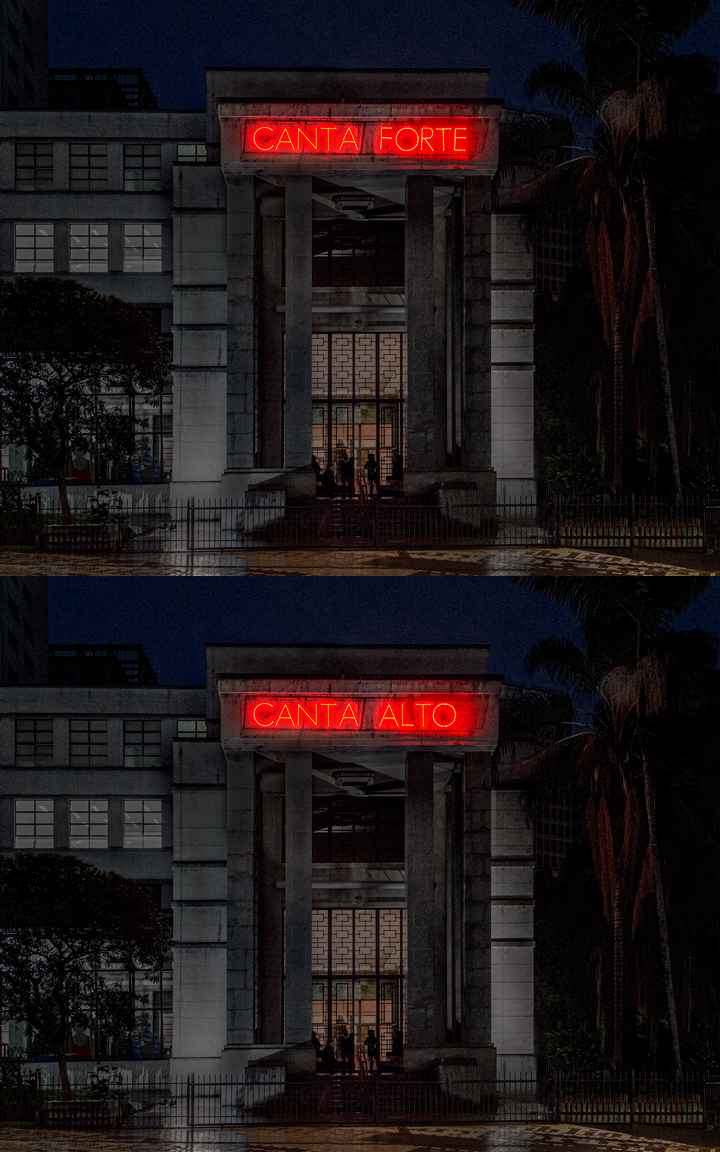
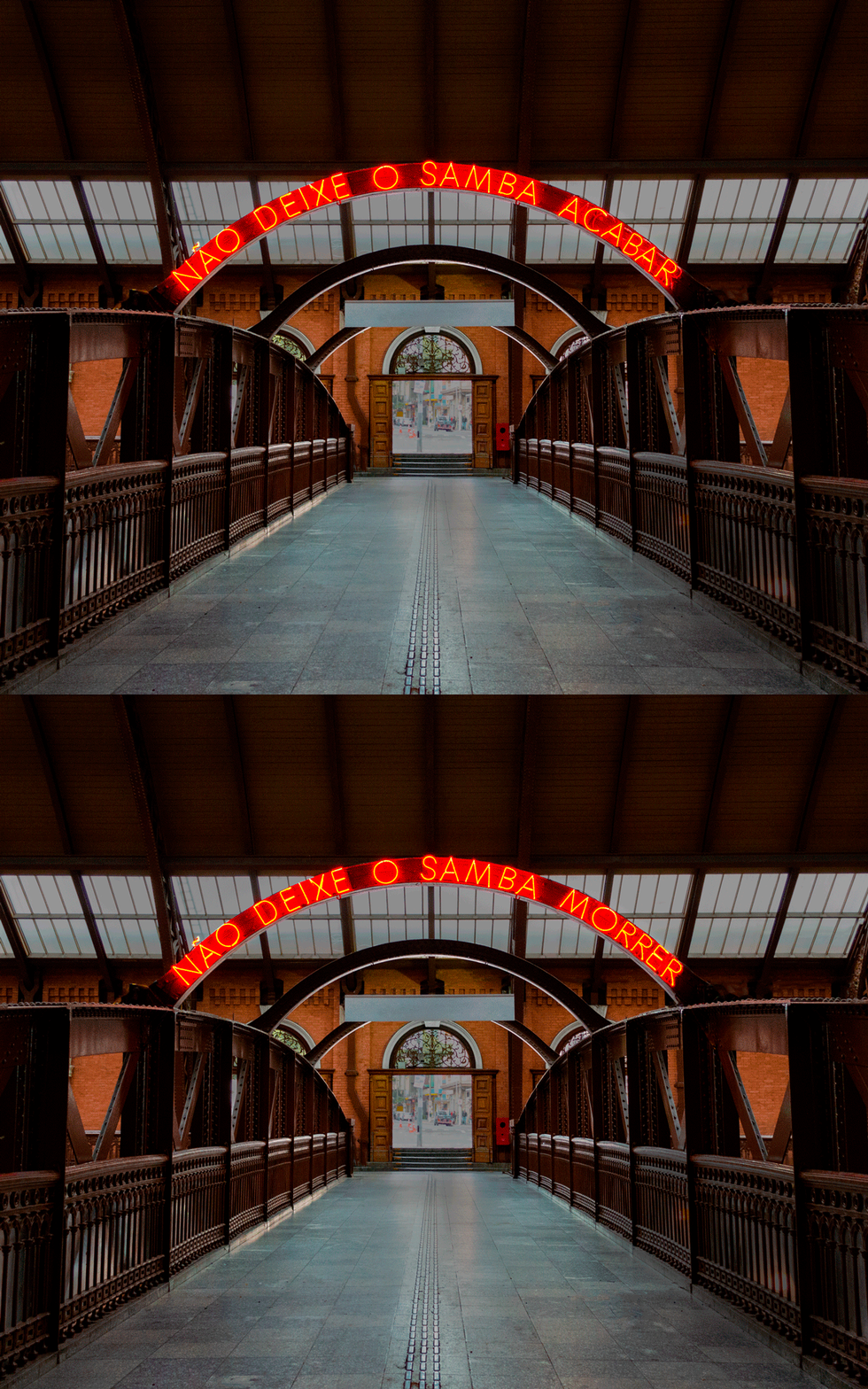
Samba da Luz (Samba of the light), 2021
Urban Intervention
Estação da Luz and Biblioteca Mário de Andrade
São Paulo – Brazil
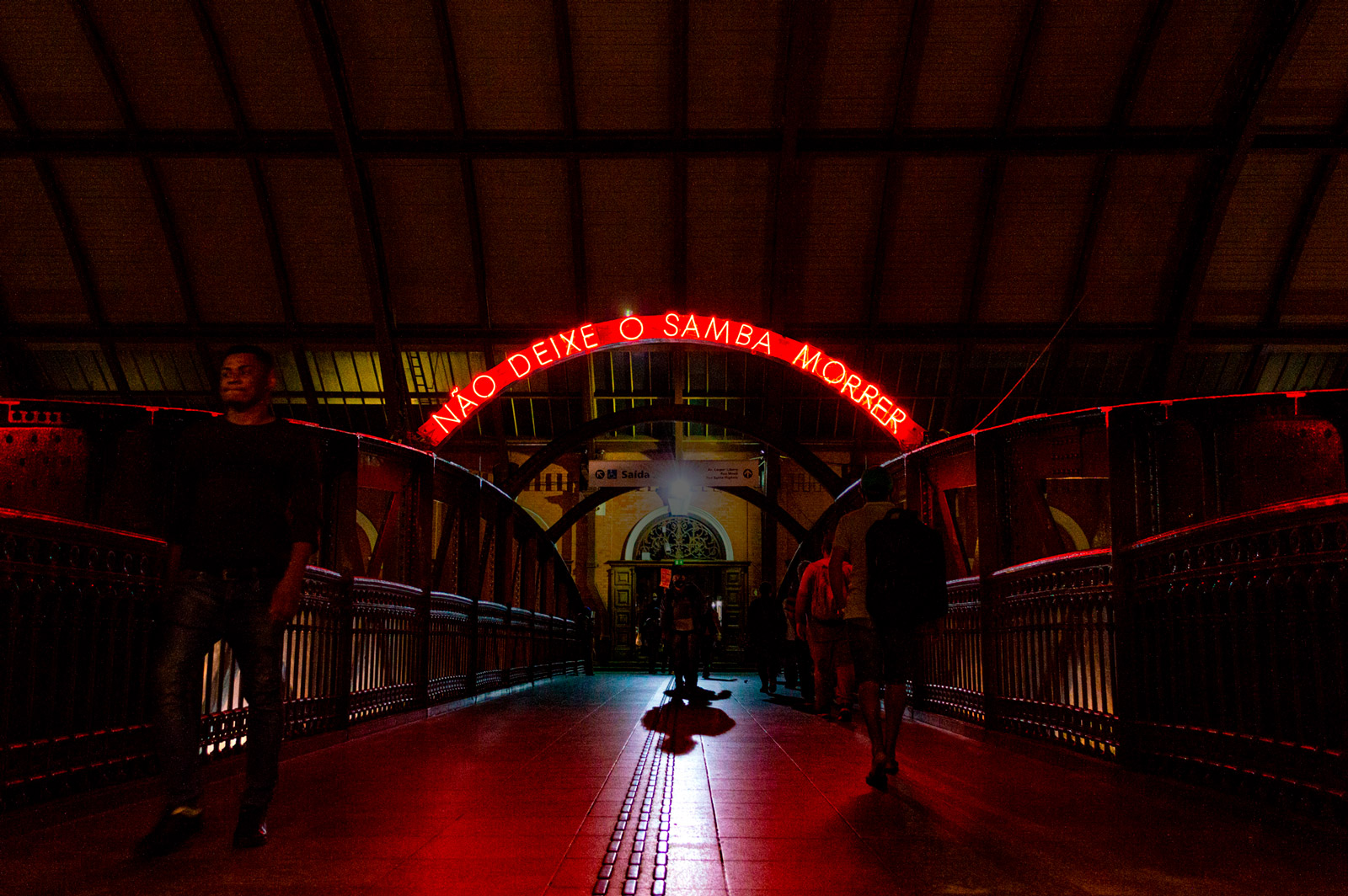
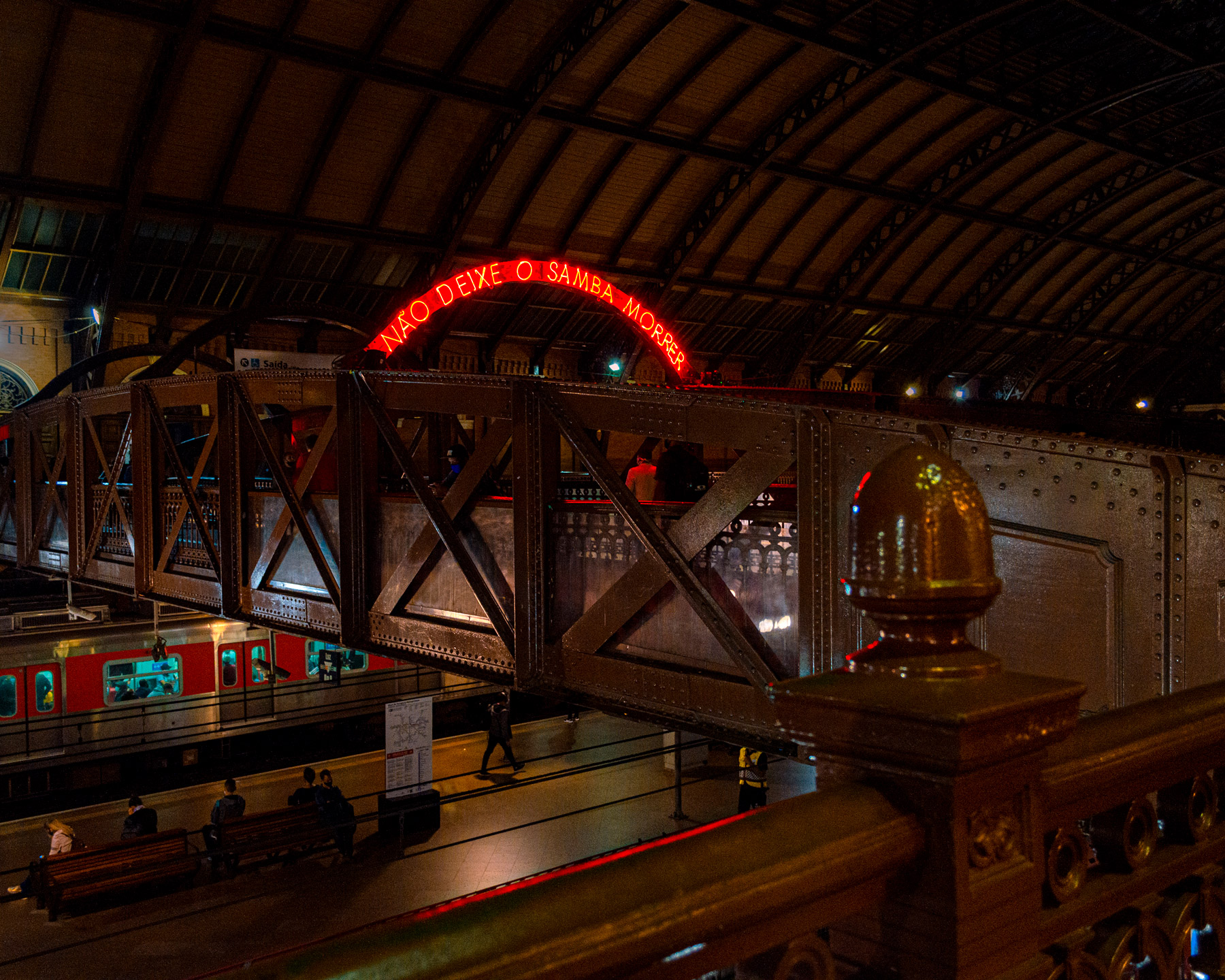
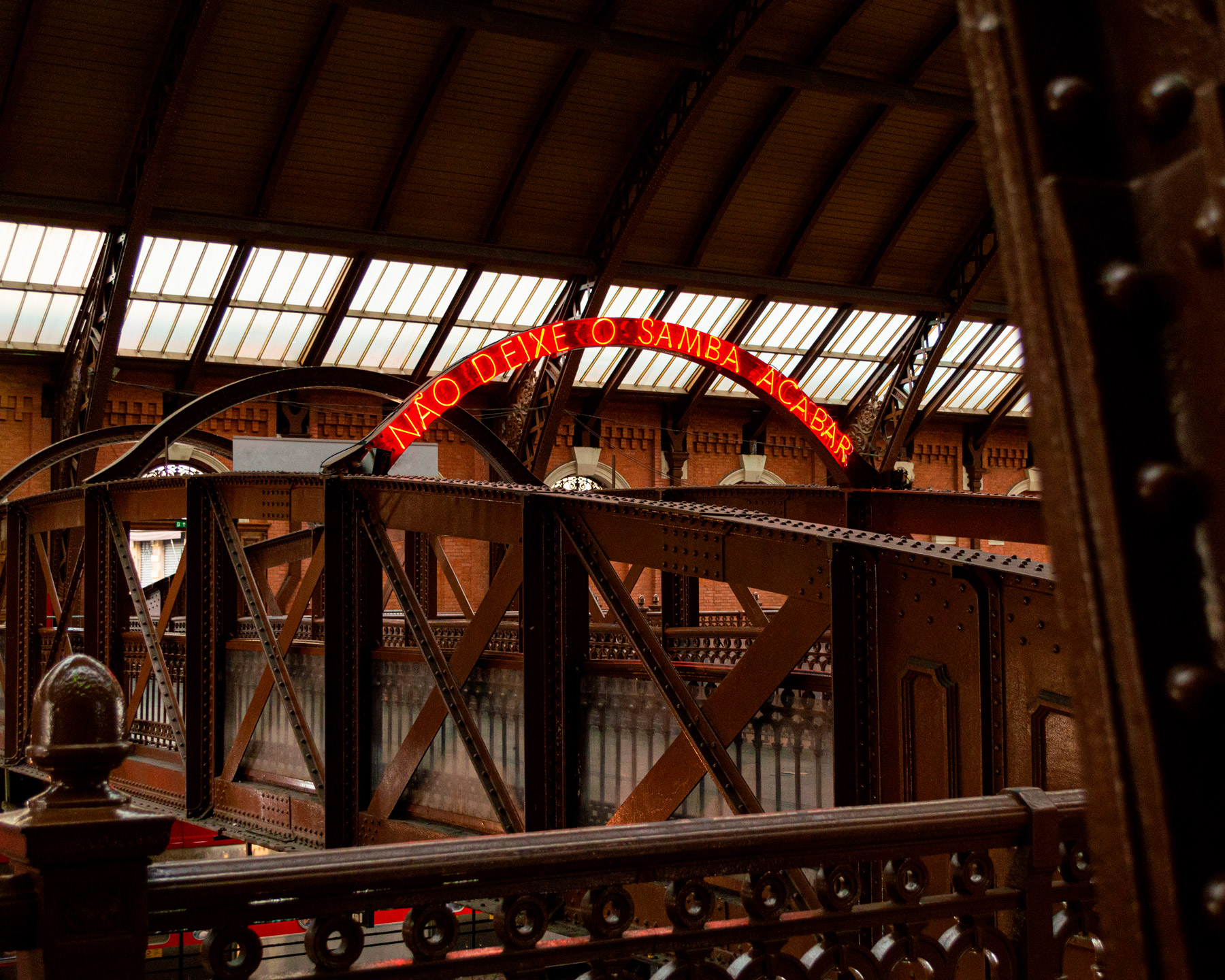
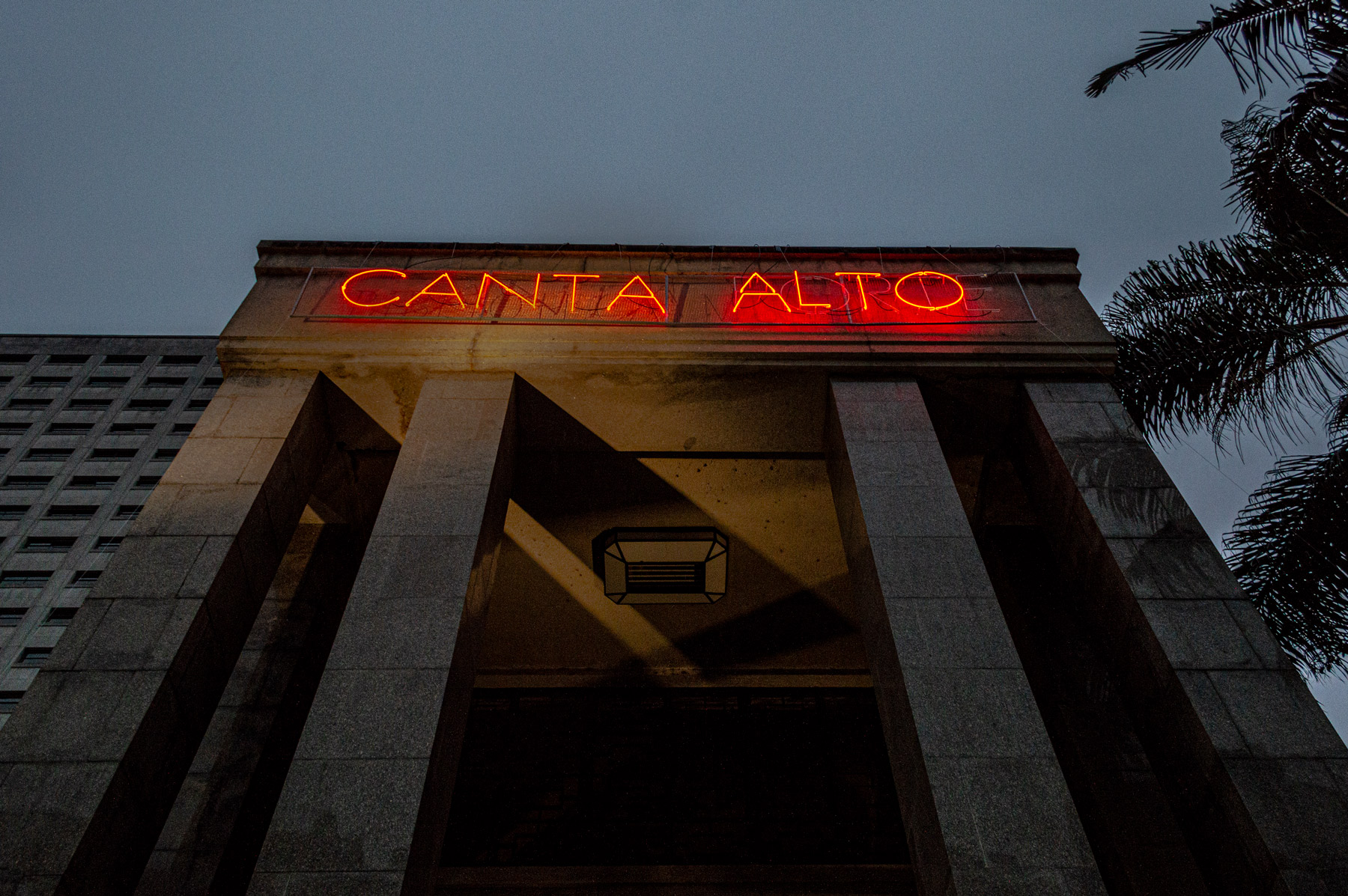
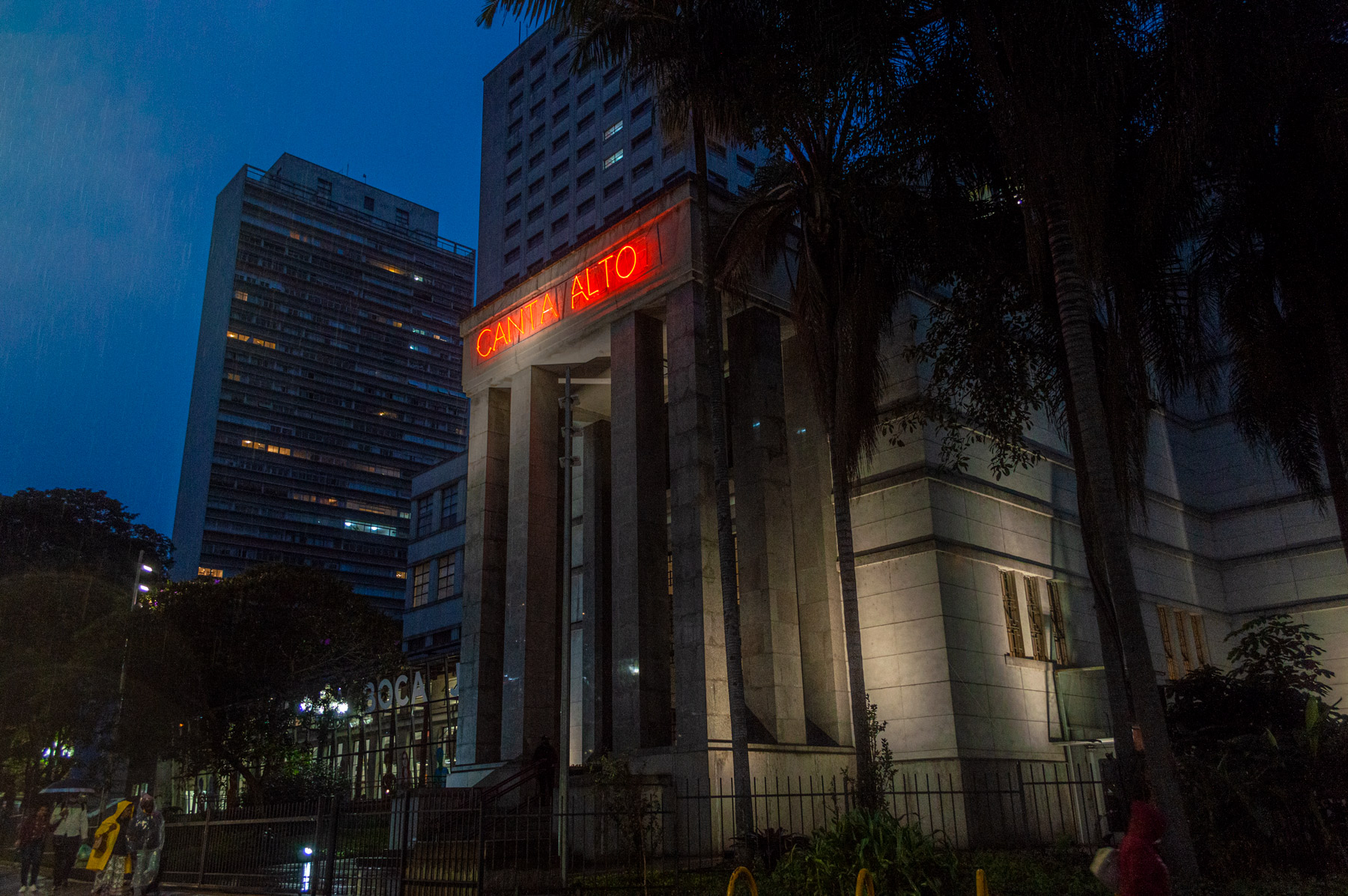
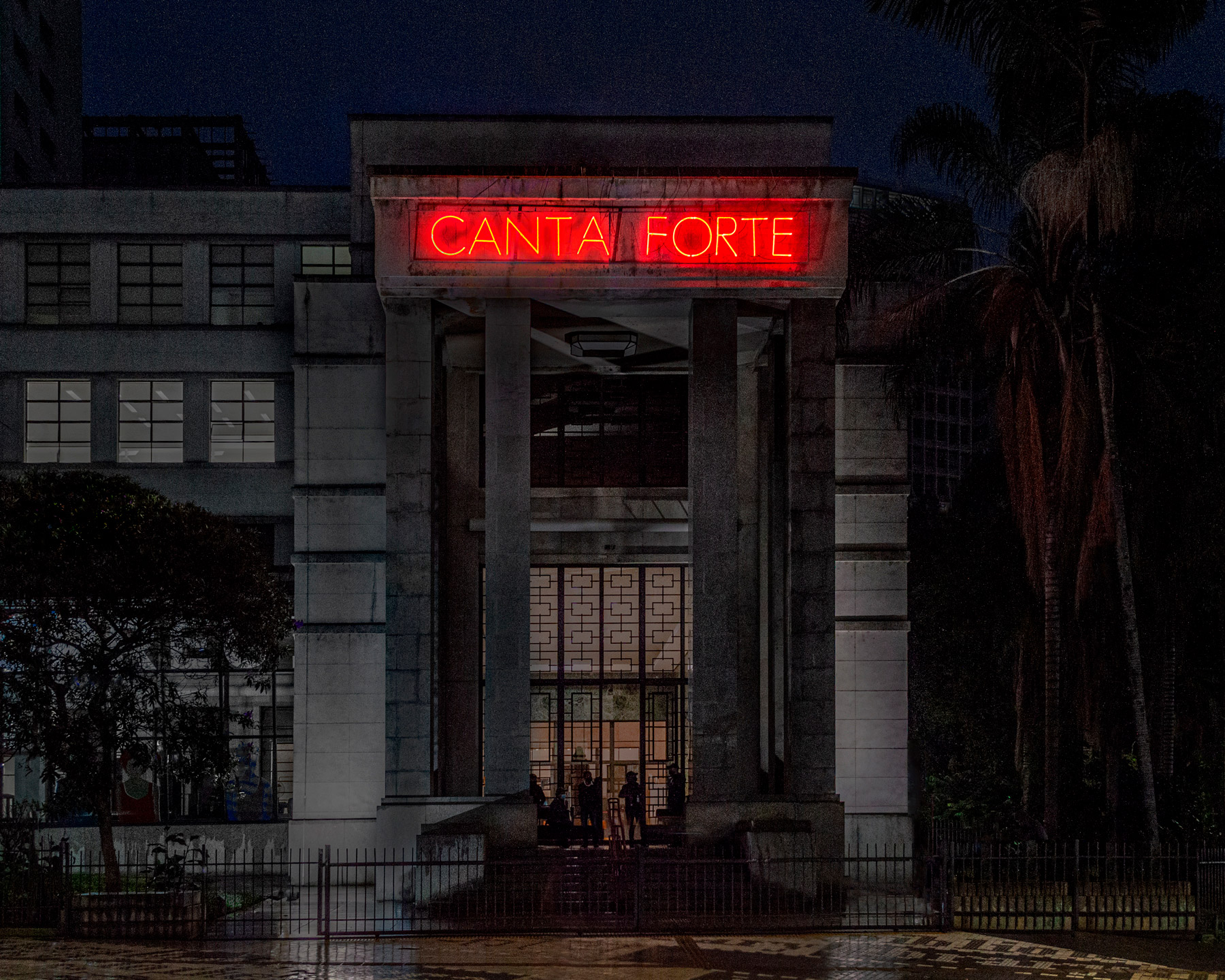
The urban intervention Samba da Luz, by Felippe Moraes, occupies the center of São Paulo with two monumental neon signs installed on the façade of the Biblioteca Mário de Andrade and at Estação da Luz. Carried out in 2021 as part of the Museu de Arte de Rua (Street Art Museum), the project emerged within a context of social restrictions, proposing a luminous, public presence amid a period of distancing and the suspension of collective experience.
The work turns fragments of emblematic sambas into large-scale urban signs. At the library, the neon alternates between “Canta forte” and “Canta alto,” evoking the song by Martinho da Vila. At Estação da Luz, the phrase “Não deixe o samba morrer” alternates with “Não deixe o samba acabar,” referring to the classic immortalized by Alcione. These inscriptions activate collective memory and reposition samba as a living language within public space.
The title weaves together multiple meanings, connecting the Luz neighborhood, the idea of illumination, and the knowledge passed down through popular culture. By inscribing these words in places of intense circulation, the artist turns architecture and urban flow into a support for a message of resistance, care and continuity.
Between art, city and spirituality, the project also aligns symbolically with the forces of Exu, the entity associated with movement, communication and crossroads. In this sense, Samba da Luz does not only illuminate the city — it re-enchants it, turning samba into an ancestral technology capable of moving through crisis and reinventing everyday life.
Curatorial text
Samba da Luz – Felippe Moraes
In the year Carnival was absent, when the streets could not be swallowed by the desire of bodies set free and costumed in delirium, we occupied the city with light and samba, red and silence. Whether through the evidence of its absence or the affirmation of its presence, the Samba da Luz project brings rhythm not only as music, but as ancestral knowledge. When we find ourselves without a path, we turn to our elders for guidance, and so we turn to samba with the same reverence directed to those who taught us to walk, to dance and, above all, to inhabit and hold tension with precariousness.
This project of urban interventions takes place simultaneously at Estação da Luz and at Biblioteca Mário de Andrade. At the first, we light up the cry “Não deixe o samba morrer/acabar,” which became known through Alcione’s voice in 1975. At the second, “Canta Forte/Canta Alto,” evoking the refrain of “Canta, canta, minha gente,” released by Martinho da Vila in 1974. Before the workers, the excluded and the forgotten who pass through, inhabit and transform the city, samba materializes as a voice that emanates from the street and insists on not being silenced.
Melancholy and mourning run through each of us, prostrate before the monumentality of tragedy. And so, as a last way of reinventing our existences, we return to samba as knowledge that flows from the terreiros and sets itself in motion in the world. In it, we seek symbolic healing for our violated subjectivities. We call, therefore, upon song, upon the fury of existence, upon malandragem and upon the ancestral knowledge of the crossroads as ultimate ways of existing and resisting.
Laroyê, Exu! Hail Samba!
Felippe Moraes
June, 2021
Felippe Moraes
Samba da Luz, 2025
Vídeo 360º
4’36”