Felippe Moraes
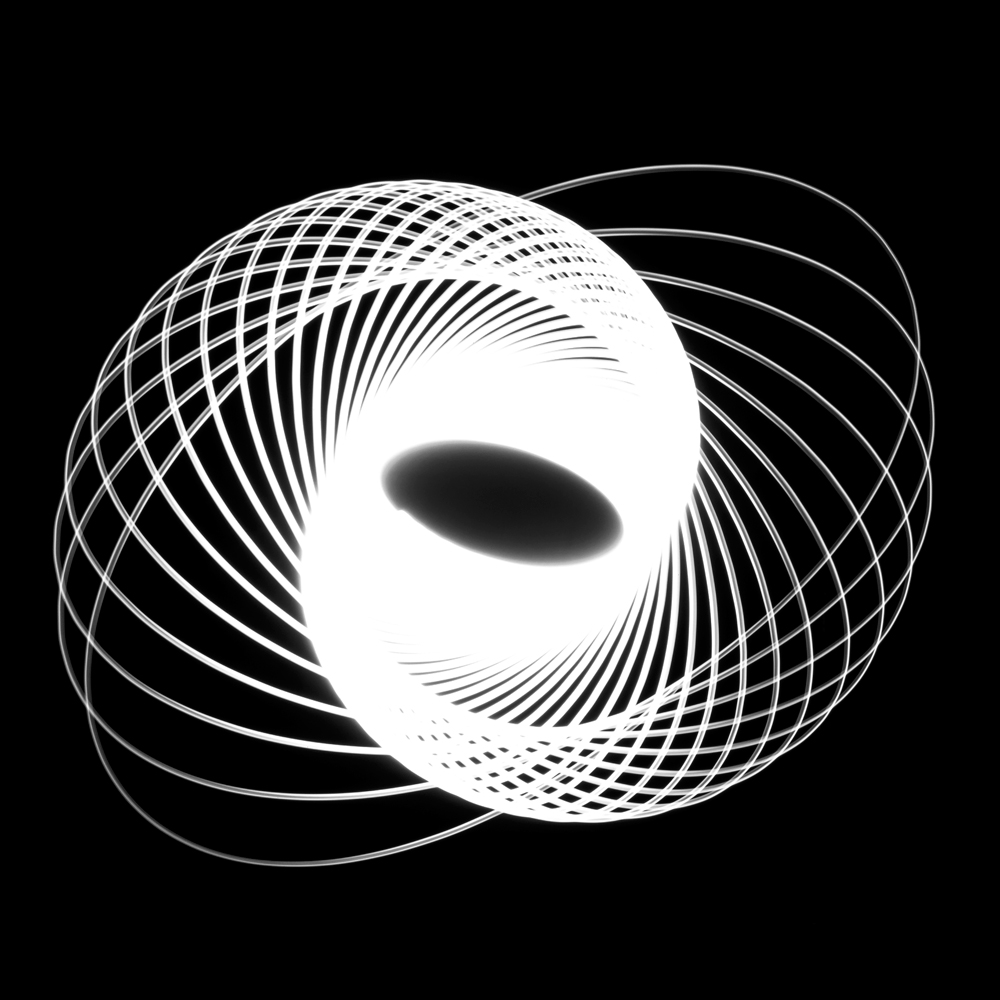
Movimento Pendular (Pendular Movement), 2015–2017
Fine art photographic print on paper
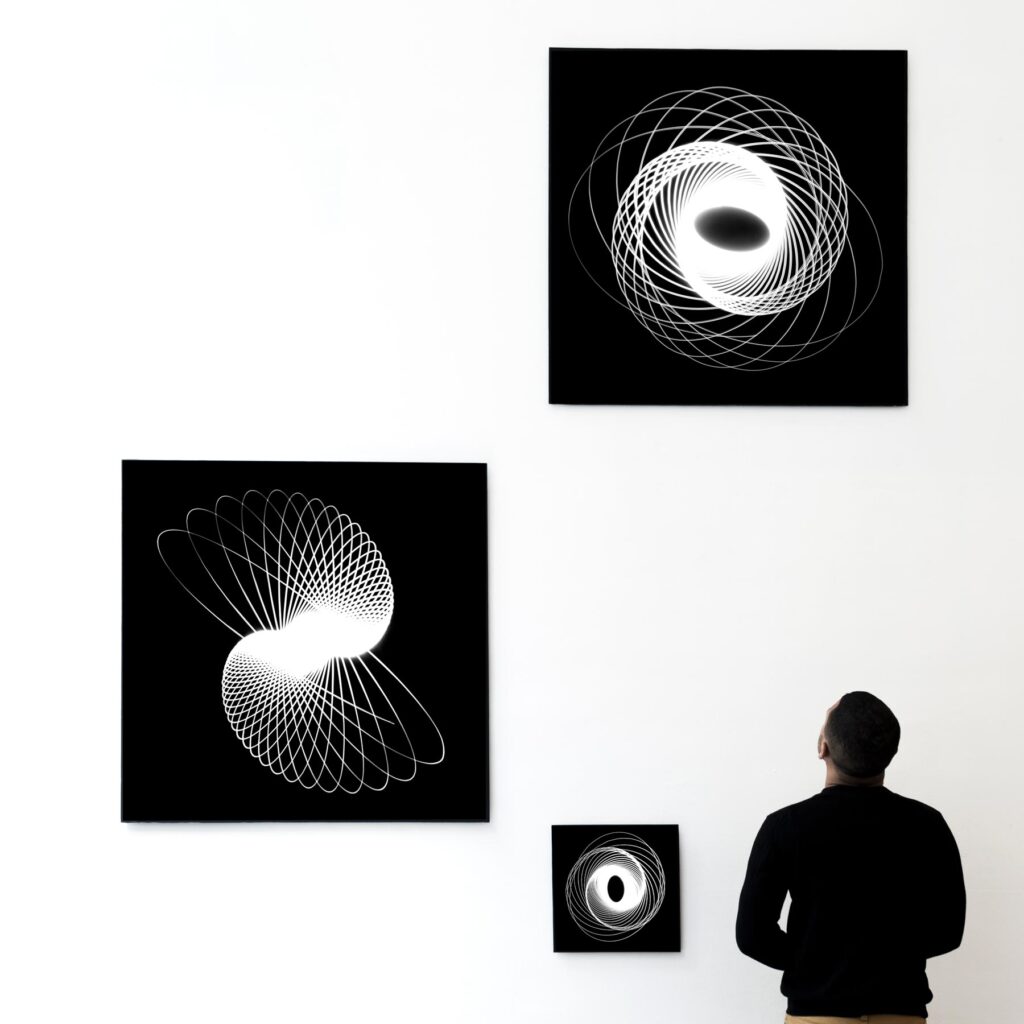
100 × 100 cm / 30 × 30 cm
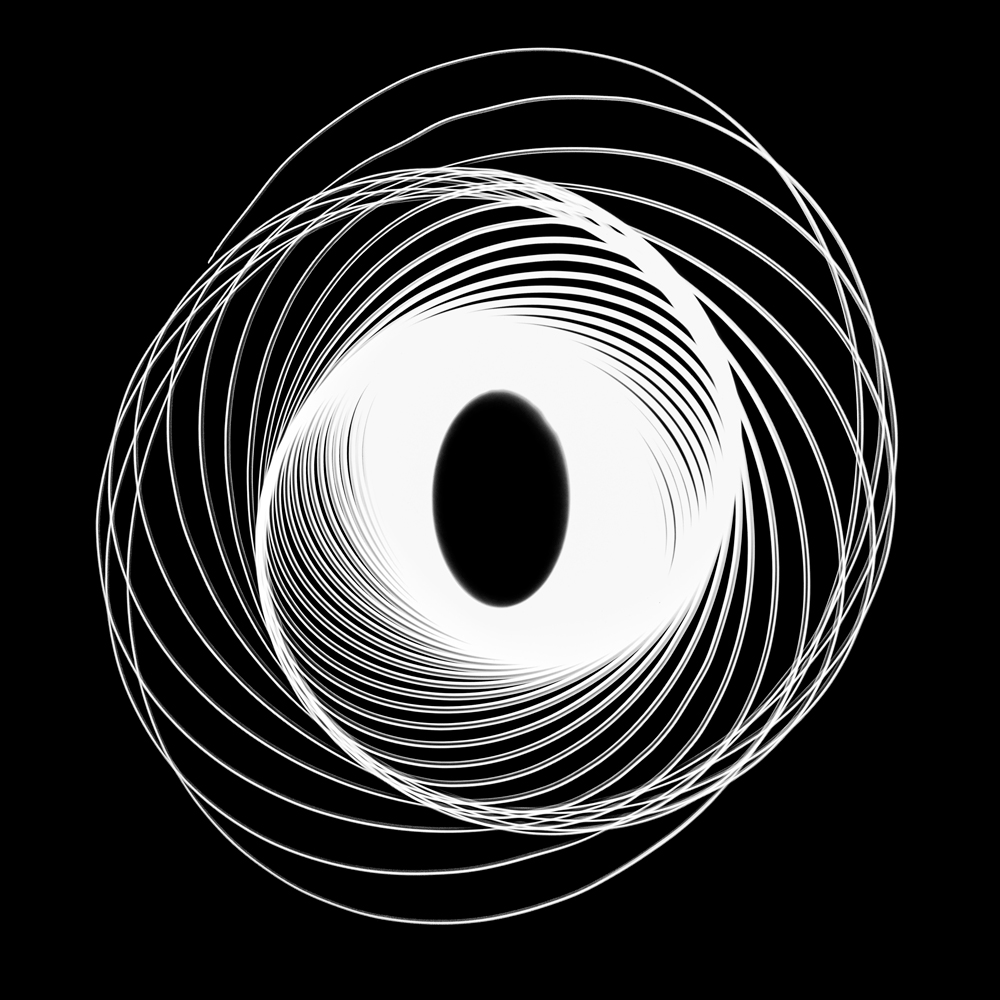
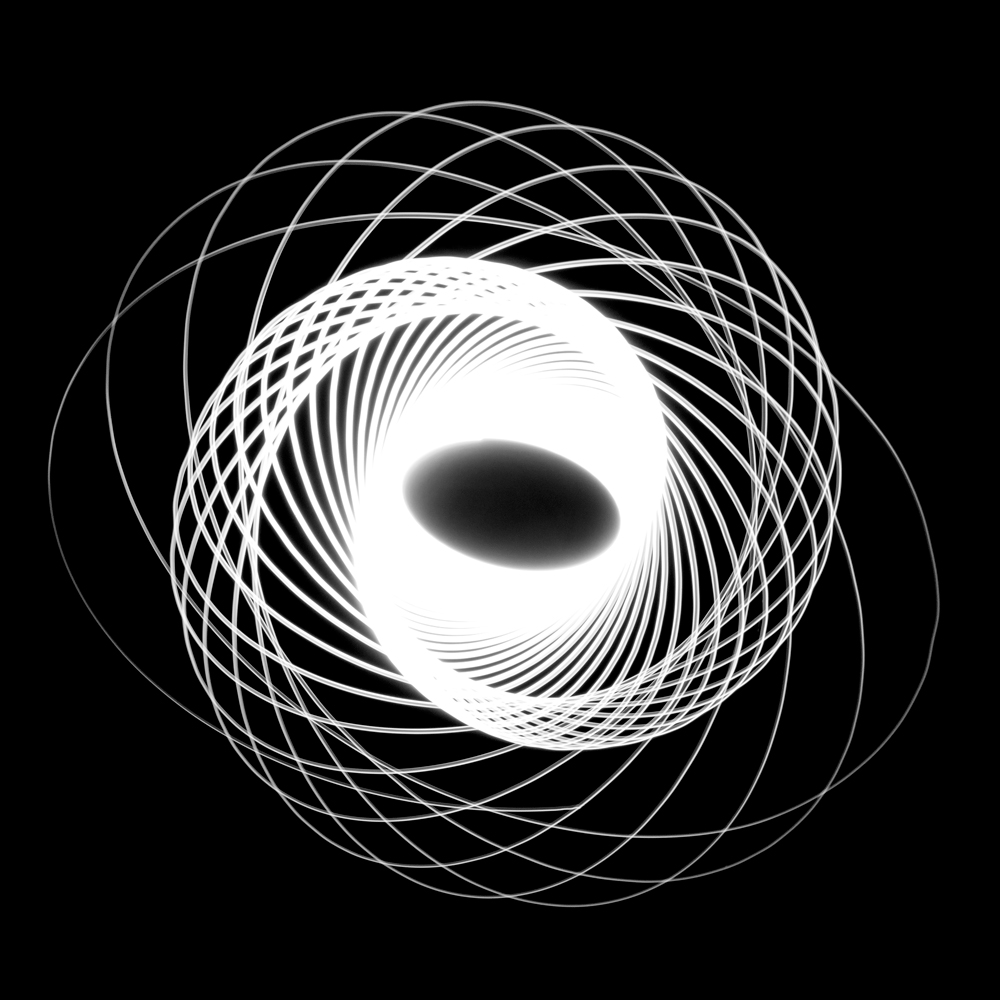
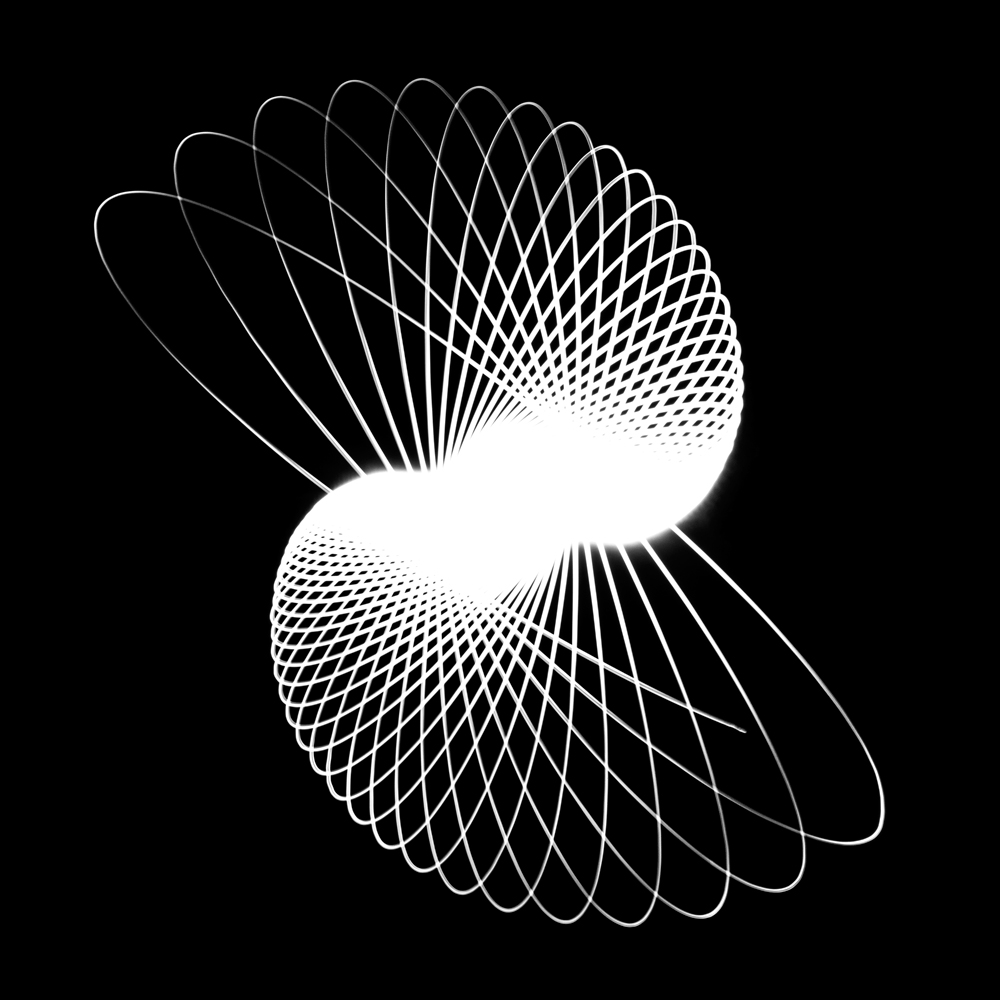
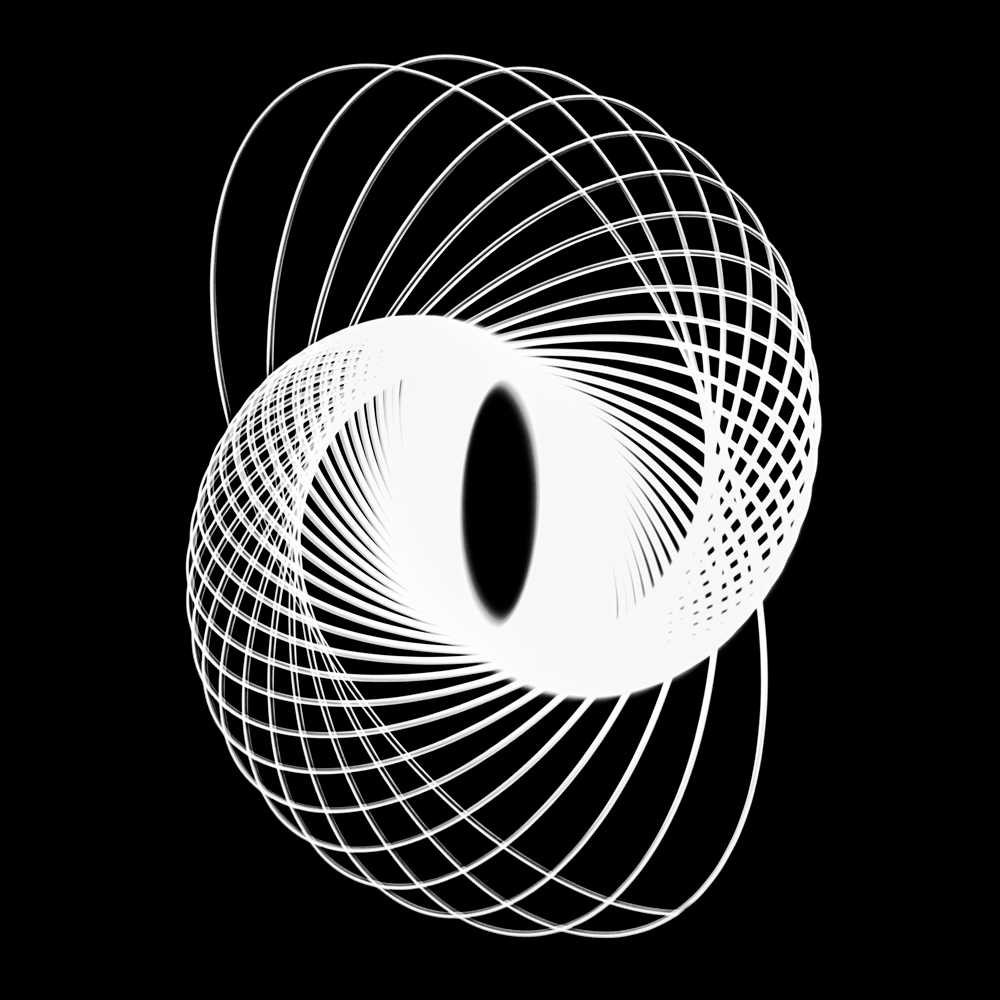
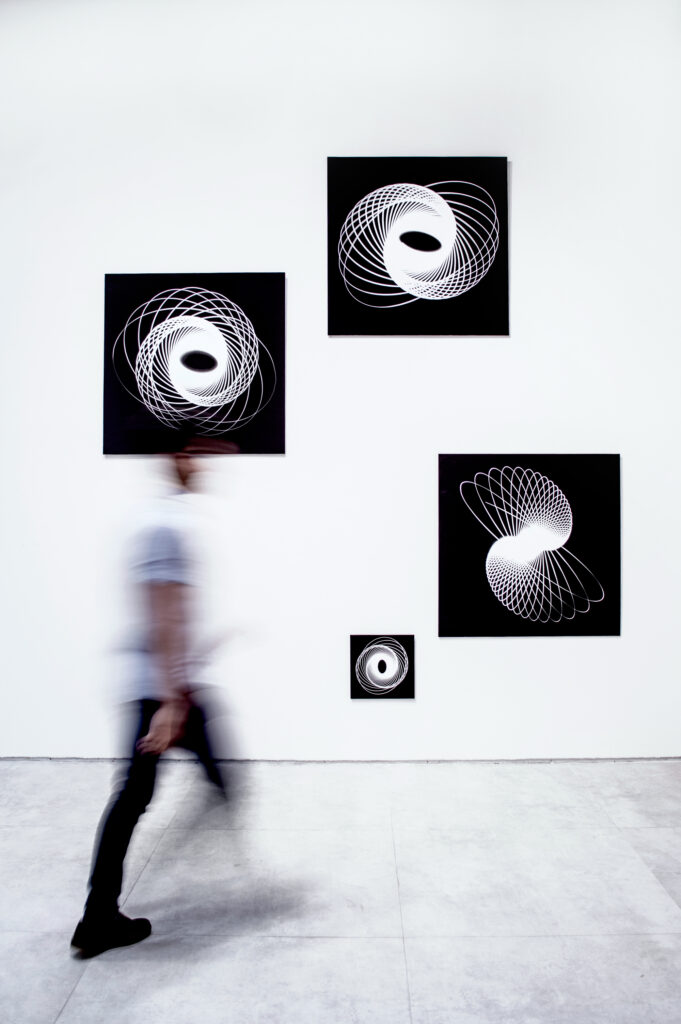
The series Movimento Pendular begins in 2014 with two installations Movimento Pendular #1 and #2 (2014) and expands into this light drawing photographic body of work made between 2015 and 2017. Felippe Moraes creates these light drawings by recording trajectories of light produced by a flashlight suspended by a wire above a camera lens. With the aperture open for sixty seconds, the camera captures the luminous trail generated by the pendulum’s motion, turning movement into drawing.
The resulting images do not represent only free gestures, but trajectories governed by physical laws. The pendulum, a classic instrument for observing time and gravity, produces oscillation patterns that become visible on the photographic surface.
Each photograph functions as a direct index of an actual movement. The camera’s sensor records the path of light through space, creating figures that reveal balance, repetition and harmony. The series is part of Felippe Moraes’ broader research into pendulums, physical systems and the presence of mathematical and natural structures in the formation of images.
Light Drawing as a Record of Movement
In Movimento Pendular, photography functions as an instrument capable of making visible something that normally escapes human sight.
The pendulum’s movement occurs continuously in space, but its complete trajectory can rarely be perceived as a continuous drawing. By using the long-exposure technique, the artist allows the camera’s sensor to accumulate traces of light over time.
This procedure turns the flashlight’s displacement into a graphic form. Time stops being merely an invisible dimension and becomes inscribed directly into the image.
The photograph, in this case, does not capture an isolated instant, but the duration of a phenomenon.
Pendulum, Time and Physical Laws
Since the seventeenth century, experiments with pendulums have been used to investigate phenomena such as gravity, periodicity and the measurement of time. The regularity of pendular motion enabled the development of high-precision clocks and contributed to the advancement of the natural sciences.
In the series Movimento Pendular, this classic instrument appears as an image generator.
The forms recorded in the photographs are not arbitrary. They result directly from the physical laws that govern the pendulum’s motion, including gravity, inertia and air resistance.
Each variation in the amplitude of the movement or in the length of the wire produces different patterns in the final image.
Selected Exhibitions
2017 – Cosmografia – Baró Galeria (São Paulo, Brazil)
2018 – Imensurável – CAIXA Cultural Fortaleza (Ceará, Brazil)