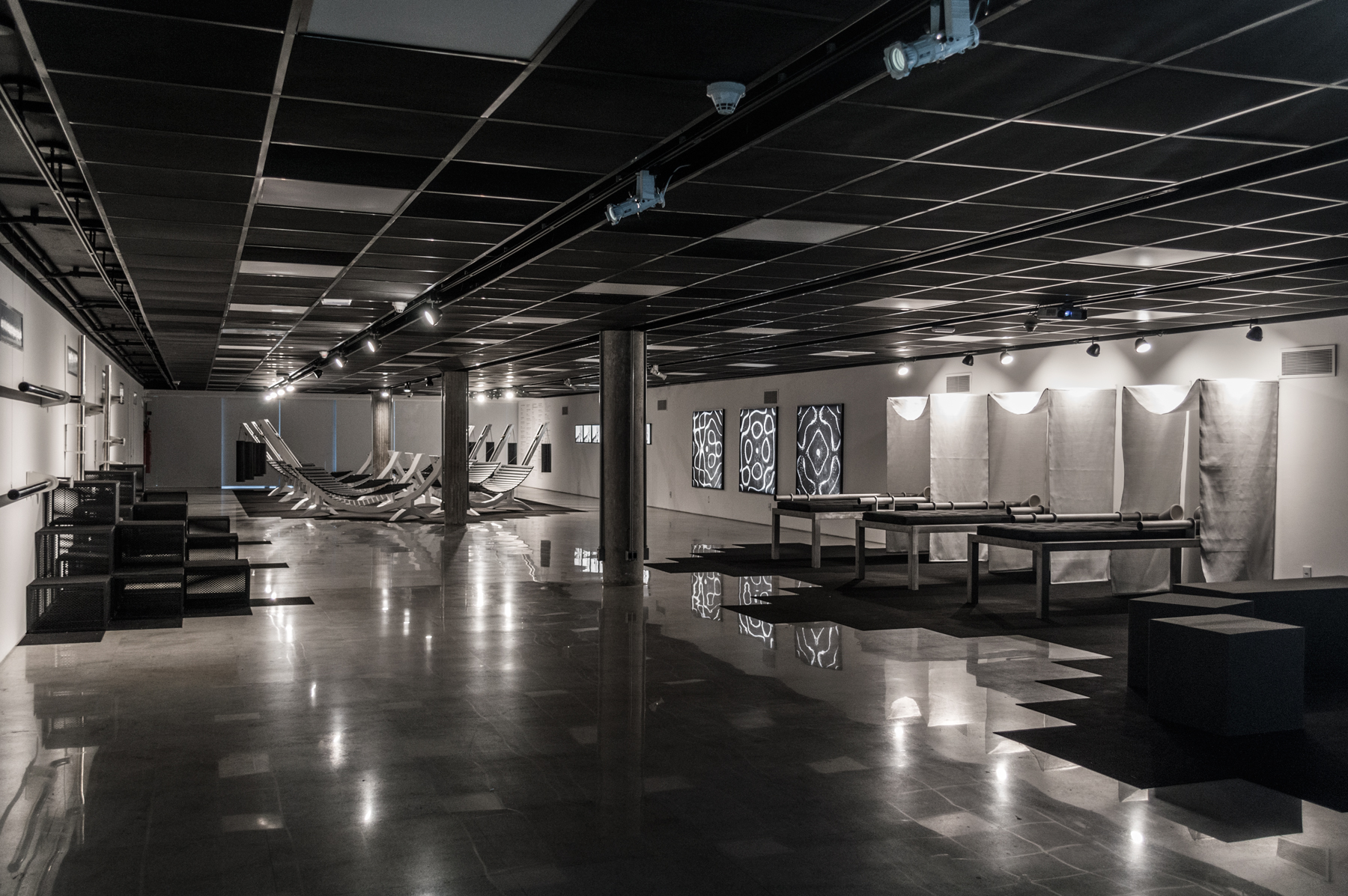
Solfejo (Solfège), 2019
Solo exhibition
Centro Cultural FIESP
Curated by Julia Lima
Educational curator: Giovanna Puerto Carlin
São Paulo – Brazil
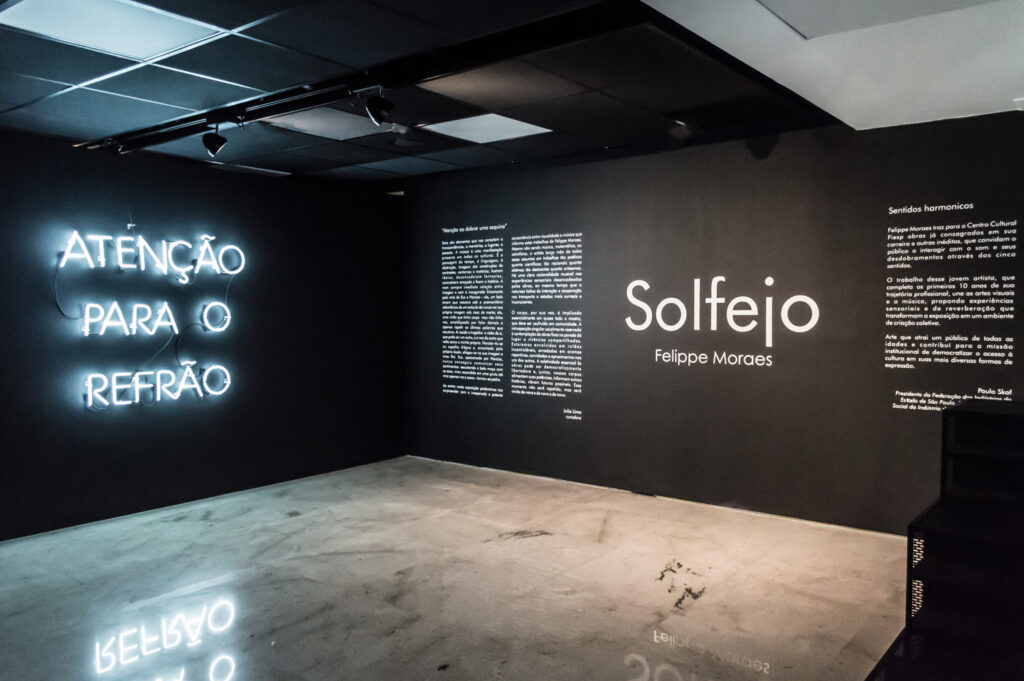
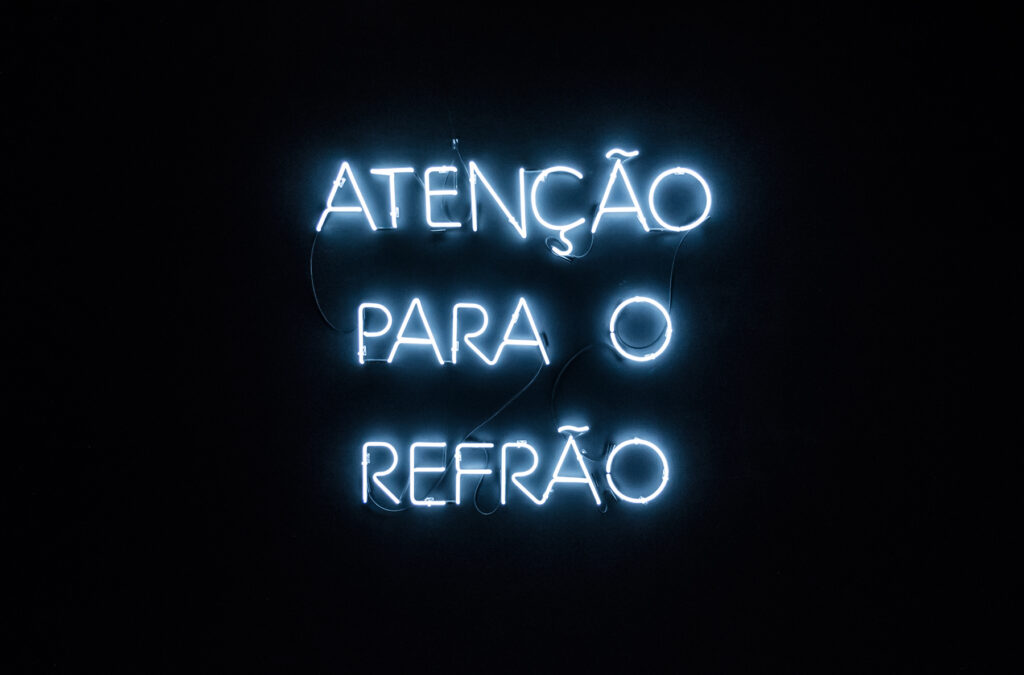
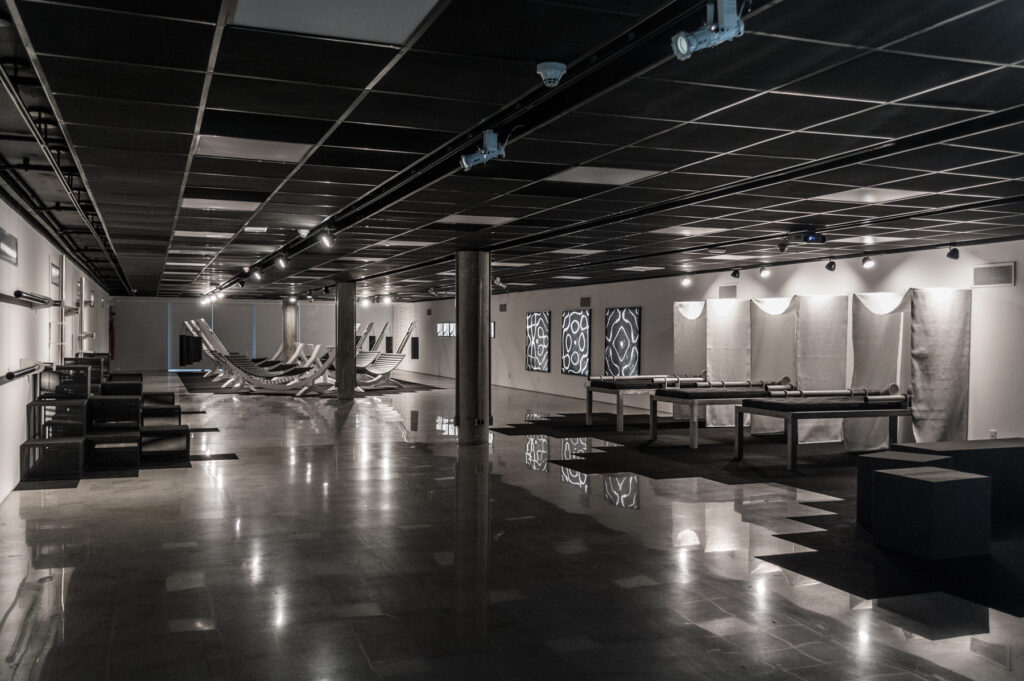
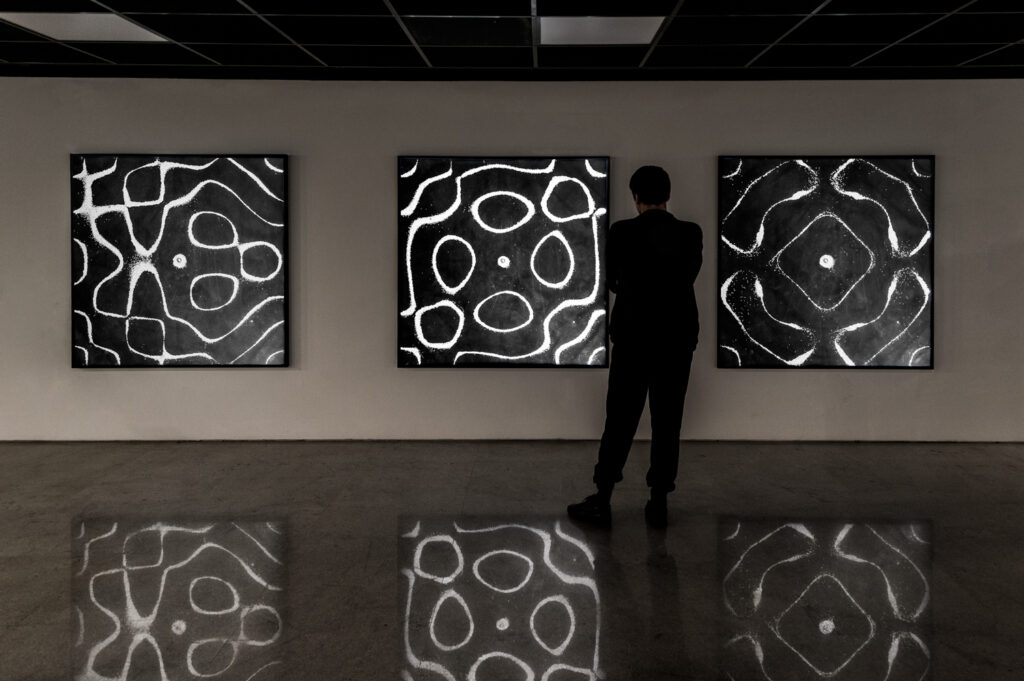
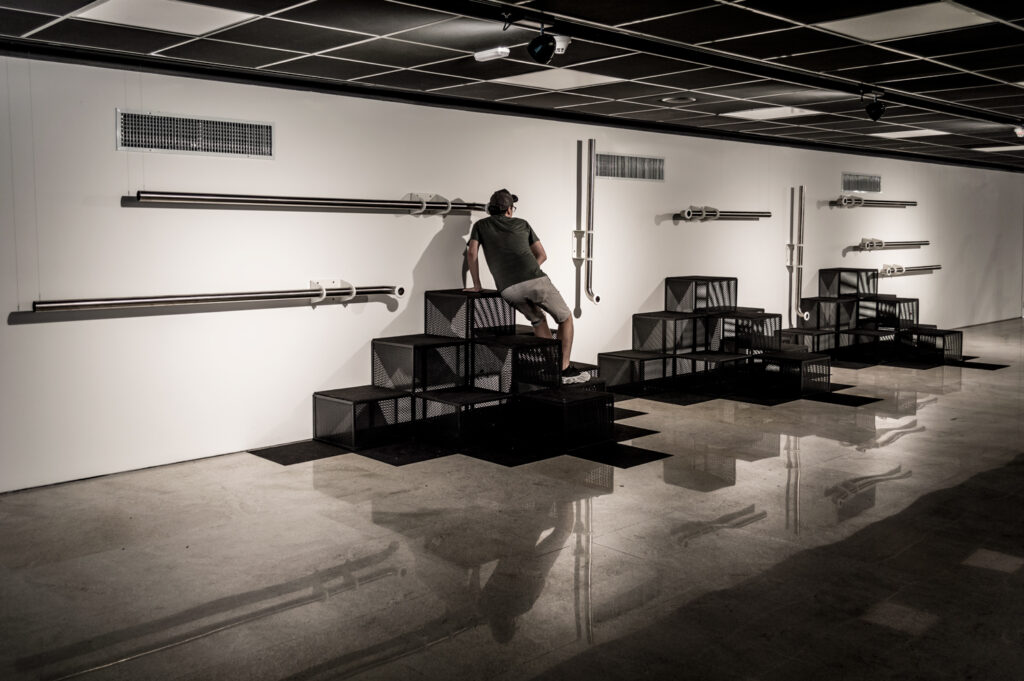
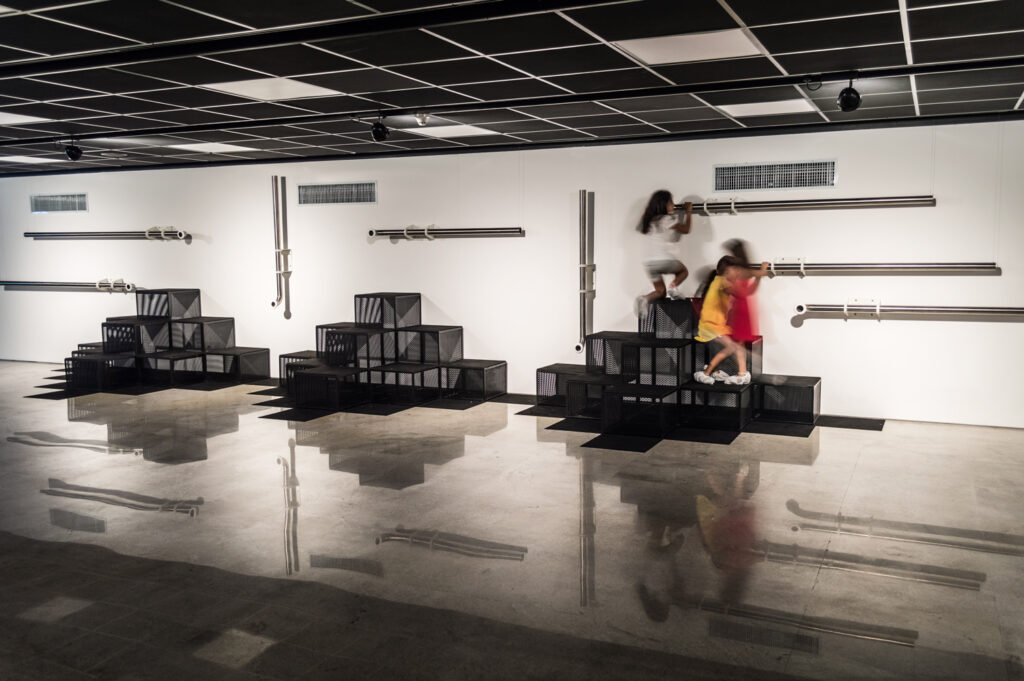
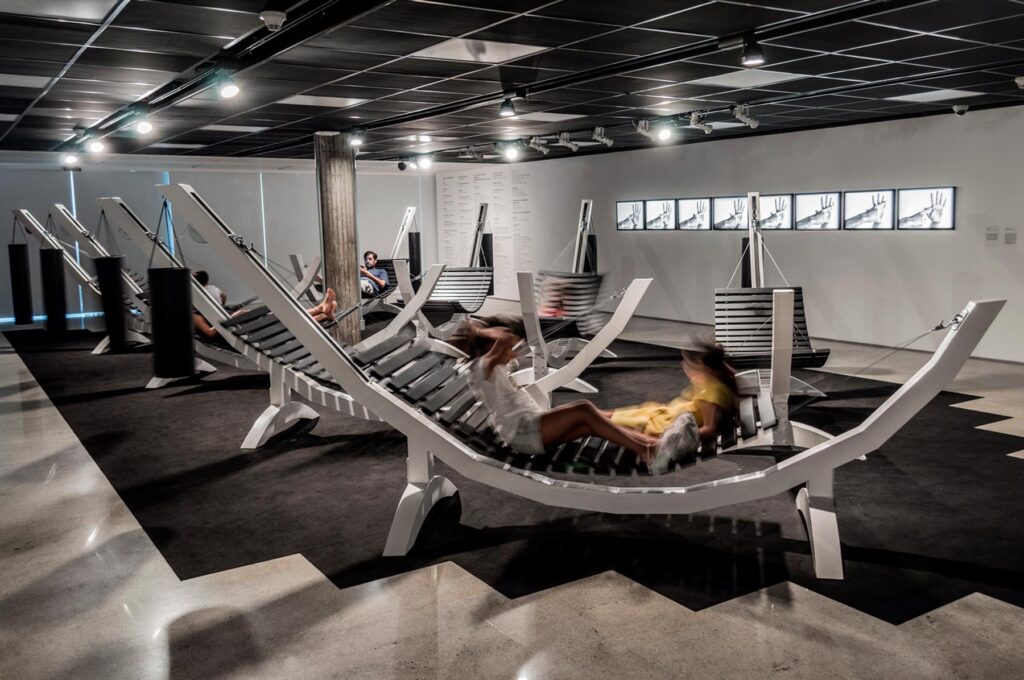

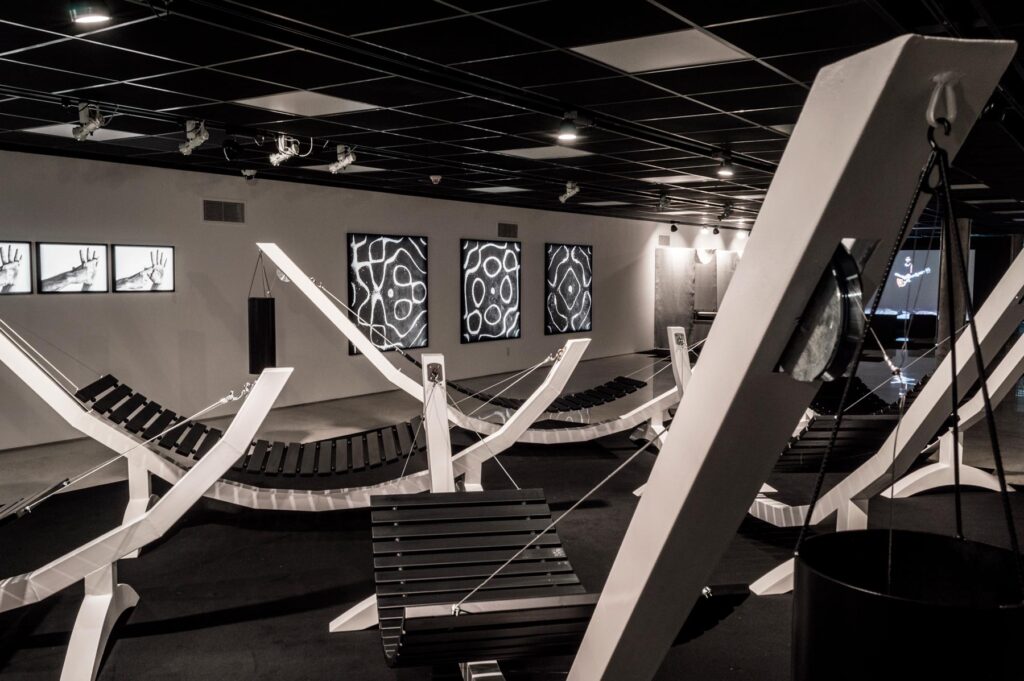
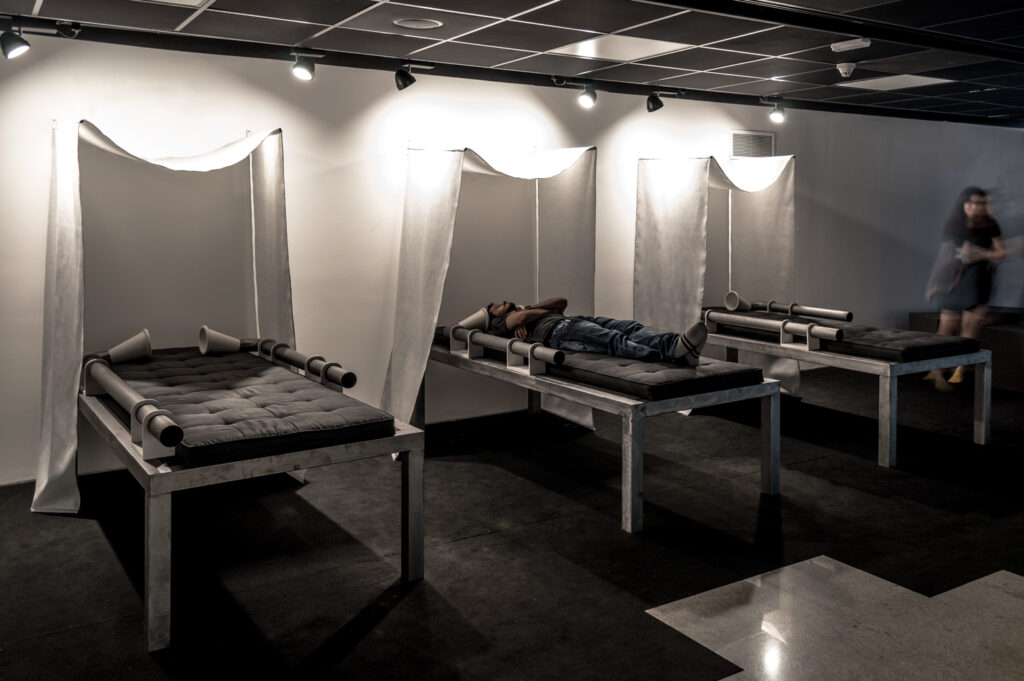
The exhibition Solfejo (2019) brings together 29 works by Felippe Moraes presented at the Centro Cultural FIESP, weaving together installations, objects, and records that investigate the relationship between sound, image, and perception. With a strongly immersive character, the show offers the public a sensory expansion by integrating visual, sonic, tactile, and olfactory elements within a single environment.
Among unpublished works and already-consolidated pieces, interactive installations stand out that turn the visitor into an active agent of the experience. Networks that trigger bells, structures that produce harmonic intervals, and environments steeped in scent evoke musicality as an expanded phenomenon, one that goes beyond listening and moves through the body.
Taking solfège as a metaphor, the exhibition proposes a reading of the world based on invisible patterns. Just as a musical score allows one to anticipate sound, the works operate as devices capable of revealing latent structures of reality, bringing science, spirituality, and sensory experience closer together.
Curatorial Texts
- Divino Maravilhoso – Julia Lima
Resonance and Dissonance – Felippe Moraes
I understand that an artist’s practice has a central axis, which they may or may not (re)recognize. Over time, I came to understand mine, in a way, as an expanded spirituality that regards material experience as an opening onto other possible ones. A kind of primordial nourishment from which all the work emanates.
I don’t see this as something defined a priori, but as a larger motivation that imbues any artist’s research — one that is neither chosen nor invented, but discovered. The encounter with this axis happens through successive crossings with the other and with oneself — because the absolute engine of the work of art is, ultimately, subjectivity itself and its relations with the world.
This central axis, invisible yet omnipresent as in a centrifugal movement, continually reveals itself in different forms throughout my work: at times dressed in mathematical constants that attempt to account for the universe’s immensity; at times as the poetic proposition of an endless walk toward the horizon. At other times, it appears as an attempt to visualize sound and its invisible manifestations, or to expand its physical experiences, as in this exhibition.
In the ten years since I began my career, Brazil and the world have undergone profound transformations. Amid such upheavals and changes, I have not been indifferent to asking myself what my importance and relevance were as an artist within the larger scheme of contemporary events. I have been and continue to be crossed by a vibrant and necessary questioning of what my place is as a vector of discourse and reflection. I even questioned that so-called center, invisible and omnipresent. I even doubted its very existence.
Within this context of crisis, there is gradually revealed before my eyes and my most subtle perceptions the understanding that the artist’s greatest relevance lies precisely in being an artist, regardless of the engine or the starting point. In accounting for one’s subjectivity and revealing repressed vulnerability, one ends up mirroring that of so many others who reverberate within it. The artist is, therefore, a herald of their time.
In a present in which the dissonant and the oppositional are silenced and diminished before the voice of the mob, subjectivity becomes a liberating element, and listening to it is an act of rebellion.
Solfejo is an agora. An environment of encounter and disencounter, where one can observe lapses of vibration, tangible or intangible, literal or metaphorical. The bodies that set the musical mechanisms in motion vibrate and alter the surrounding environment, transforming and recreating the space. The listening proposed at other moments suggests that the frequency of the other and of the world is part of what makes us who we are.
Taking place within a territory central to the profound changes in the fabric of recent history, Solfejo becomes an even more potent temporary space of noise and listening. The artist’s voice, as subject, reverberates their presence as a vector of transformation. The public, in turn, continues from where the artist left off, activating matter and placing subjectivity as a transformative action upon the environment: resonating and listening.
Solfejo thus configures itself as a device that gives voice to noise, to the body that clashes, and to the dissonant cry, understanding them as vectors of resistance and continuous re-existence, and understanding the other as an extension of ourselves.
Felippe Moraes
2019