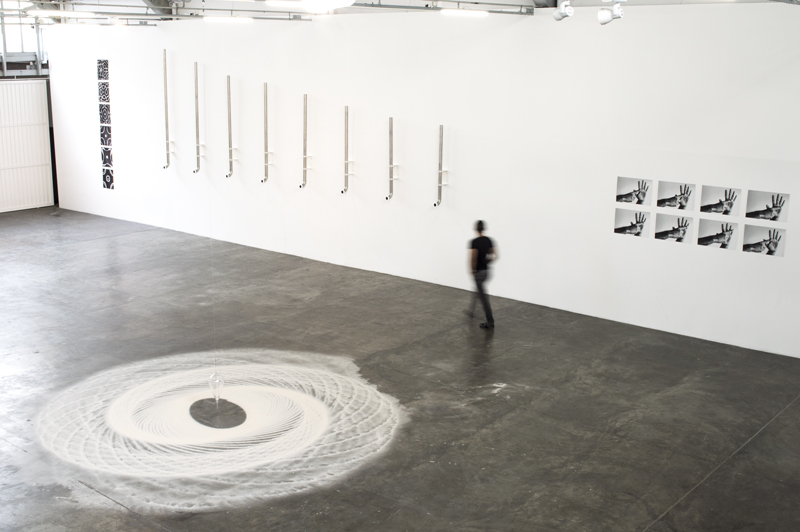
Ordem (Order), 2014
Solo exhibition
Baró Galeria, Barra Funda
Curated by Adriano Casanova
São Paulo – Brazil
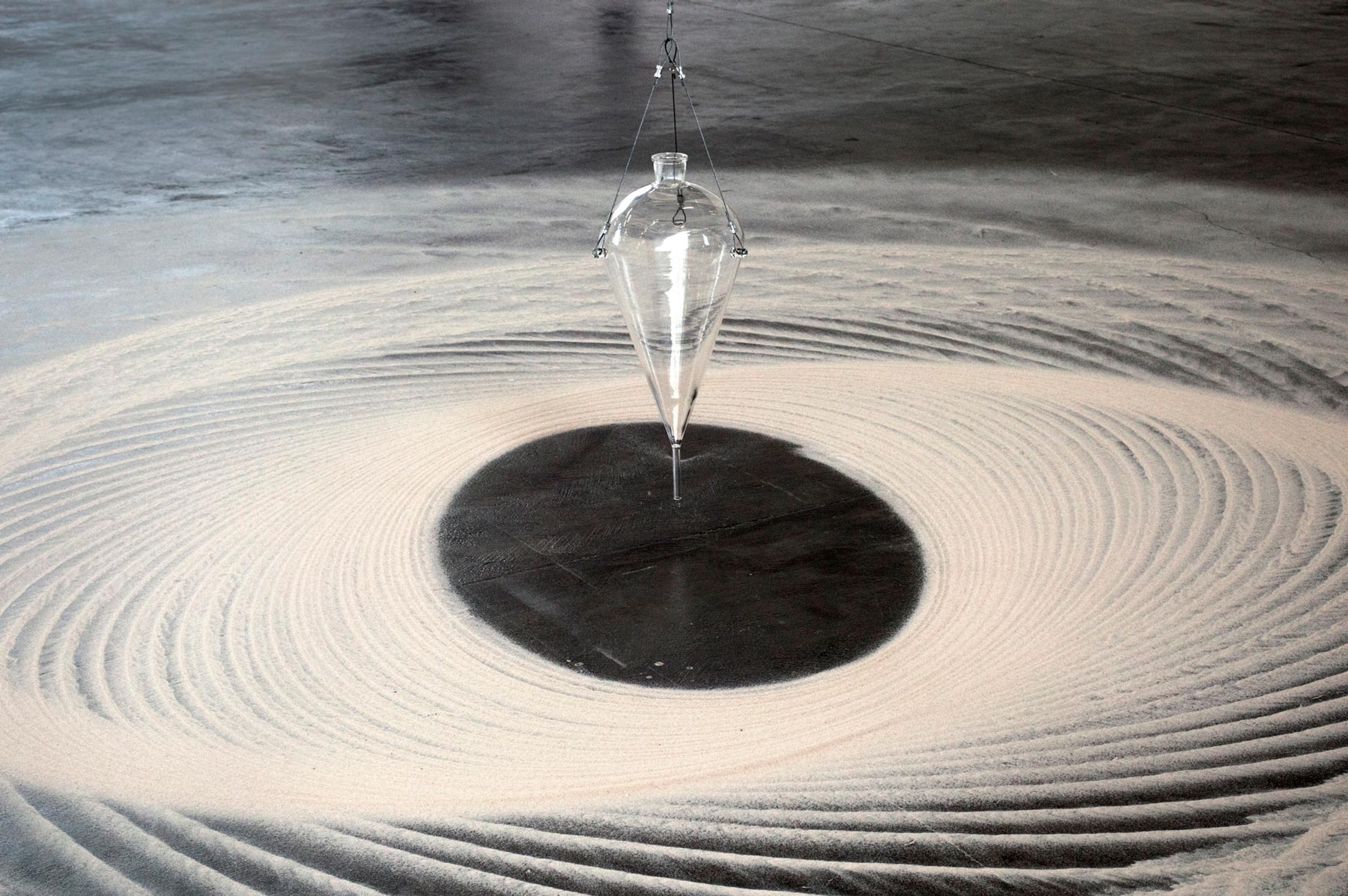
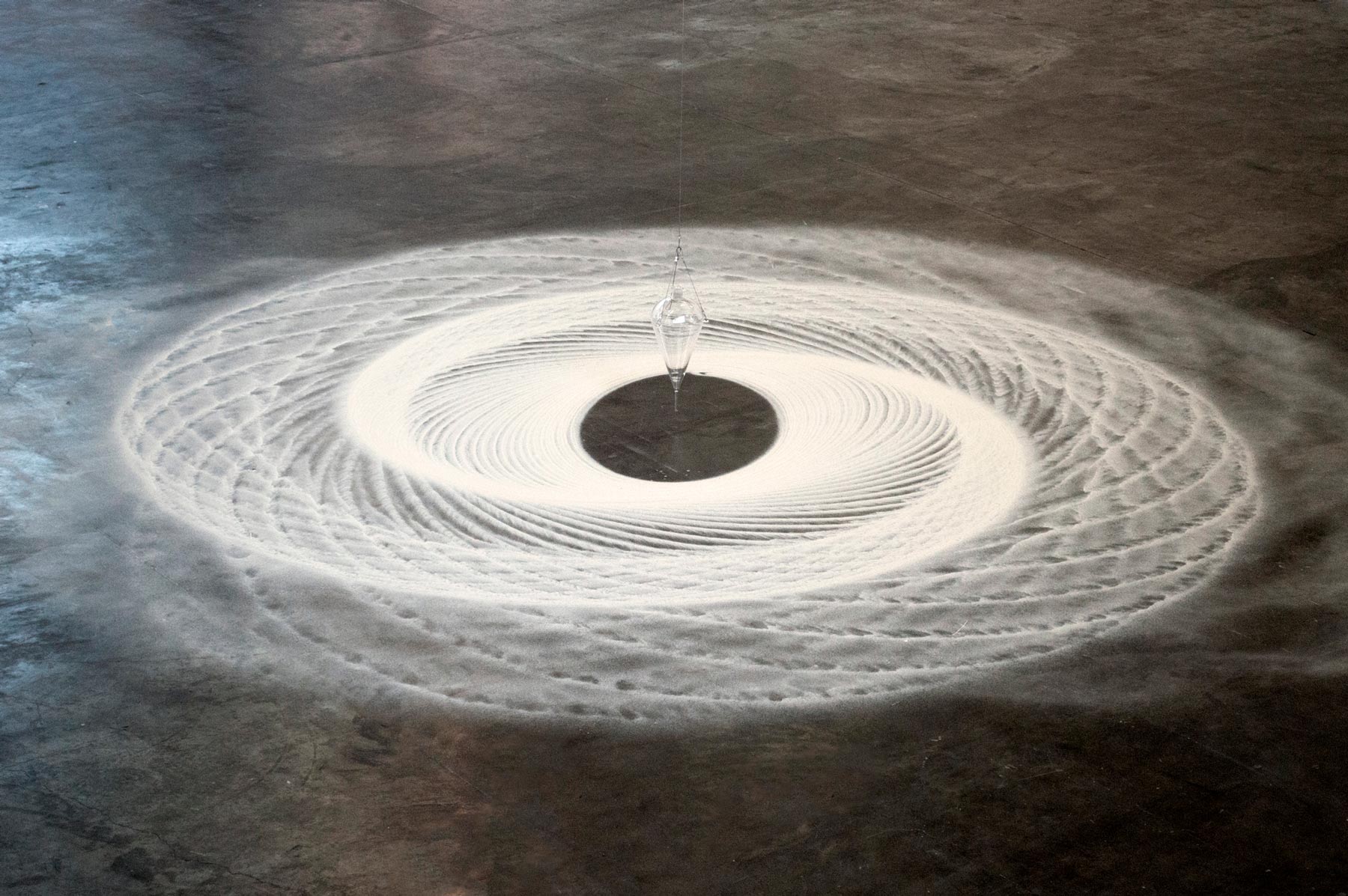
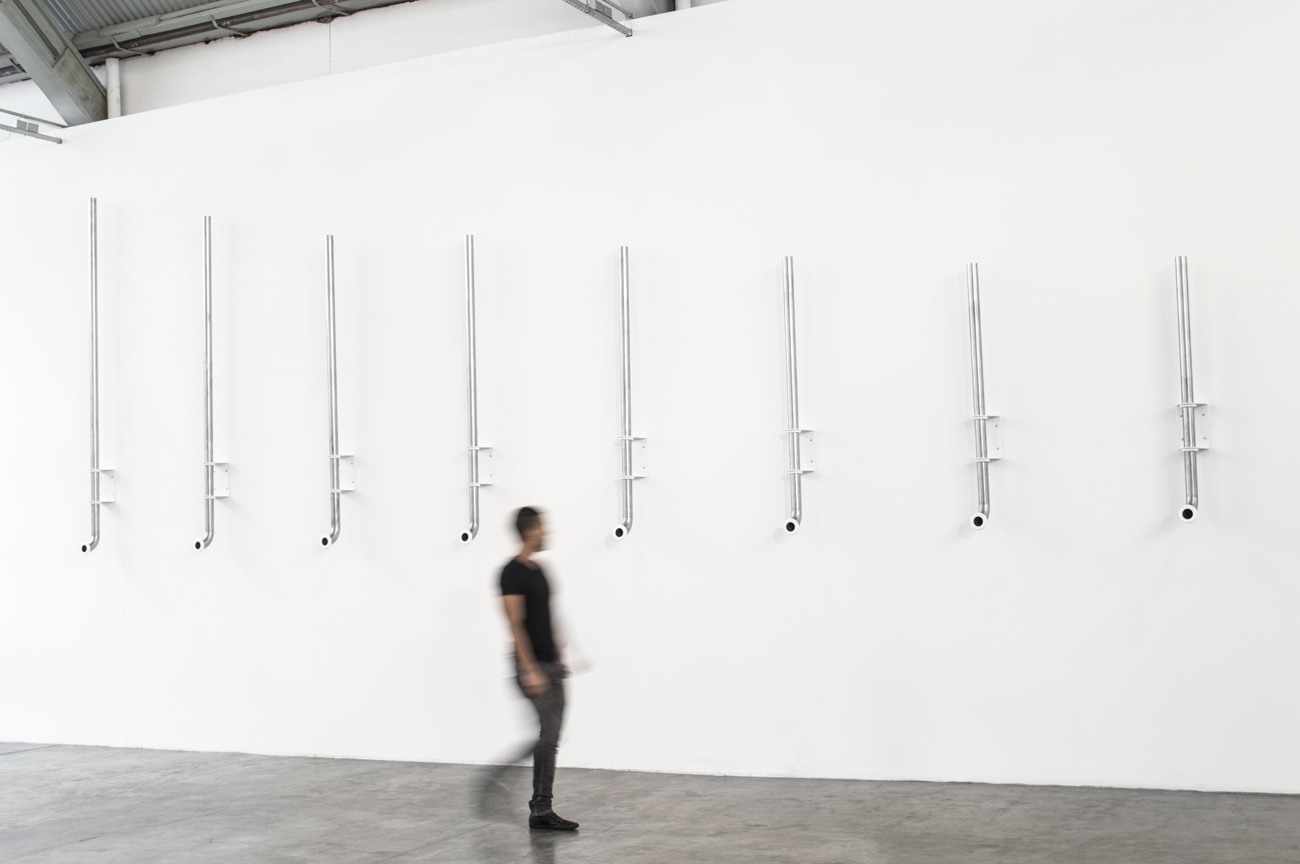

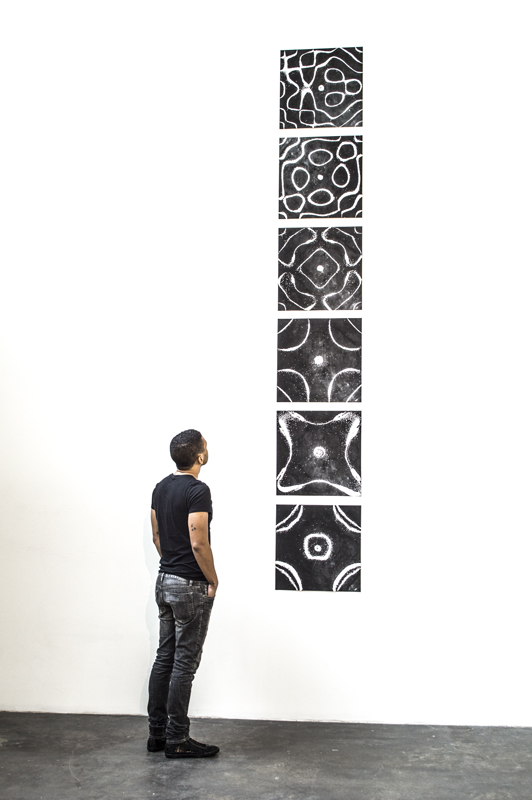
The exhibition Ordem was developed during an artist residency at Baró Galeria, in Barra Funda, and marks a pivotal moment in Felippe Moraes’ production. The show presents, for the first time, a body of work that would become central to his trajectory, including Solfejo, Movimento Pendular, Desenho Sonoro, and Tubos Sonoros.
The exhibition investigates the existence of invisible patterns that structure reality. Through devices, instruments, and systems created by the artist himself, these hidden rhythms become perceptible. The work operates in the transition between the invisible and the visible, revealing layers of order that are not immediately apparent to everyday perception.
By weaving together sound, image, time, and movement, Ordem proposes a sensory experience of that which escapes direct observation. The show suggests that reality is crossed by systems and frequencies that, though imperceptible, organize the world in a deep and continuous way.
Curatorial Text
Situations in Residence” – Adriano Casanova
Artistic experience and practice have always been tied to the situations the artist moves through — whether empirical, scientific, emotional, or otherwise — and they are present in the work and in the moment of creation. In this sense, the artist residency exists precisely to draw the artist into these new situations and, consequently, new experiences — this displacement is stimulated through geography, daily life, culture, language, and so on, creating new platforms for the work.
“(…) One cannot really comment, but rather say, one has to enter, to live deeply within the ideas in order to develop the form appropriate to the specific time and place” (J. Beuys, Social Sculpture Colloquium, The Free International University, 1995. Edited by Shelley Sacks, 1997. Goethe-Institut Glasgow)
Beuys’ idea is that for art to exist, only a situation needs to exist, and it is through such situations that the show with the three resident artists — Alan Fontes (Minas Gerais), Felippe Moraes (Rio de Janeiro), and Ramon Vieitez (Pernambuco) — comes together.
Over several months of living in the Barra Funda neighborhood, in São Paulo, these artists placed their works as a consequence, as a result of their art submitted to the real and imagined weathering of time.
In the case of the show “Ordem” by Rio de Janeiro-born Felippe Moraes, the situation moves toward the bias of Science — or rather, toward the uncertainties of formulas. As he himself defines it: an invisible geometry. Moraes focuses not only on the historical dimension of his mathematical research, but also on the fundamental “errors” within the process of discovering a formula, making room for the empirical, spiritual, and metaphysical questions of his invented mathematics.
The image drawn with millimetric precision in sand on the floor; the calculation, the time, and the desire; the wait for the unpredictable within something scientifically tested. His art lies along this line dividing these two worlds — an attention to the unpredictability of mathematical calculations combined with a search for different modes of representation in contemporary art, resulting in the meeting between the rightness that comes after error, within an uncalculated reality.
As in the work Solfejo, in which the musical notes C, D, E, F, G, A, B, C are photographed through the method of the Guidonian hand, created by the scientist Guido D’Arezzo. In his research into other ways of recording mathematical representations, Moraes appropriates this photographic language in the creation of sonic images.
For a gallery today, building a residency program requires a range of factors that do not necessarily align with the art market and its logistics.
With a machinery rapidly geared toward showing the latest work or the artist of the moment at the next art fair, a space for research and conceptual development for the artist tends to fall to the background within the commercial strategies of a company that trades in artworks. But art is not made only of sellable objects, and galleries are grappling with this dilemma, once again reshaping and rediscovering the circuit. Artists do not only reside — they resist.