Felippe Moraes
Monumento ao Horizonte (Monument to the Horizon), 2016
Corten steel
480 × 300 × 90 cm
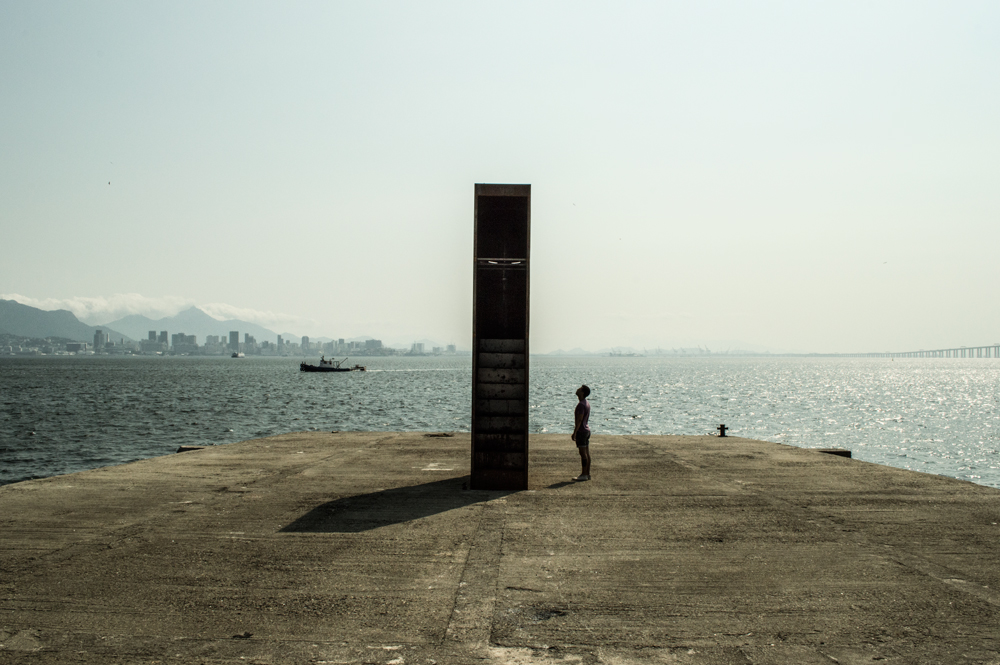
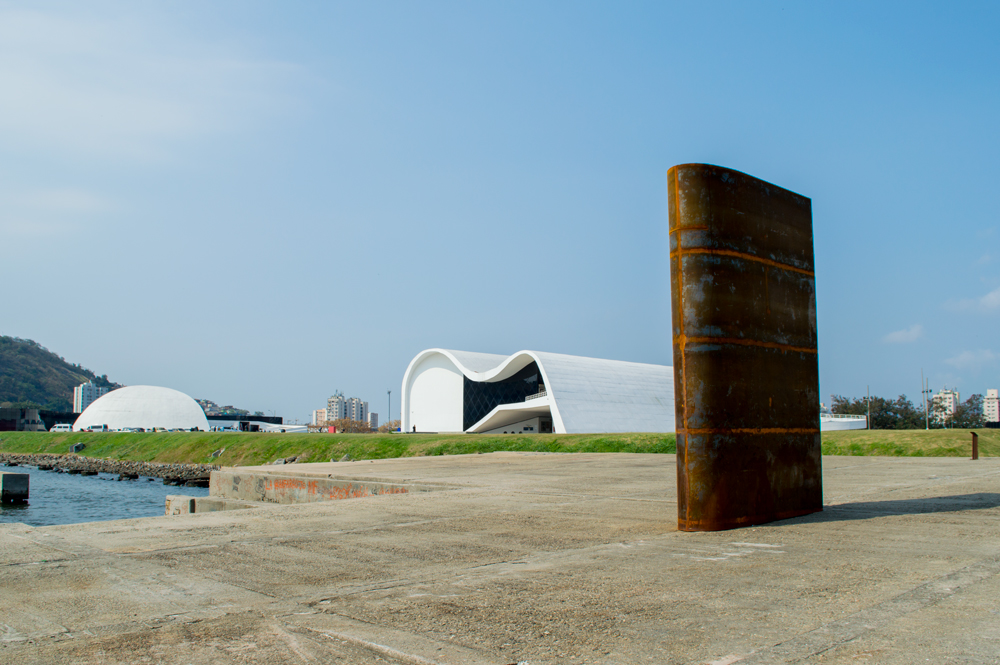
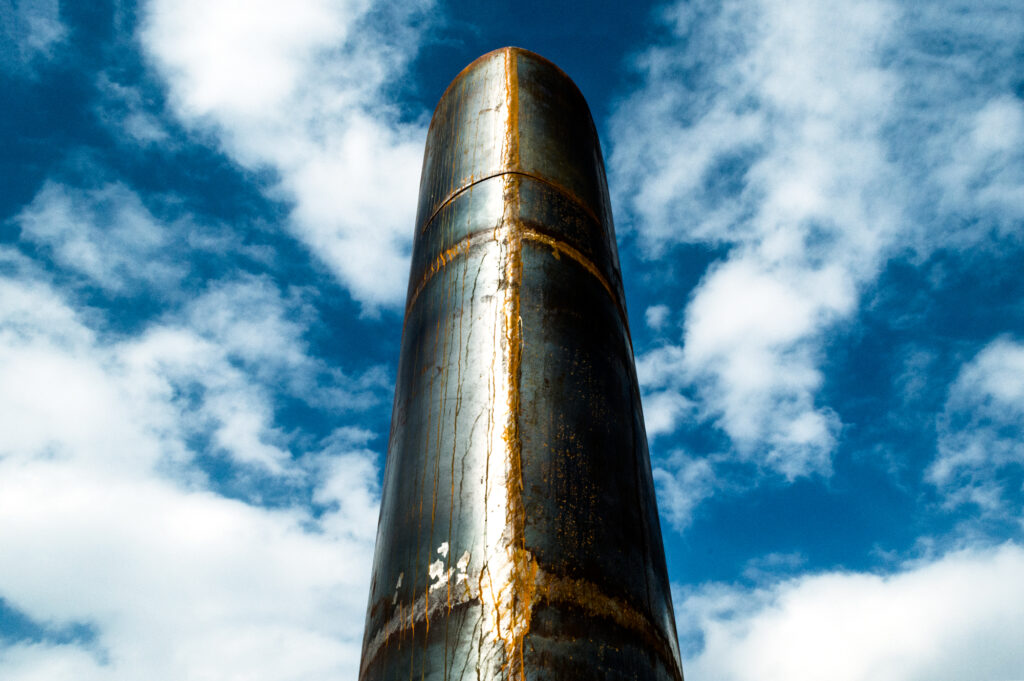
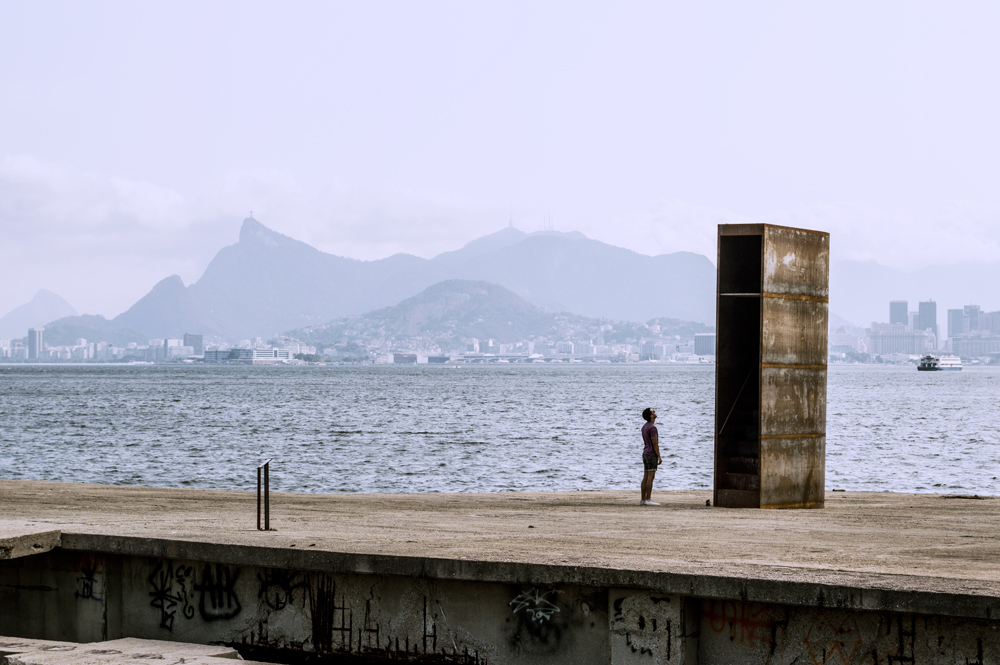
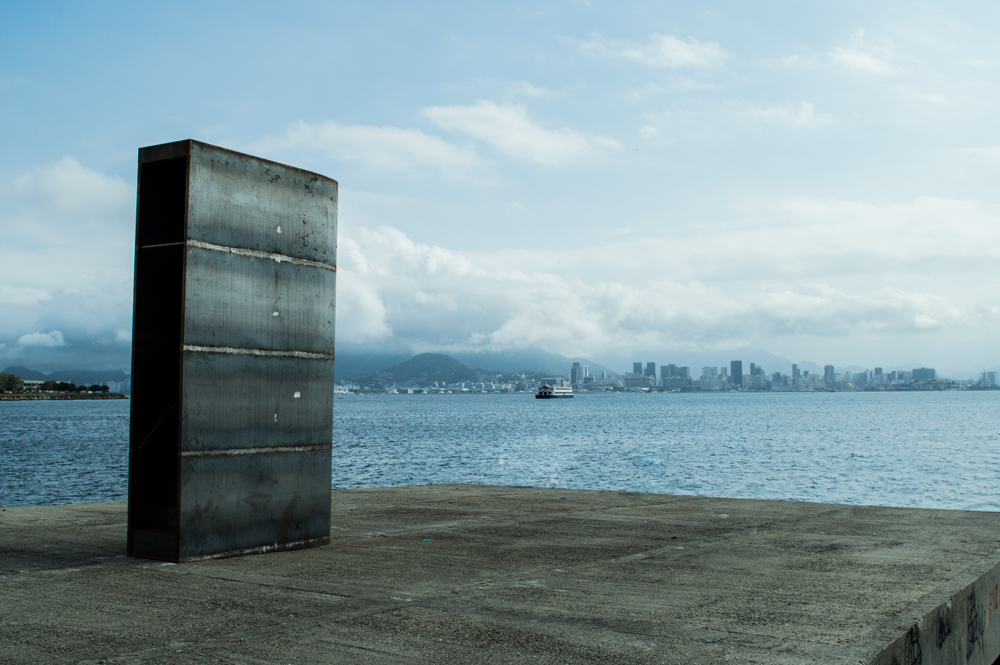
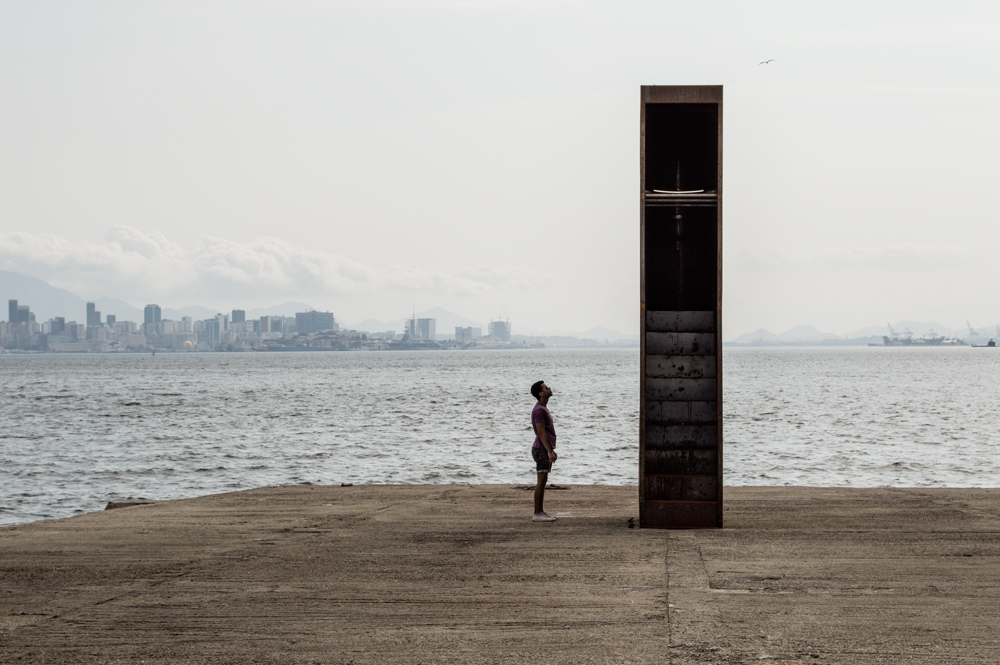
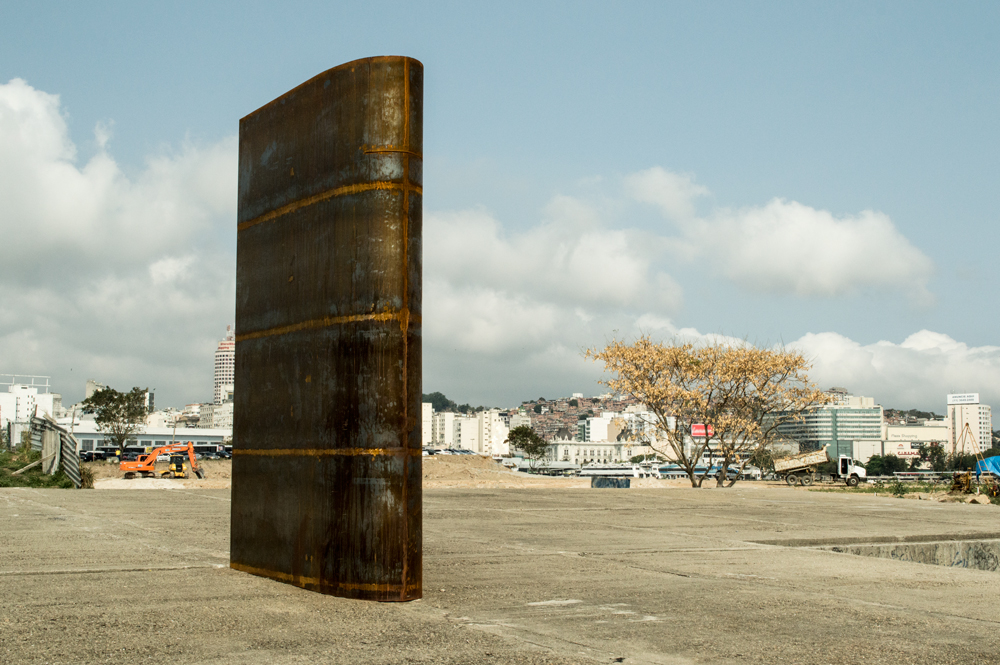
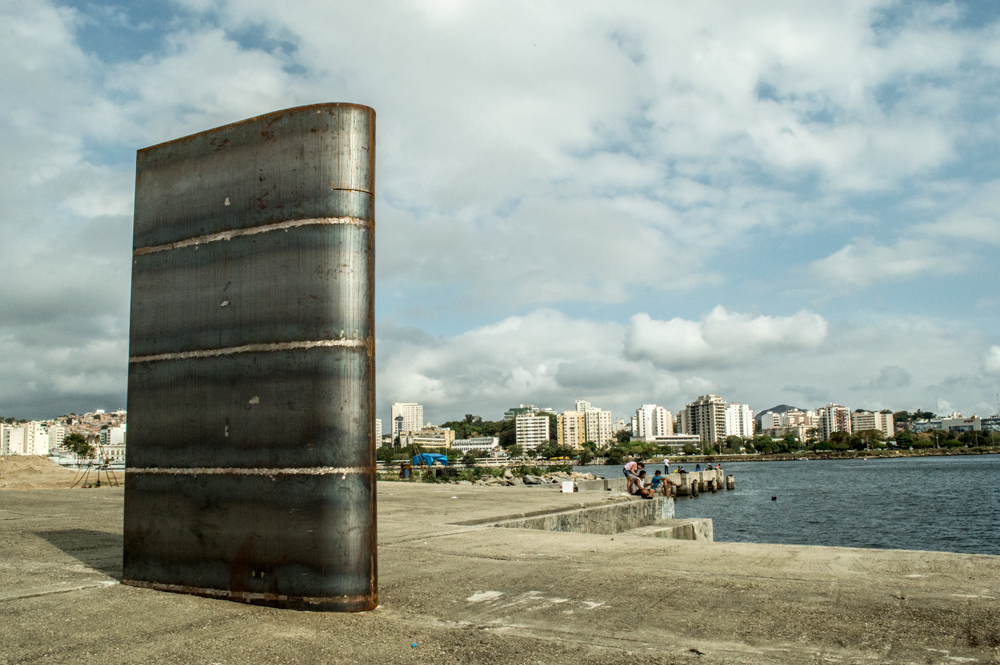
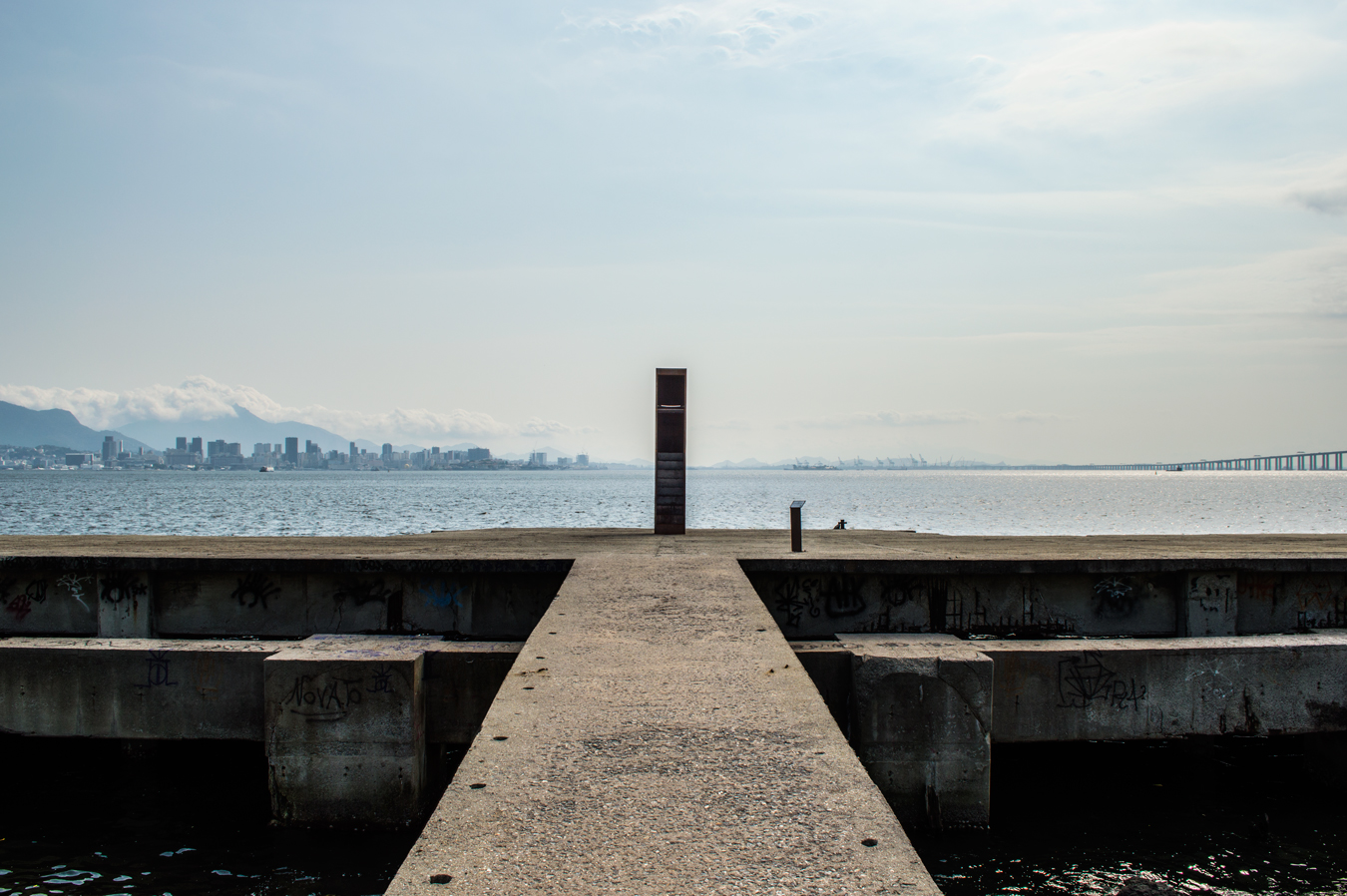
Monumento ao Horizonte (Monument to the Horizon, 2016) is a permanent public sculpture by Brazilian artist Felippe Moraes, installed at the Caminho Niemeyer cultural complex in Niterói, on the shore of Guanabara Bay.
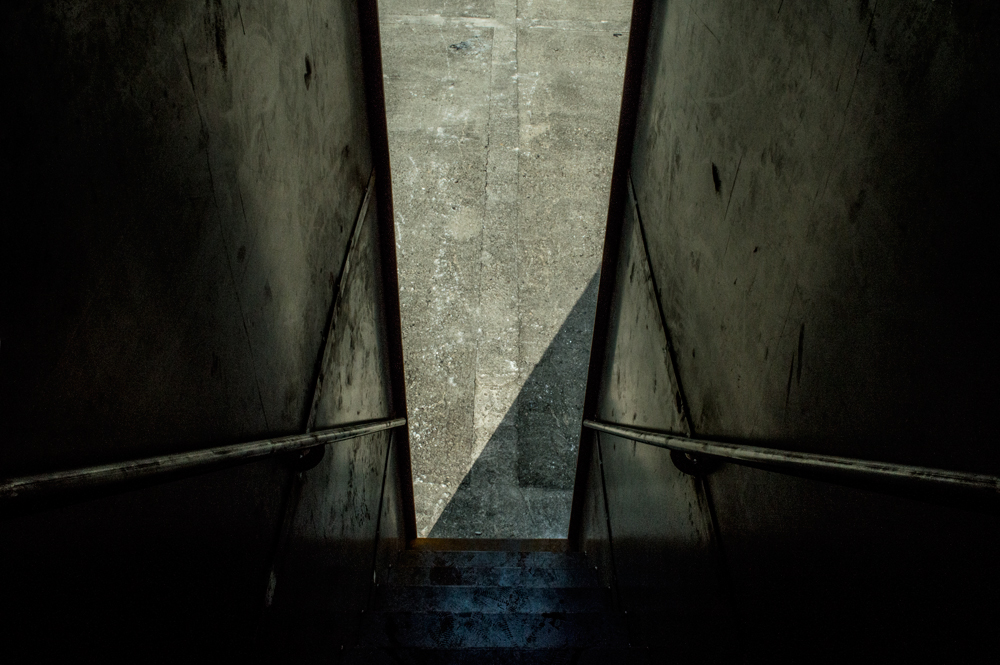
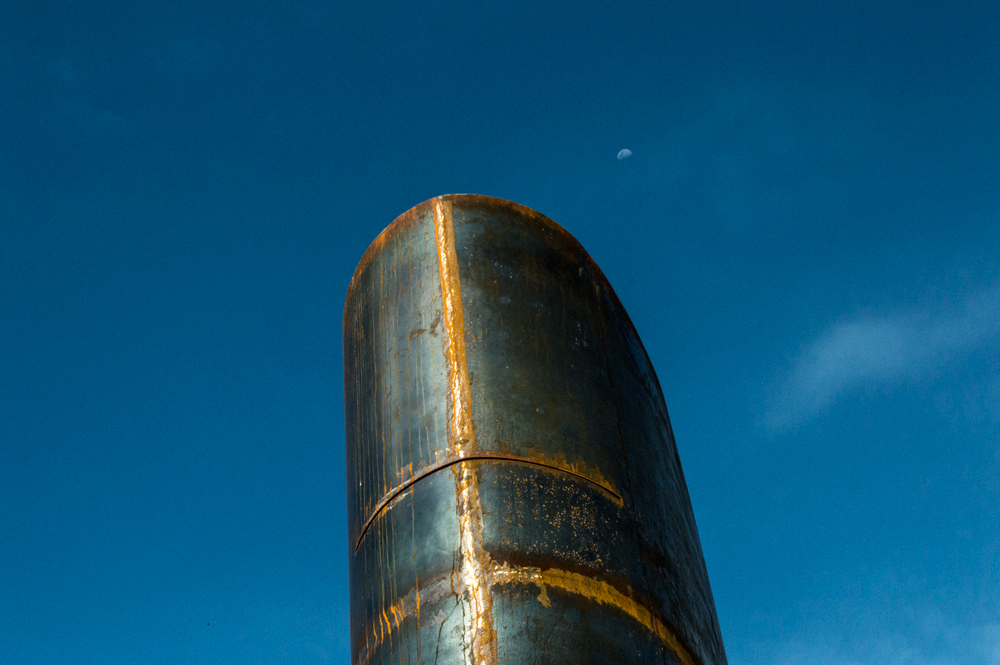
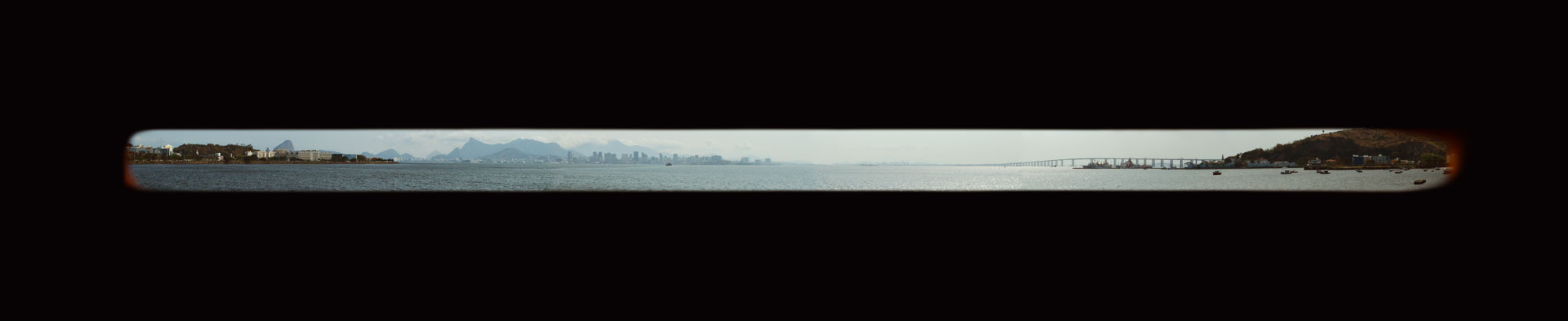
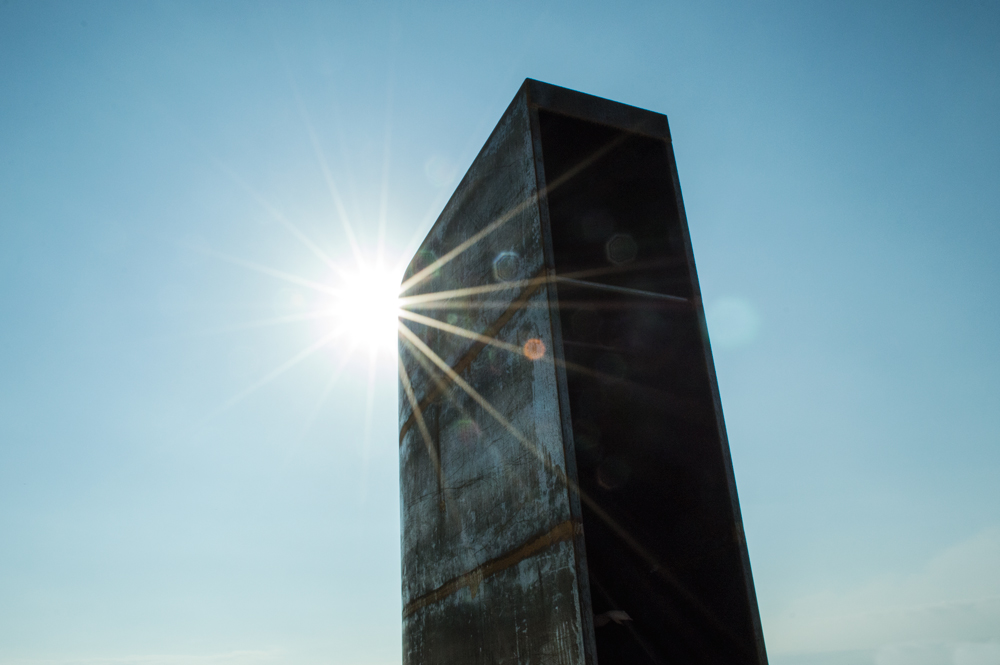
The work consists of a corten steel tower 4.8 meters tall that functions as an observatory of the horizon. Inside, a staircase of nine steps leads the visitor to a narrow opening slit into the metal structure. Positioning their eyes in front of this slit, the observer sees the horizon directly ahead, framed by the sculpture and visually isolated from its surroundings.
The intervention turns the simple act of observing the landscape into a sculptural, perceptual experience. By framing the horizon, the monument reveals the delicate monumentality of this imaginary line that separates sky and earth — a boundary that structures our perception of space and landscape.
Architecture and the observer’s experience
The sculpture was designed as a device for observation. Unlike a traditional monument that asserts itself through form or historical narrative, Monumento ao Horizonte creates a direct experience between the visitor’s body and the landscape.
Climbing the internal steps, the observer is guided to a precise point of view. The opening in the corten steel functions as a viewfinder that frames the horizon to the west, the direction toward which the monument is permanently oriented.
This orientation is not arbitrary. The slit points toward where the sun sets, establishing a direct relationship between sculpture, geography and cosmological phenomena. The work engages with ancestral traditions of architecture and observatories that organize space according to the movements of the sun and the human experience of time.
Relationship with the landscape of Guanabara Bay
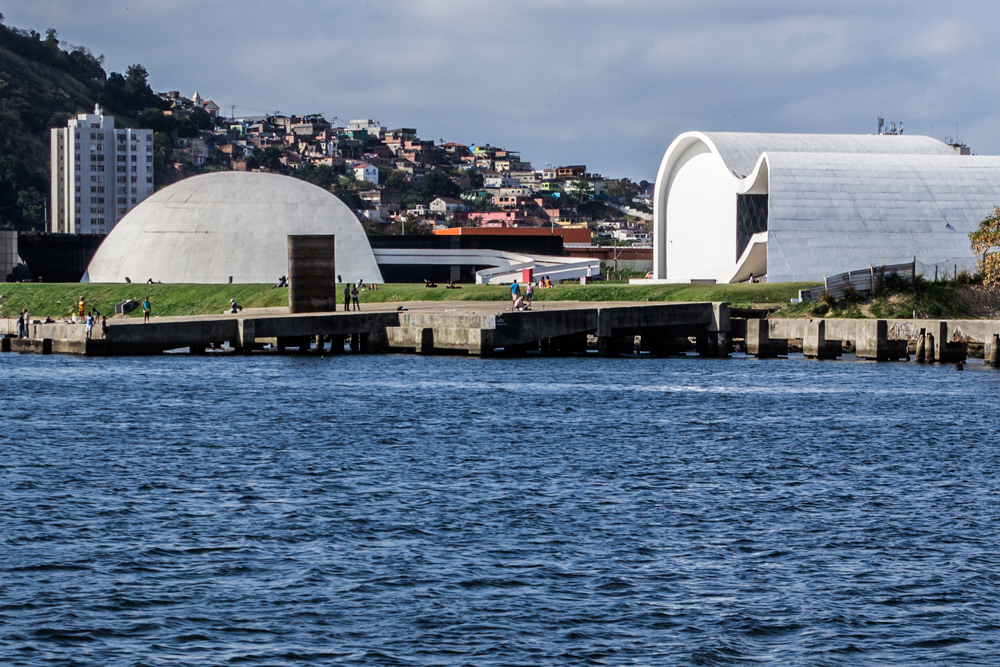
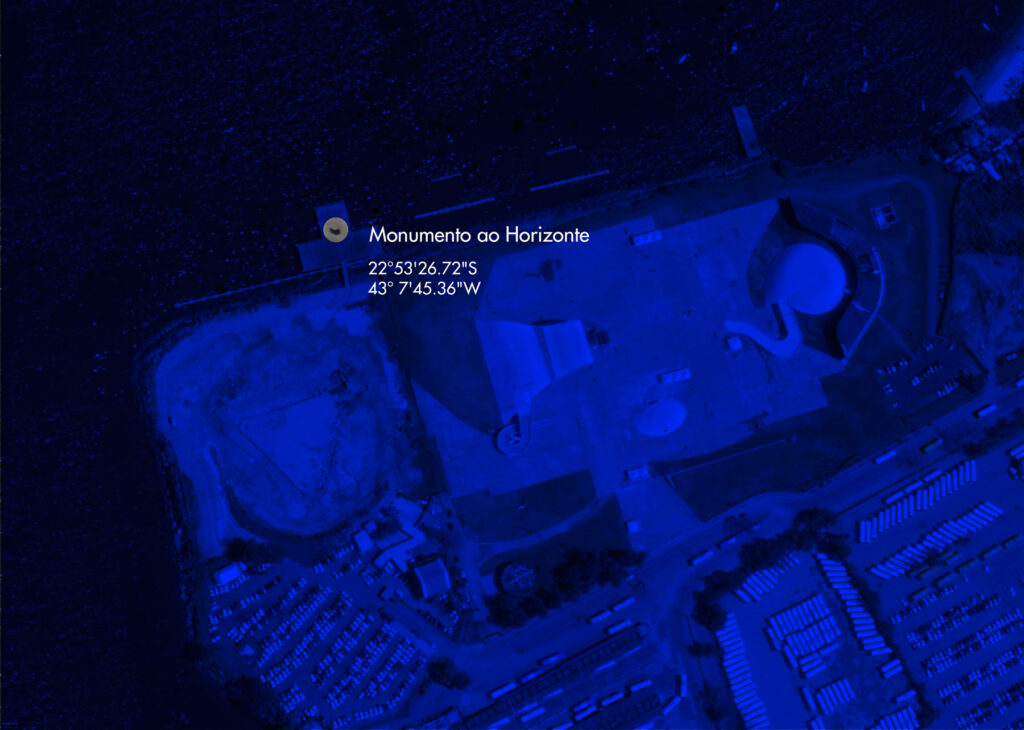
Monumento ao Horizonte was installed on a concrete pier located in front of the Teatro Popular complex. The structure had originally been built to receive boats making the crossing between Niterói and the city of Rio de Janeiro, though the project was never fully realized.
The choice of this location redefined the sculpture’s project. Bathed by the waters of Guanabara Bay and facing directly toward the city of Rio de Janeiro, the work establishes an inevitable dialogue with the landscape of its neighboring city.
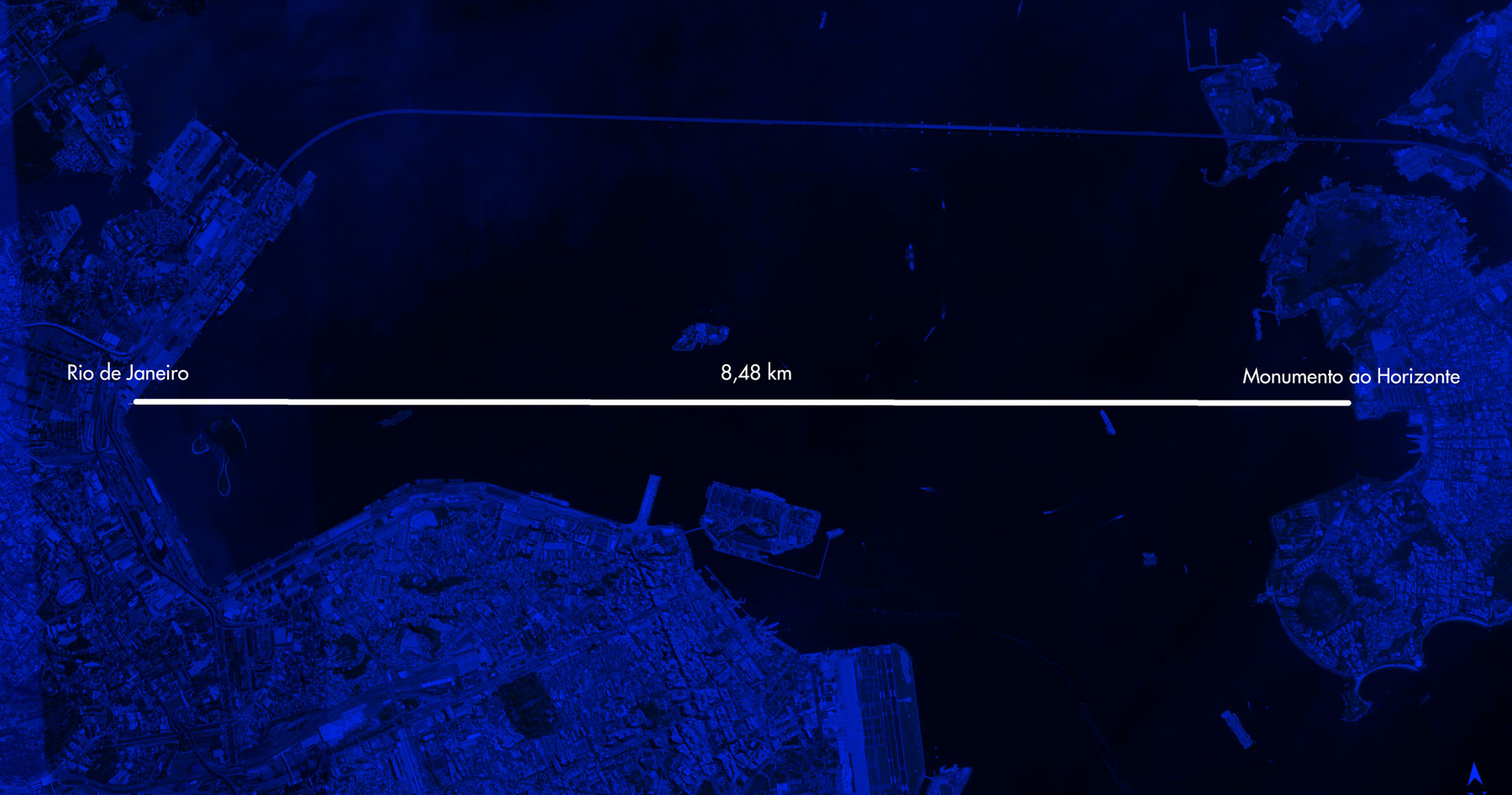
Through the slit, the framed horizon corresponds to the first visible point of the city directly ahead, located in the Caju neighborhood. This geographic relationship turns the act of looking into a precise spatial measurement between two cities separated by the bay.
The distance to the horizon
The height of the sculpture’s slit was calculated so that, looking through it, the distance between the observer and the horizon line is exactly the same as the distance to the first visible point in Rio de Janeiro ahead, located in the Caju neighborhood. This distance is 8.48 kilometers, equivalent to 8,480 meters.
This calculation derives from the work A Distância do Horizonte (2011–), which determines this figure based on the eye height of an observer above the Earth’s surface. By incorporating this measurement into the sculptural project, the work connects perception, mathematics and the physical experience of space.
Monumento ao Horizonte stems from a reflection on how the experience of the real occurs through the body and its physical presence in space. The calculation of the distance to the horizon depends directly on each person’s eye height, revealing the diversity of human experience.
The sculpture proposes a symbolic inversion of this logic by offering a shared point of observation. Everyone who climbs the nine steps and positions their eyes in front of the slit comes to share exactly the same point of view and the same distance from the horizon.
Regardless of height, age, identity or social condition, all visitors find themselves subject to the same physical, geographical and cosmological laws.
In this sense, Monumento ao Horizonte functions as a leveler of human experience and of our place in time and space. The work turns the contemplation of landscape into a reflection on our position before the infinite.